
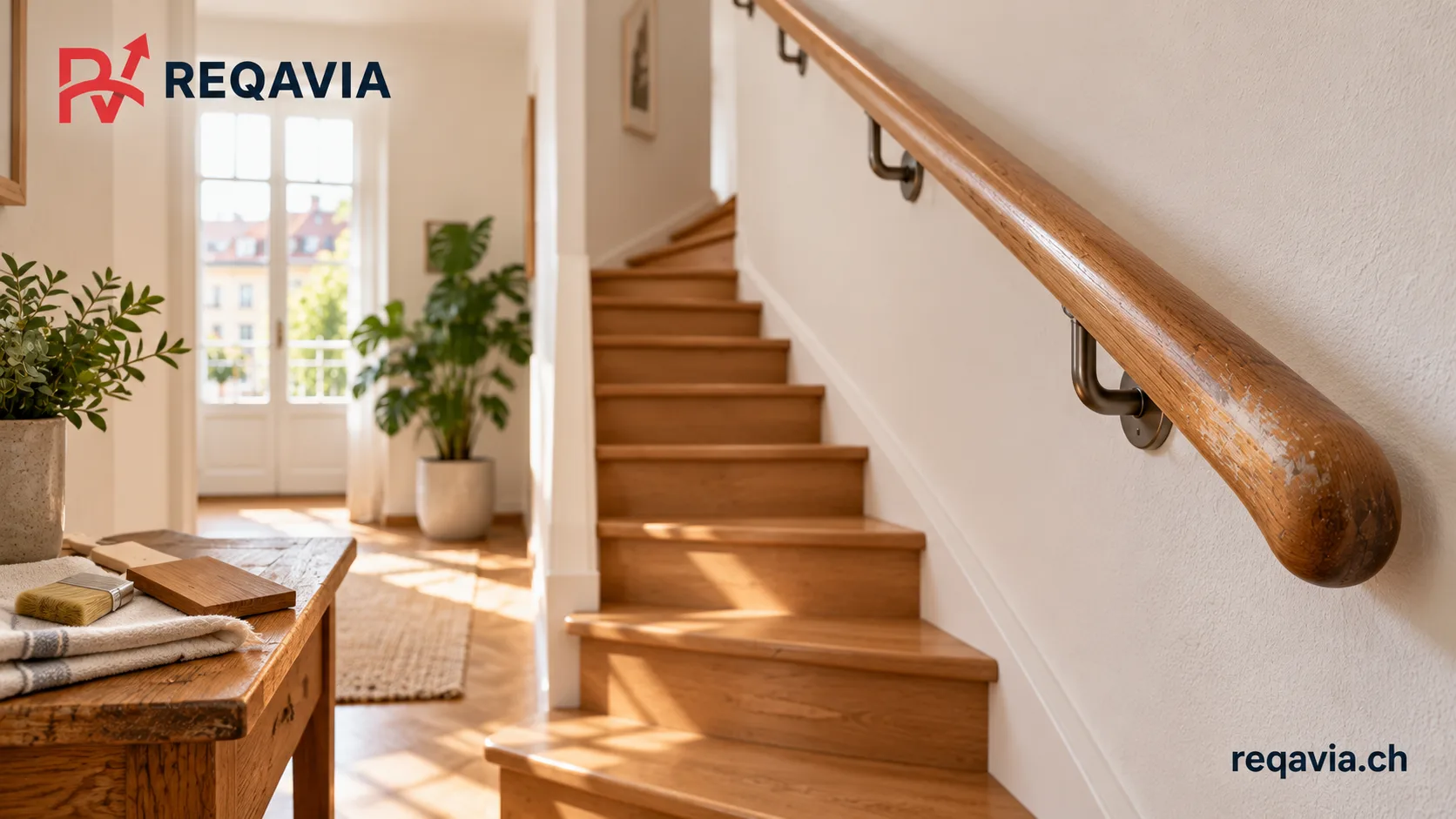
A rough or worn wooden stair handrail needs more than a colour choice. Before arranging refinishing, establish whether it is secure and how everyone will use the stairs while it cannot be gripped. The practical order is to clarify any defect, agree safe access, then specify preparation and finish. A fresh coating does not resolve a loose fixing or broken rail.
1. Separate the surface problem from a safety defect
Describe what you have noticed during normal use: flaking finish, splinters, movement at a bracket or a cracked section. Do not lean on the rail to test its strength or remove a fixing to investigate. A loose, broken or doubtful component needs assessment by an appropriately qualified person before it is treated as a painting job.
A wall-mounted handrail and the top of a stair guard are not necessarily the same assembly. Identify which you have and whether the proposed work affects a barrier against falling. BFU explains the fall-protection role of railings and parapets. Ask who is responsible for any repair, removal and reinstatement rather than assuming the painting quotation covers these tasks.
BFU: railings and parapets as fall-protection elements (in German)
2. Describe the rail and the people using the route
Record the approximate length, straight and curved sections, visible brackets and number of flights involved. Say whether the stairs have another usable handrail and whether they serve a private home or shared access. Explain if residents need continuous support on this route; detailed medical information is unnecessary. In a rented or shared property, agree the scope and timing with the responsible owner or manager.
Tell the company about the landing, doors, lighting and any alternative route. An alternative must actually be usable by the people concerned. Do not base the plan on residents simply avoiding the handrail they normally need.
3. Agree access before work begins
Ask the contractor to explain how preparation, coating and drying will affect access. Staged work is an option to assess, not an automatic solution: leaving one section untouched may still leave someone without support. If safe circulation cannot be maintained, revise the timing and arrangements before starting. Do not improvise a replacement handrail from tape or an unsecured object.
BFU’s stair-safety guidance highlights usable handrails, good visibility and keeping stairs clear. Agree where equipment and materials will stay, how any protection is secured without creating a trip hazard, and who checks the route during the job. The arrangements must also respect the building’s required escape routes.
BFU: stair safety, handrails and visibility (in German)
4. Specify the existing finish and the result you will touch
Share any reliable information about the wood, previous coating and oils, waxes or cleaning products used on it. Mark unknowns clearly. Ask the painter to assess compatibility and include the proposed preparation, dust control and protection of nearby surfaces in the quotation. Do not begin extensive sanding or stripping an unknown coating yourself while that assessment is unresolved.
Approve a representative sample for colour, sheen and feel. Ask how the finished surface will suit normal gripping and what care it needs. Obtain instructions for when it can be held and used normally. A surface that looks dry is not, by itself, confirmation that the job is ready for use; timing must follow the selected finish and actual conditions.
5. Confirm reinstatement and handover
If any component was removed, identify the person responsible for reinstalling and checking it. Inspect the agreed finish, cleared steps and completed work without conducting your own strength test. Keep the product and finish details, care instructions and any unresolved observations.
For a painting request through REQAVIA, describe the rail’s length, material, condition, postcode, access and residents’ need for support in text. Share useful photos privately with the company during coordination, outside the request form. REQAVIA is an intermediary; scope, price and execution are agreed directly with the company. Ask for a proposal that addresses safe access as clearly as the finish.