
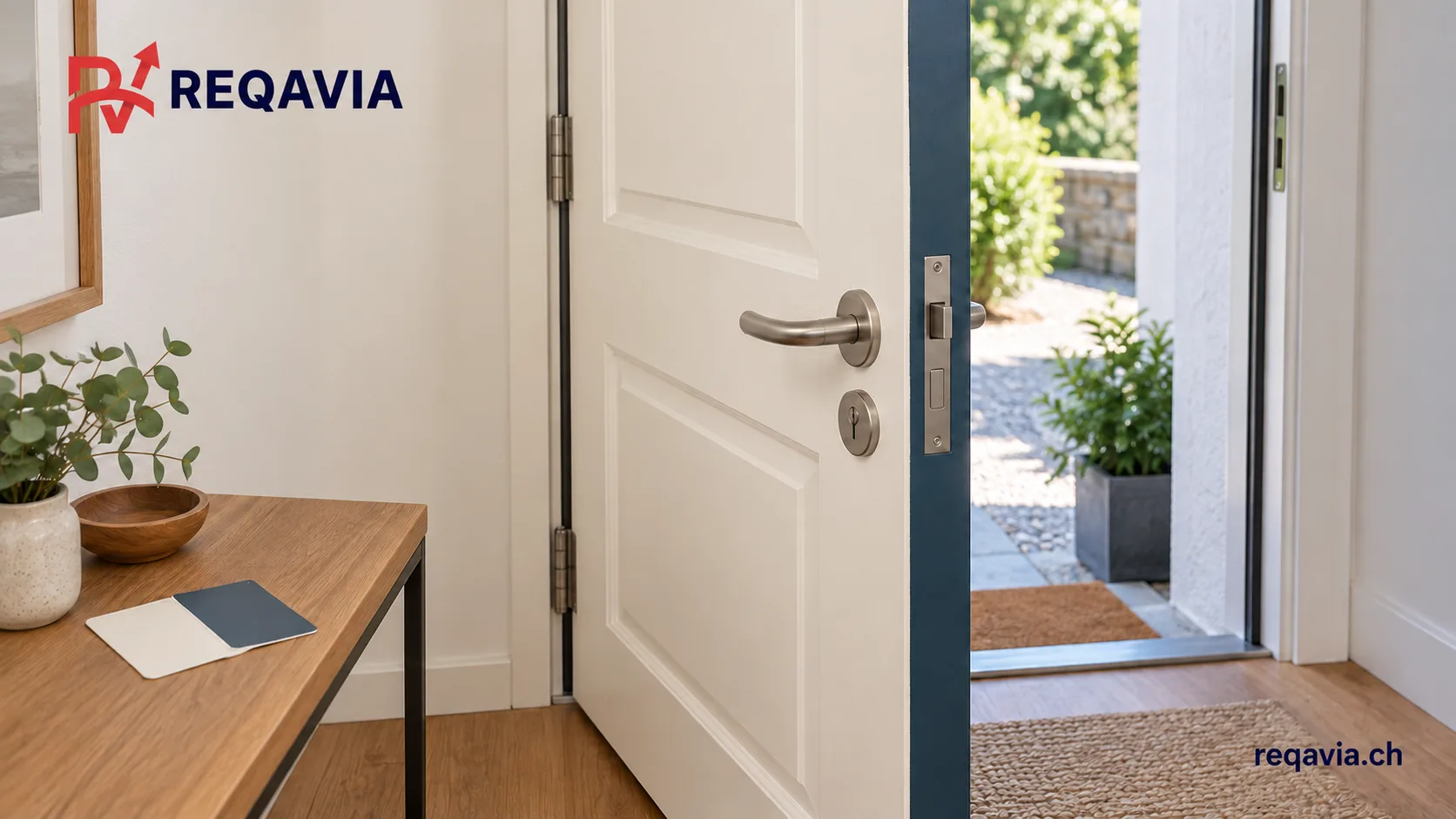
A different colour on each face of a wooden door needs more than two colour references. When the door opens, its edges, rebates and frame become visible. Decide where each colour stops before asking for a final quotation. There is no need to guess a universal rule: use a drawing that shows the result you want from both sides and have the painter confirm it.
1. Map the door in its open and closed positions
Photograph the closed door from each side and the open door where you can do so safely. Mark copies of the photos or make a simple sketch. Identify the inside face, outside face, hinge edge, lock edge, frame and surrounding trim. Ask which top or bottom edges are included in the work. Do not treat “both sides of the door” as a description of the whole frame.
Use words as well as colour on the plan, so an uncoloured printout is still understandable. Agree whether the colour boundary remains visible when the door is partly open. If it opens onto a shared stairwell, describe that separately from direct outdoor exposure. In a rented home or shared building, clarify the proposed change with the responsible owner or management before commissioning it.
2. Provide dimensions and judge actual samples
Measure the door leaf’s height, width and thickness without taking it off its hinges. Note glazed panels, mouldings and the frame sections you want painted. Record sunlight, rain exposure or a sheltered entrance as observations, rather than choosing a coating system yourself. Ask the painter to confirm a suitable approach for each face and the existing surface.
Compare samples of both colours and their finish in the actual entrance lighting. A screen image is not your agreed physical sample. Keep the colour references, sheen and sample approval together with the drawing. If the existing frame will remain, look at it beside both samples before deciding.
3. Separate surface preparation from existing faults
Before work, check whether the door opens, closes and locks normally. Record rubbing, loose parts, peeling or visible damp damage. Ask whether repairs are included or need a separate assessment. Do not expect a new coat of paint to correct a door that already catches against its frame.
If an old coating needs removal and its composition is unclear, ask for an assessment before sanding it yourself. Suva notes that sanding lead-containing coatings releases harmful dust; appearance alone does not establish what is present. For a door with a fire-safety function or specialist fittings, ask for the appropriate competent person to assess the proposed work.
Suva prevention advice: hazardous substances in renovation work (German)
4. Compare the whole job and keep access workable
Have the quotation identify the faces, edges, frame sections, preparation and protection included. Clarify who handles locks, handles, seals and any removal and refitting. Ask which parts must remain free of paint under the door’s own instructions. Do not remove fittings merely to simplify the painter’s arrival.
Agree how the entrance will remain secure and usable during painting and drying, especially if it is the only entrance. Ask when it may be closed, locked and used normally for the chosen system and conditions; do not substitute a generic drying time. Compare an on-site proposal with a workshop proposal only after including transport, temporary arrangements and refitting.
5. Check the boundary and the door’s operation
When the painter confirms the door is ready, inspect it open and closed against the approved plan. Look at the colour boundary, visible edges, frame and protected fittings in useful light. Check opening, closing and locking together, and record any remaining points specifically instead of approving only the front view.
Use a REQAVIA painting request to describe the wooden door, dimensions, condition, exposure and proposed colour boundaries. The request uses text; share useful photos privately and directly with the company during coordination. REQAVIA is an intermediary. You agree the price, scope and execution with the company, including any specialist assessment needed before painting.