
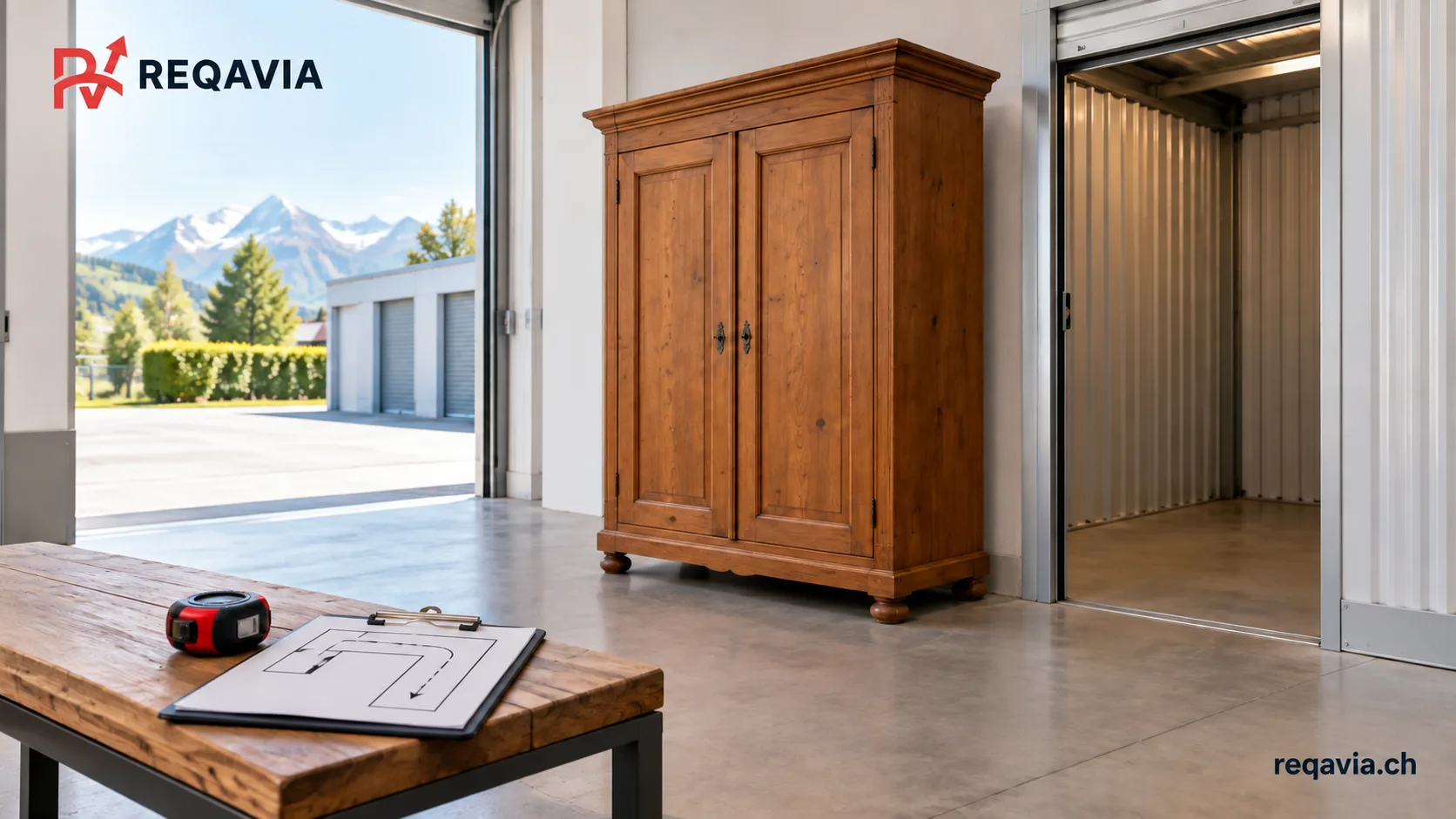
If a wardrobe will not pass through the storage door, stop the manoeuvre and check the complete route before trying again. A unit can have enough floor space while its entrance or the preceding corner prevents access. Establish how the furniture will travel, where it must turn and who will assess any uncertainty before unloading more belongings.
1. Measure the furniture in its transport condition
Record height, width and depth, including handles, feet, cornices and the protective packaging you intend to use. State whether the measurements describe the assembled wardrobe or separate components. If dismantling is planned, establish who will do it and how the parts will be protected and reassembled. Do not assume that an unfamiliar or damaged wardrobe can be taken apart safely.
Identify the largest component after dismantling; a long side panel may still determine the route. Include the weight if reliably known, otherwise mark it as unknown. Tell the mover about mirrors, glass, loose joints and components that cannot be removed.
2. Trace the route from the vehicle to the final position
- Doors: measure the actual clear opening with the door in its usable position, rather than relying on the advertised or nominal door width.
- Corners: record corridor widths, the space before and after each turn, and any low overhead obstacles. A wide door is insufficient if the wardrobe cannot be lined up with it.
- Level changes: note steps, thresholds, ramps and the available landing space. Describe anything you cannot measure safely instead of guessing.
- Lifts: obtain the door opening and cabin dimensions, the displayed load limit and any restrictions on goods transport. The mover must assess the planned load, including equipment and accompanying people.
- Arrival: check where unloading can take place, the remaining carrying distance, access hours and the route into the actual allocated unit.
Use the same unit, preferably centimetres, throughout and label every measurement. A simple numbered route sketch helps distinguish several similar doors. Share supporting photographs privately with the company during coordination, avoiding unrelated people and personal documents.
3. Resolve uncertainty before attempting the move
A doorway diagonal or a small difference between two measurements does not by itself establish that the manoeuvre is workable. Turning, protective materials, handling equipment and the space needed by the team all matter. Ask for an assessment, possibly on site, for very heavy, tall, fragile or unstable furniture, or where the route remains unclear.
For handling heavy loads, Suva recommends suitable transport aids and planned work processes, together with instruction on safe handling. Ask the mover to explain the proposed method for your particular route.
Suva: prevention guidance on handling heavy loads
4. Compare alternatives as a complete job
Possible options include planned dismantling, a unit with a more accessible entrance or a different agreed route. Compare transport, dismantling and reassembly, handling, storage charges and any additional journey together. A larger unit elsewhere in the building may have the same access obstacle. Ask what each option actually solves and have changes to the scope and price confirmed in writing.
5. Agree what happens if the allocated unit changes
Before delivery, identify who can authorise a substitute unit or a changed transport plan. If the route on arrival differs from the one checked, record the obstruction and contact both the storage provider and mover. Agree a safe waiting position and keep passageways clear. Do not force the wardrobe through or remove structural door or lift components to preserve the timetable.
For a storage or moving request through REQAVIA, describe the dates, addresses, largest item, transport dimensions and difficult access points in the text. Say whether a route assessment or dismantling is needed. REQAVIA is an intermediary; you agree the service, price and execution directly with the company. Share any necessary photographs privately with that company during coordination.