
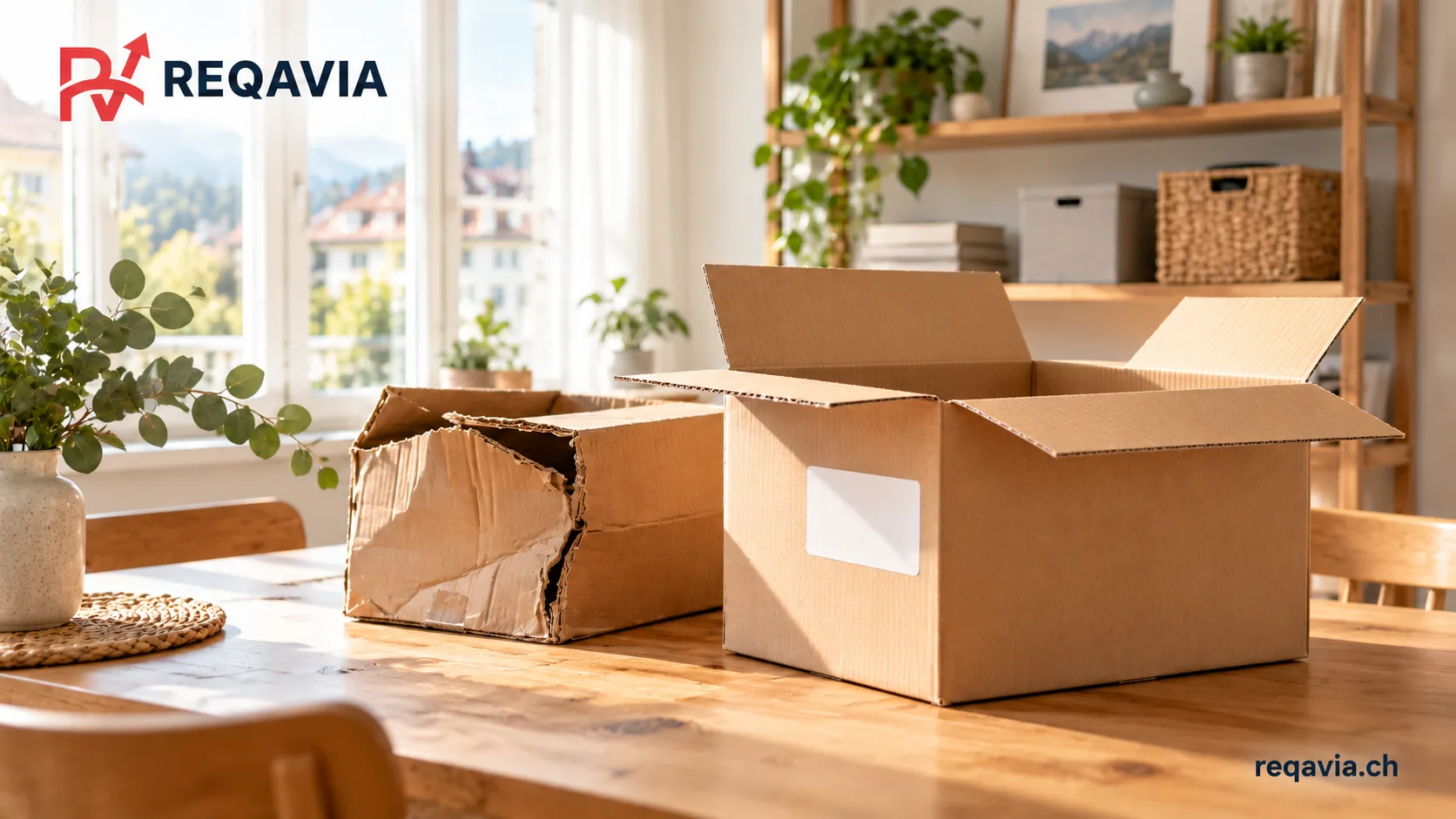
Free moving boxes are useful only if they are suitable for the next job. A box that carried clothes once is not automatically ready for books or several months in storage. Inspect the empty boxes before accepting the whole collection, and keep questionable ones out of the packing area until you have decided whether to replace them.
Start with the box, not its old label
Ask what the boxes previously contained and where they have been kept. Then look at the base, corners, handholds, closure and overall shape. Separate anything damp, dirty, distorted or visibly weakened. A description such as “used once” does not tell you its current condition, and a photograph cannot show every damaged fold.
Suva’s workplace prevention guidance calls for intact containers, respect for load limits and no reuse of single-use containers. Check any available identification or instructions. If you cannot establish that a box is appropriate for reuse and the intended contents, ask the company about a suitable replacement rather than improvising a load test.
Allocate contents before filling
Make a simple list of usable box sizes and the groups they could hold. Do not fill the largest box with all your heavy belongings simply to reduce the number of packages. Tell the handling company about dense contents and ask what packaging and division they require; do not invent a weight limit from the box’s dimensions.
Fragile objects, collections and items with particular preservation needs may need purpose-suited packaging. Keep these out of the ordinary-box count until the packing method is settled. More adhesive tape should not be treated as proof that a weakened base or torn handhold has regained its original performance.
Replace the previous instructions
Remove or obscure old addresses and room labels while respecting the previous owner’s privacy. Check every side: a large old destination can remain more noticeable than a small new label. Use one current inventory number and a short description such as “winter textiles”, with the destination or storage group clearly identified.
Keep detailed personal information in your own inventory. If you change contents while packing, update the record immediately. When replacing a box, transfer its identity or record the connection between old and new numbers; otherwise an apparent missing box may simply be one that was repacked.
Plan inspection and retrieval
Decide which boxes you may need during storage before the company arranges the load. Ask how those groups will remain accessible and whether containers need to meet particular site requirements. An attractive stack in a room at home does not establish that the same arrangement suits the storage location.
During access visits agreed with the provider, notice changes in packaging or the surroundings and report concerns. Do not assume a box will remain suitable regardless of storage conditions. If a box is deteriorating, discuss safe repacking and handling before trying to retrieve its contents from an awkward position.
Describe the packaging in your request
For a storage request through REQAVIA, state that some boxes have been used before. Give the confirmed count, external dimensions, general contents, intended duration and access needs. Identify what is already packed and what still requires assessment, replacement containers or packing assistance.
Ask the company to specify which materials and preparation are included in its offer, and settle replacements before collection day. Photos can be shared privately and directly with the company during coordination; describe the essentials in the request text. REQAVIA is an intermediary. The storage arrangement, price and execution are agreed directly with the company.