
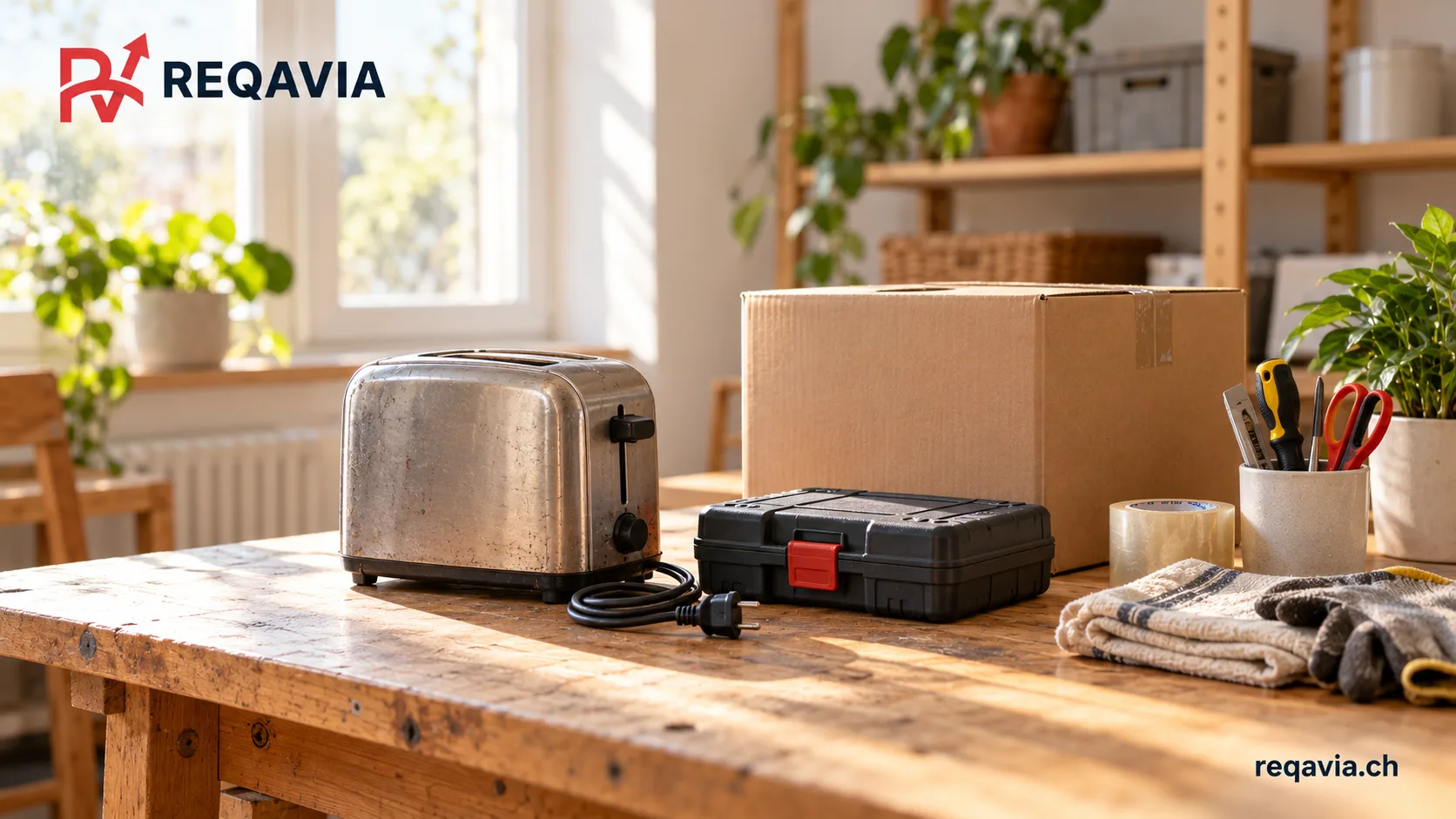
If you find an appliance or tool that has not been used for years, do not advertise it as working on the strength of memory or appearance. Separate three things: what you know, what remains unverified and what needs competent assessment. Decide whether there is time to resolve those questions before the clearance. A possible sale should not turn into an unsafe demonstration or an indefinite reason to keep everything.
Create an honest item record
Record the make and model if they can be read without opening or dismantling the item. List the accessories, visible defects and the last use you can actually recall. Distinguish “last used successfully then” from “checked and working now”. If another person supplied the information, record that rather than presenting it as your own observation.
Use current photographs showing the actual object and relevant defects. Do not use a picture of a new version as a substitute. Keep serial details and personal information out of unnecessary circulation. Before arranging a sale or collection, clarify who owns the item and who may approve its transfer. Finding something in a shared cellar is not a sufficient practical basis for deciding its destination yourself.
Do not turn a buyer's visit into a test
If the condition is doubtful, leave the item out of use while arranging suitable advice. Do not power up damaged or unfamiliar equipment simply to show that a light comes on. Electrical equipment, pressurised devices and products with a protective function may require a relevant specialist. This article offers no repair or testing procedure; the question is who can assess the particular item properly.
Keep the instructions you already have available for that assessment, together with the model information and known history. Ask what the assessor will examine and how they will describe the result. A superficial observation should not be presented as a complete condition report. If safe assessment is unavailable before collection, leave the readiness question unresolved rather than guessing.
Check official safety information
The [Federal Consumer Affairs Bureau](https://www.konsum.admin.ch/de/recallswiss) describes RecallSwiss as the official web service for recalls and public safety warnings published with Swiss market-surveillance authorities. Use the exact product identity when checking relevant notices. If you find a matching warning, follow the stated instructions and resolve the issue before proposing ordinary reuse.
Not finding a notice does not establish that this individual item is safe or functional. Nor does wording such as “untested” answer an unresolved safety concern. Keep the item separate if you cannot determine an appropriate next step. For uncertainty about a safety-sensitive product, ask the competent authority or a suitably qualified specialist instead of relying on a prospective recipient's enthusiasm.
Choose a route that fits the deadline
Compare the time needed for assessment, possible repair and finding a recipient with the date the room must be clear. Set a decision date before the company's visit. If reuse is appropriate, agree a realistic collection arrangement and identify the accessories that must stay with the item. Do not promise immediate use beyond what has actually been established.
Prepare an alternative if no suitable recipient is confirmed. Ask the clearance company or the competent local collection service how that type of item should be handled, stating its actual condition. Do not assume it belongs in an ordinary mixed load. Update the inventory when the route is decided, and distinguish items remaining for assessment from those approved for collection.
Request the clearance accurately
In your REQAVIA text request, describe the devices, dimensions, access and unresolved condition questions. Ask which items the company can assess for its handling scope and which need a separate route. REQAVIA acts as an intermediary; the company directly agrees the work, price and collection arrangements with you.