
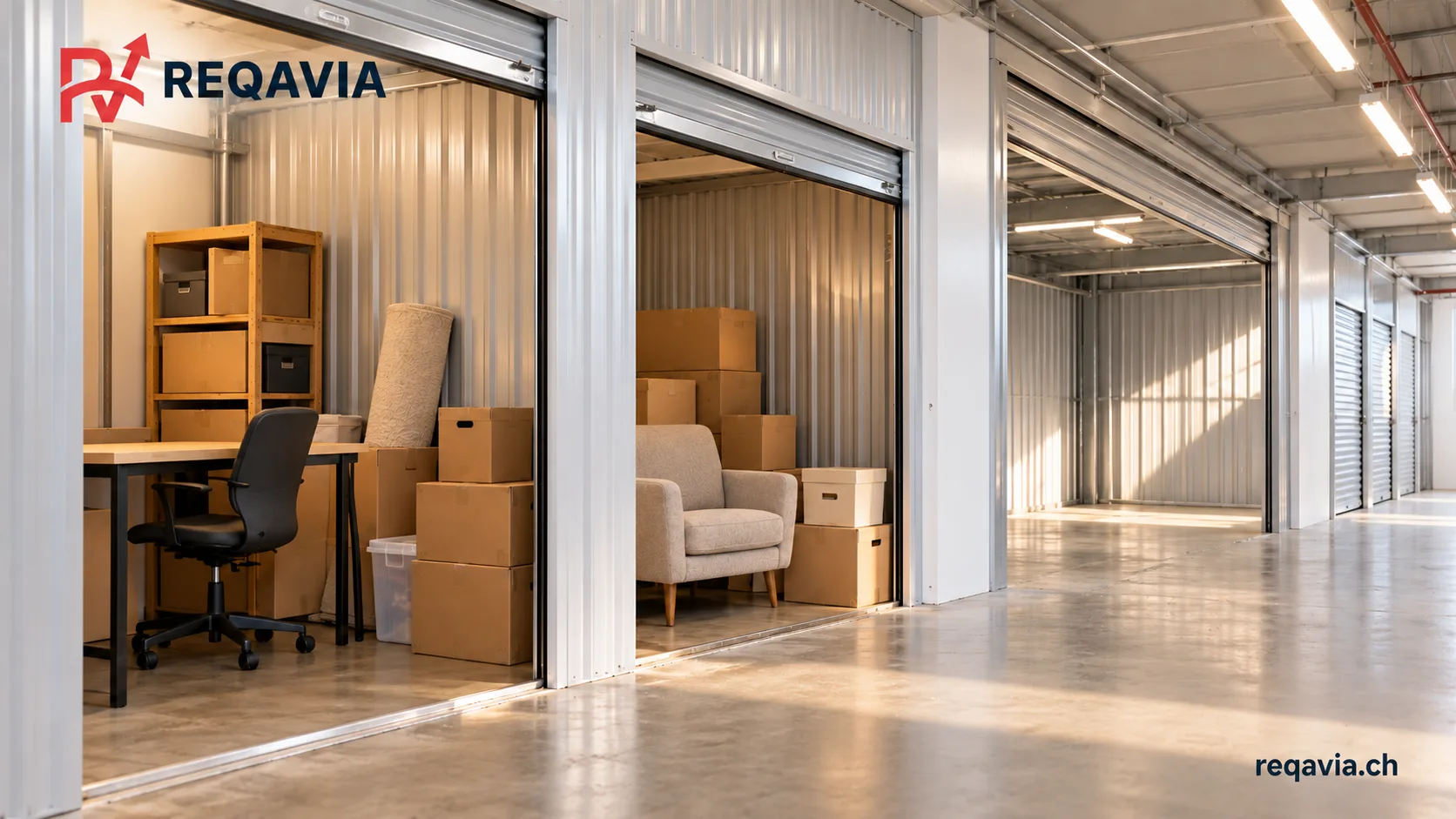
Two smaller storage units are useful only if your belongings can be divided sensibly between them. Adding their advertised floor areas does not show whether a long sofa fits, whether the doors allow access or how many visits retrieval will require. Compare a real allocation of your belongings and a likely collection trip before accepting either option.
Start with the objects that constrain the choice
Make a short list of items whose shape is difficult to change: long furniture, tall cabinets, large panels and objects you do not intend to dismantle. Record their dimensions in the form in which they will be stored. Keep related parts together in your planning, including a bed and its base or a table and its extension leaves. Do not count an item as dismantled until that work has been agreed.
Ask for the usable internal length, width and height of each proposed unit. Also ask about the door opening, thresholds, columns or other obstructions. An area figure alone does not establish the length of a wall. If access is uncertain, ask the company responsible for handling the furniture to assess the route before the move.
Draw two usable arrangements
Sketch the contents in the single-unit option, then repeat the exercise for the two-unit option. Include room to reach items you expect to collect. A sketch helps reveal problems but does not certify that the furniture can be carried or stacked as shown. Have uncertain handling arrangements checked by the company.
Try a division that serves a purpose: items needed soon in one unit and longer-term belongings in the other, or separate owners with clear inventories. Splitting the components of every piece across both units merely to fill gaps makes later checking harder. If neither layout gives a sensible home to the largest pieces, ask about a different unit or location.
Rehearse a retrieval you will actually make
Choose one likely task, such as collecting the guest bed and its bedding. Write down which unit contains each part, what must be moved first and who will have access. Then consider an unexpected request for one box. This shows whether a neat-looking division remains practical after the first visit.
Check the route to both units: same floor or different floors, lift arrangements, loading point and walking distance. Ask whether the same access arrangements apply to each, including the people authorised to enter. Do not assume two doors in the same building mean identical access hours or handling support. Keep belongings inside the agreed spaces rather than using the corridor as a temporary third unit.
Compare the complete arrangement
Request a written breakdown for the expected storage period. Compare each unit’s charge together with any agreed transport, handling, access or other quoted services. Ask which items are charged separately and what happens if your planned duration changes. Review the start, end and termination arrangements for each unit; do not assume both can be reduced or ended together.
For two units, decide where future additions will go. Use distinct unit codes in the inventory, with every container and furniture group assigned to one. Update the record when anything changes location, before leaving the site. Keep the inventory accessible outside the stored collection.
Explain why you need the space
In your request, describe the main furniture dimensions, box count, expected duration and how often you need particular belongings. State whether separation by owner or retrieval date matters. Ask the company to compare a workable two-unit arrangement with a single larger unit on that basis.
REQAVIA lets you submit this storage need as a text description. It acts as an intermediary; the company agrees the price, access, handling and execution directly with you. If a sketch or photographs help assess the layout, share them directly and privately during coordination, rather than treating them as an upload requirement in the request form.