
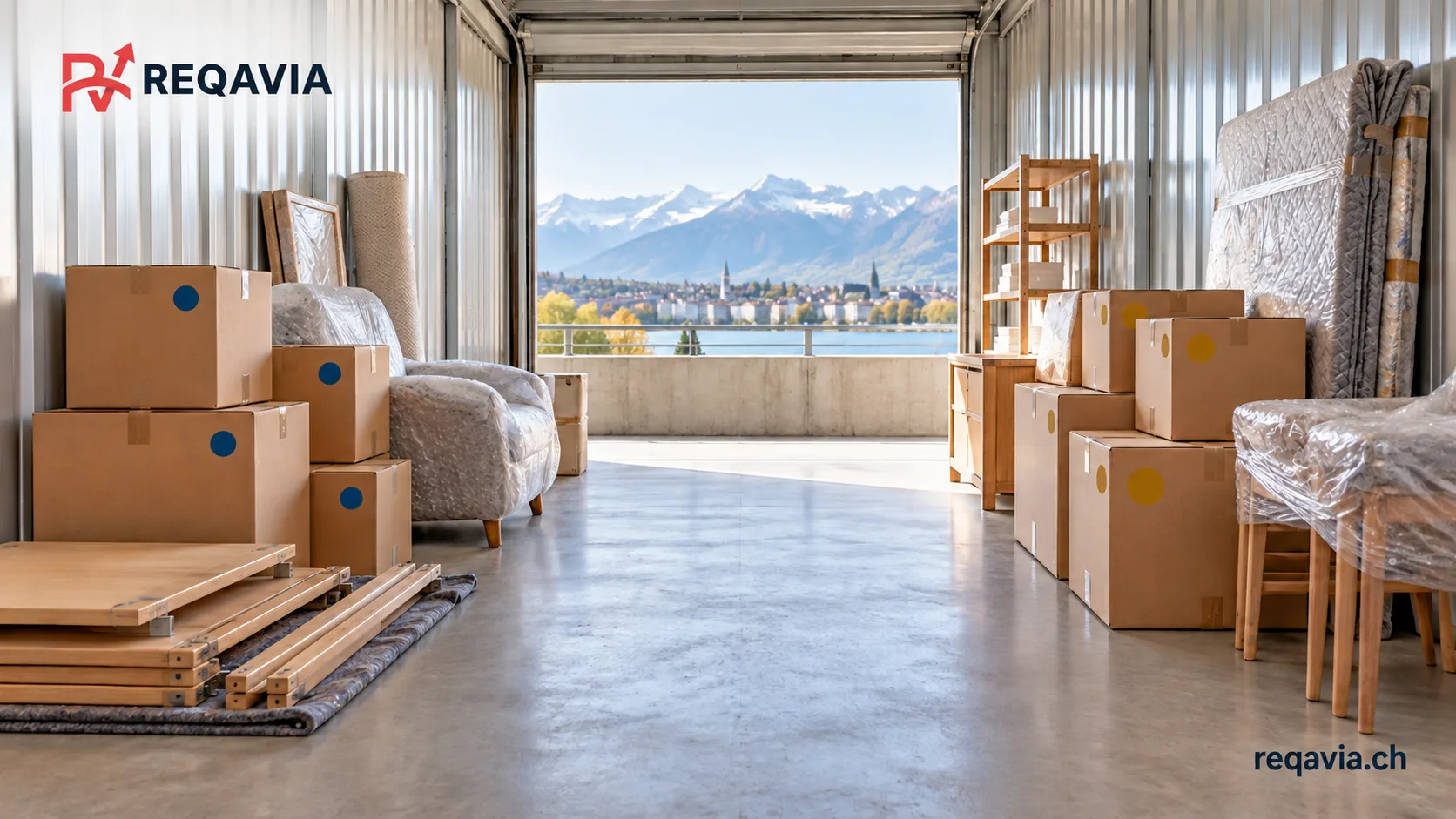
When furniture and boxes from two addresses are going into the same storage space, identify each load before collection. Prepare one inventory with two distinct sets of references and agree both handovers with the transport company. This lets you check what actually reaches storage and retrieve belongings separately later, without relying on memory or the position of a box.
Establish which belongings belong together
Record each item’s origin, owner and the person who can approve its collection and later release. Keep both households’ permissions separately recorded. Also identify belongings that must stay at each address, even when they resemble items being collected. An instruction such as “everything in this corner” is not sufficient. Resolve uncertainties with the people concerned before loading.
- Give the collection points short codes, such as A and B. Number packages in separate series, for example A-001 and B-001, without reusing an identifier.
- Record a brief contents description, the relevant person, visible existing damage and the intended storage area for each number. Keep confidential details off the outside of boxes.
- Mark detached parts and accessories with the furniture item’s reference. Note, for example, which box contains the table legs and fittings.
- Use the same references on the company’s list. Colours can help, but should not be the only way to distinguish the loads.
Plan both collections as one operation
Make a separate access sheet for each address: floor, lift and usable dimensions, stairs, narrow doorways, the route from vehicle to entrance and available time windows. Large pieces need dimensions in their transport configuration; a property’s room count cannot replace this information. Arrange an advance assessment where access is uncertain or an item is unusually heavy or delicate.
Appoint an available contact at each location. Decide who can approve changes and whom the company should inform first about a delay. Agree the order of stops with the company instead of choosing it solely by distance. Loading order, access times and the eventual arrangement in storage can also affect the plan.
Suva’s prevention guidance recommends matching handling aids to the load and working situation. Ask the company to assess the requirements of both collection routes.
Suva: handling aids suited to the task
Plan for later retrieval
Decide whether the storage arrangement should follow the items’ origin or how often you need them. Keeping A and B separate helps when each load will leave independently. If you will regularly retrieve belongings from both loads, a shared accessible section may be more useful. Still retain the link between every package and its original group in the inventory.
Sketch the storage sections and the intended access route. Ask the storage provider which arrangements and markings are permitted, and whether partial retrieval needs advance notice. Do not plan access that would require you to shift heavy or unstable stacks yourself.
Count separately at every handover
At each collection address, compare the packages handed over against that location’s list. Once everything is stored, reconcile both loads again and record their actual positions. If a planned item stays behind, record where it remains. For an item you cannot find, note its identifier and last confirmed handover point before deciding the next steps.
A common mistake is for both households to label boxes only “kitchen”, then create a combined inventory at the store. Information about origin may already be missing. Have last-minute additions confirmed before loading as well, and update both lists together.
Give the company a usable request
Describe both collection locations, package numbers and types at each one, large furniture with dimensions, the storage destination and proposed time windows. State the separate tracking required and identify anything needed soon. Ask for time allowances at each stop, waiting charges, additional handling and changes to scope. Confirm how delays would affect the agreed storage arrival window.
You can describe this transport and storage request in text through REQAVIA. Share any necessary photographs privately and directly with the company during coordination. REQAVIA is an intermediary; you agree the service, price and execution directly with the company. Keep photographs from each address separate.