
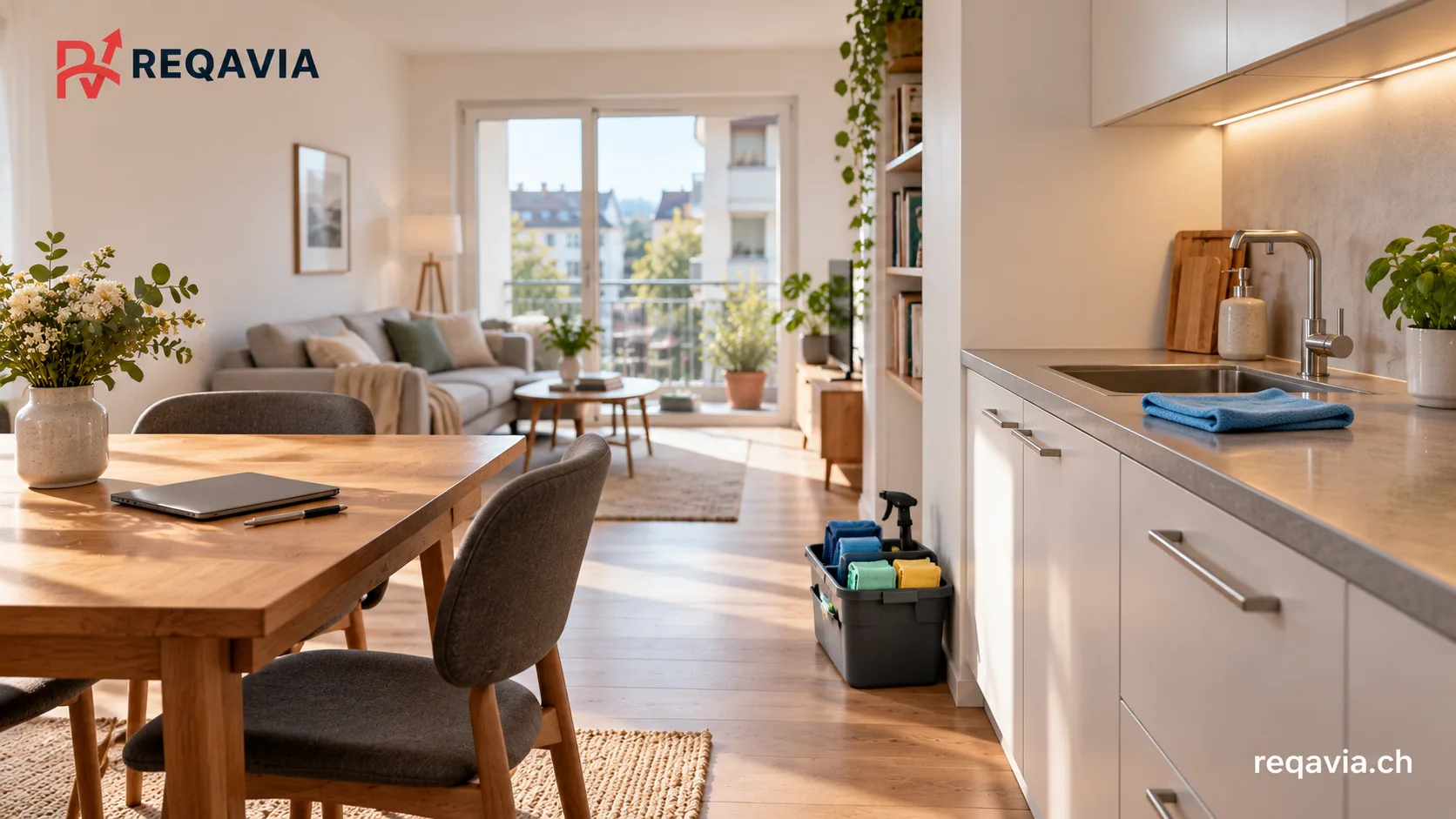
A trial cleaning visit is useful when it resembles the work you will need regularly. A neglected oven or an unusually spotless home tells you little about routine upkeep. Choose a manageable set of normal tasks, agree how the visit will be charged and review both the result and the way the company handles your home.
Choose work that represents your normal week
Include the areas that matter most in the intended routine: for example, a used bathroom, kitchen surfaces and the floors of occupied rooms. Describe their usual condition, household activity and pets. Do the tidying you realistically expect to maintain before future visits; record anything unusually demanding that day rather than treating it as normal.
Separate one-off work from recurring tasks. If the property needs an initial deep clean, ask for its own scope and price. Do not expect a short trial to resolve accumulated work and still provide a fair measure of an ordinary visit. Agree priorities if the available time will not cover every requested task.
Define what you will inspect
Provide the room count, approximate areas, floor materials and accessible surfaces. Specify included items and exclusions: cupboard interiors, appliances, windows, balconies or moving furniture should not remain assumptions. Point out delicate finishes and existing damage. Ask who supplies products and equipment, and mention any products you do not want used.
Agree observable outcomes for the listed tasks: which accessible surfaces will be cleaned and which areas will remain untouched. If a mark may require specialist treatment or repair, ask for an assessment before adding it to the routine. Do not use fragrance as a substitute for inspecting the agreed surfaces.
Clarify the price and record the time
SECO's [information on price disclosure](https://www.seco.admin.ch/de/preisbekanntgabe) identifies clear, comparable prices as its objective. For this trial, request a written description of the charging basis and included work so that you can compare offers covering the same tasks.
Ask whether charging is per visit or labour hour, how team size affects billing, and whether travel, materials or other additions are included. Establish who can approve extra work and its cost before it starts. Do not assume the trial is free or that its price automatically becomes the recurring rate.
Record arrival and departure, the number of people working, and any time spent introducing the home or preparing equipment. Separate tasks added during the visit from the original list. Ask what would differ on a repeat visit; elapsed time alone does not explain the amount of work performed.
Observe care and safe decisions
The [BFU cleaning guidance](https://www.bfu.ch/de/ratgeber/putzen) warns against rushing and unsuitable equipment. Allow adequate time; do not pressure the team to improvise access to a high or difficult surface. A pause to clarify an unfamiliar material can be a useful sign of care.
Suva's [cleaning safety checklist](https://www.suva.ch/de-ch/download/checklisten/stopp-den-stolper--und-sturzunfaellen-beim-reinigen-von-gebaeuden/stopp-den-stolper--und-sturzunfaellen-beim-reinigen-von-gebaeuden--67189.d) highlights local hazard assessment, briefing workers about the site and tasks, adequate lighting and marking wet floors. Discuss access and hazards before work begins, including where household members and pets will be while the floor is wet.
Notice whether the team respects excluded areas, asks before moving belongings and reports a problem. If a surface reacts unexpectedly or access is unsuitable, agree a pause and reassessment instead of demanding completion by any method.
Turn observations into a reviewable decision
Walk through the agreed areas and record specific results, omissions and questions. Give the company a chance to explain what happened and how any adjustment would be handled. One visit cannot establish long-term consistency, but it can reveal whether expectations and communication are compatible.
If continuing, agree an initial frequency, priorities, access arrangements and how changes, additional tasks, missed visits and cancellations are handled under the company's terms. Keep any one-off clean separate from this programme.
In your REQAVIA cleaning request, describe the trial areas, usual condition, exclusions, preferred timing and possible recurring needs. The form uses a text description; any useful photos can be shared privately with the company later. REQAVIA is an intermediary: the agreement, prices and cleaning are arranged directly with that company.