
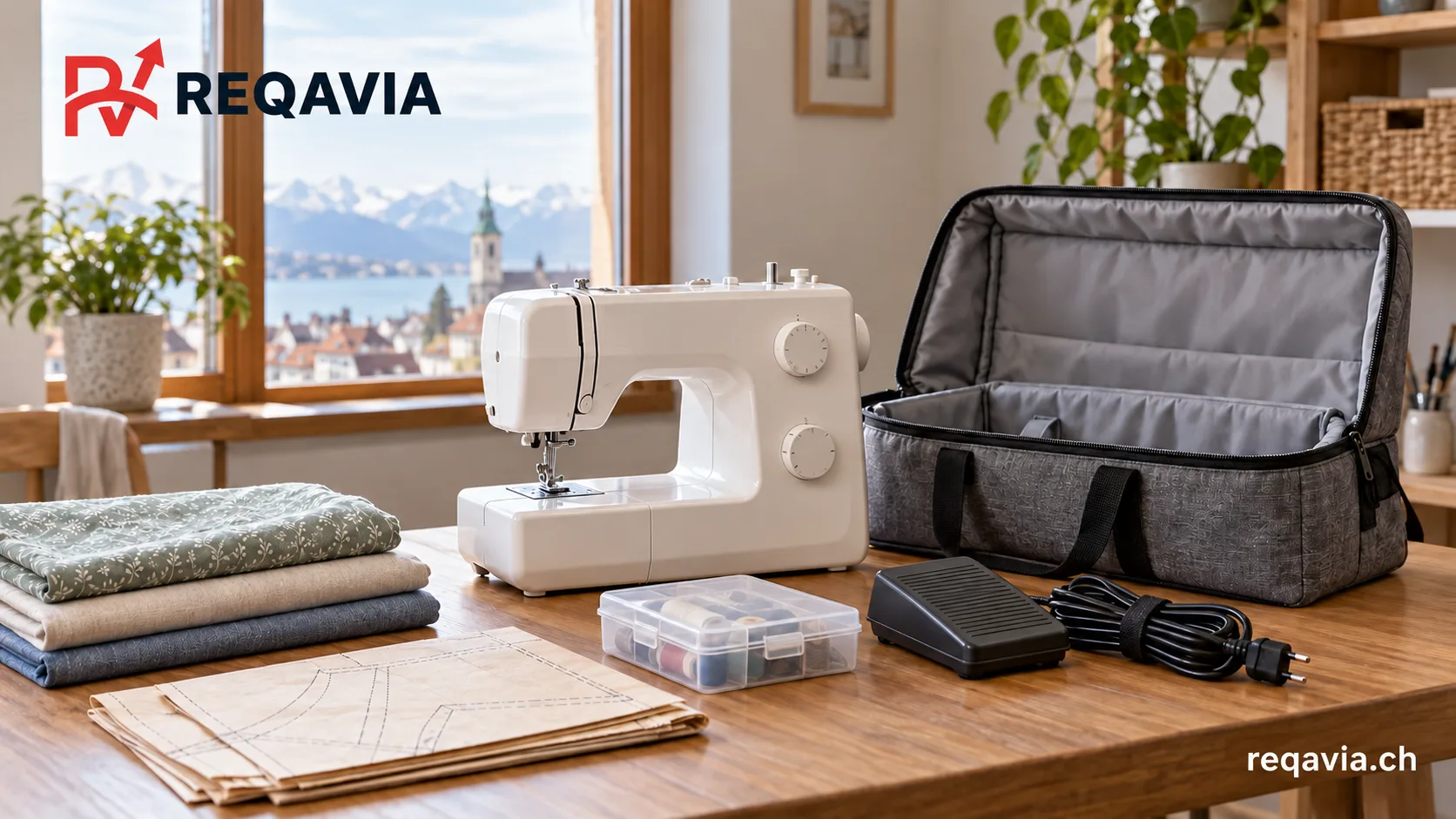
If your sewing machine will spend several months in storage, start by recording the complete set. The machine, foot control, power supply and unfinished sewing project need a shared identity, even when packed separately. The aim is to retrieve the right parts and know what needs checking before you sew again, rather than simply move the machine off a table.
1. Make a record for the machine
Write down its model, available packaging, known defects and the date of its last normal use. Read a model plate only if it is safely accessible; do not tip a heavy machine just to take a photograph. Mark the model as unconfirmed if necessary. Specify whether it is a portable appliance or a machine fitted into a table.
Photograph the visible condition and the related parts before packing. This provides a useful comparison at collection, but does not establish the cause of a later fault. Distinguish what was actually checked from what remains untested. A machine unused for a long time should not be described as fully operational without checking.
2. Give accessories an unambiguous identity
List the foot control, power supply, cables, extension table, presser feet, bobbins and other model-specific parts. Give every package the same machine identifier and its own package number. Describe the contents instead of writing only “sewing things”. If you own several machines, do not assume similar-looking accessories are interchangeable when you unpack.
Put needles, scissors and pointed tools in suitable closed containers, with no loose points inside bags where someone might reach in. List maintenance products and aerosols separately and ask the storage company whether they are accepted. The Federal Office of Public Health recommends keeping chemicals in their original containers, out of children’s reach. Do not decant them into unlabelled small containers.
3. Check the packing and the space
Measure the length, width and height of the packed machine and the additional containers. Give a weight only if you know it or have reliable documentation. Ask who prepares the packaging and how the appliance will be protected against movement and pressure. Having a carrying bag does not, by itself, establish that the storage room or handling arrangements are suitable.
Consult your own machine manual for the preparations and storage conditions applying to that model. Do not apply a generic oiling, cleaning or dismantling routine intended for another appliance. Damaged cables, uncertain operation or a machine fixed into furniture need assessment by someone qualified. Resolve those questions before the collection date.
4. Leave unfinished work understandable
Keep the pattern, cut fabric and associated instructions together as a separate project group. Write down the completed stage, anything missing and the next operation you intended to perform. A photograph of the last assembly can be more helpful than a general picture of a fabric box. Keep these notes accessible without unpacking the machine.
Sort fabric reserves by an intended use. When comparing storage offers, consider the conditions for the appliance, access to your project boxes, the expected duration and the retrieval arrangements. If you may need materials during the break, position them so that the machine does not need repeated moving. Separate confirmed services from matters the company still needs to assess.
5. Write a useful storage request
In your text-based storage request through REQAVIA, describe the model, accessories, packed dimensions, location and expected duration. Explicitly mention collection, packing assistance or later access to individual items if needed. Photographs can be shared directly and privately with the company during coordination; the request form is for a written description.
REQAVIA is an intermediary platform: you agree the services, price and execution directly with the company. At retrieval, compare the package list and visible condition with your record. Have unusual changes assessed before using the machine again. These details let you request storage suited to the complete sewing set.
Federal Office of Public Health: safe chemical storage (German page)