
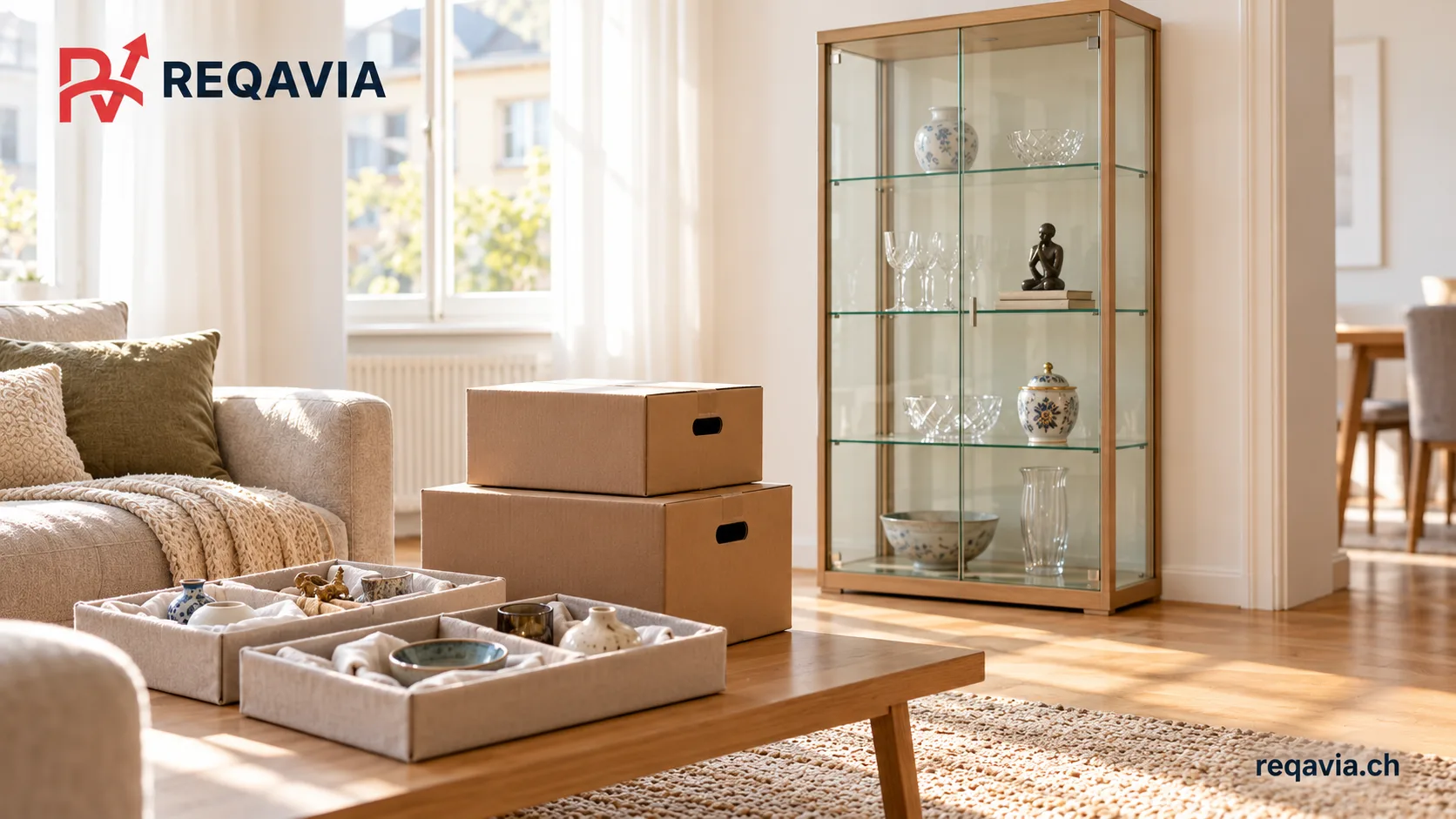
Treat a glass display cabinet and the things inside it as two connected storage tasks. Listing only “one cabinet” leaves unanswered who packs the keepsakes, how glass components are handled and whether you can retrieve one object while the furniture stays in storage. Start with two linked inventories before asking the company to assess the work.
Record the collection before emptying the cabinet
Photograph the arrangement privately if it will help you put things back. Then group the contents in a way you understand: a tea set, family ornaments or a collection kept together. Give each group a code and list its components at a useful level of detail. You do not need to disclose the personal story behind every object in a service request.
Mark objects that you will take with you, those needed during storage and those that can remain packed until the cabinet returns. Decide who will pack each group. If you want the company to pack fragile objects, ask it to assess and accept that work explicitly; acceptance of the furniture does not establish acceptance of every item it contains.
Create a separate record for the furniture
Record the cabinet’s height, width and depth, its known model or construction and the access route. List glass doors, shelves, removable components, keys, fittings and any lighting. Link these entries to the cabinet’s own code rather than mixing them with the contents inventory.
Describe existing cracks, loose parts or uncertain fixings before handling is planned. Consult the instructions you already hold where available, but do not decide that a shelf is removable merely because it appears separate. If the design, condition or wall attachment is unclear, arrange an appropriate assessment. Any work on fixed electrical connections also needs separate clarification; do not quietly include it in a furniture-carrying task.
Agree preparation before anyone starts
Ask who empties the cabinet, who prepares permitted components, who packs each fragile group and who supplies the agreed protection. The handling method should reflect the actual cabinet and its condition. A closed cabinet door is not a plan for transporting loose contents inside it. Do not instruct the crew to leave objects on shelves simply to avoid packing them.
Keep the preparation list specific enough to check. If dismantling or reassembly is offered, clarify which elements it covers and what information or parts must be available. Do not hide a crack under wrapping or improvise a repair to make collection easier. Particularly fragile or valuable objects may need a suitable specialist’s assessment before a storage arrangement is accepted.
Preserve the option of a partial retrieval
Assign a separate code to each packed contents group and record its storage position. Keep the detailed inventory, keys needed for access and reassembly information available outside inaccessible wrapping. Give the company clear instructions about which contents must remain reachable; do not assume the cabinet and all its boxes can be placed at the back of the unit.
Ask the storage operator how it proposes to accommodate the cabinet and fragile parts. Do not designate glass components as a support for other boxes. Confirm any handling limits and request the relevant terms for responsibility and cover where value matters. Do not infer identical arrangements for the furniture and its contents from a single line in a quotation.
Check both records at handover
At collection, reconcile the cabinet record and the contents list separately. Note exclusions, existing condition observations and any item still awaiting preparation. On return, check the associated parts before the reassembly appointment and check each contents group before replacing it in the cabinet. An empty space on a shelf should not be the first indication that a box was never included.
In a REQAVIA text request, describe the cabinet’s dimensions, glass components, known condition, contents groups, access and packing help required. REQAVIA acts as an intermediary; price, scope and execution are agreed directly with the company. Share any helpful photographs privately and directly with that company during coordination.