
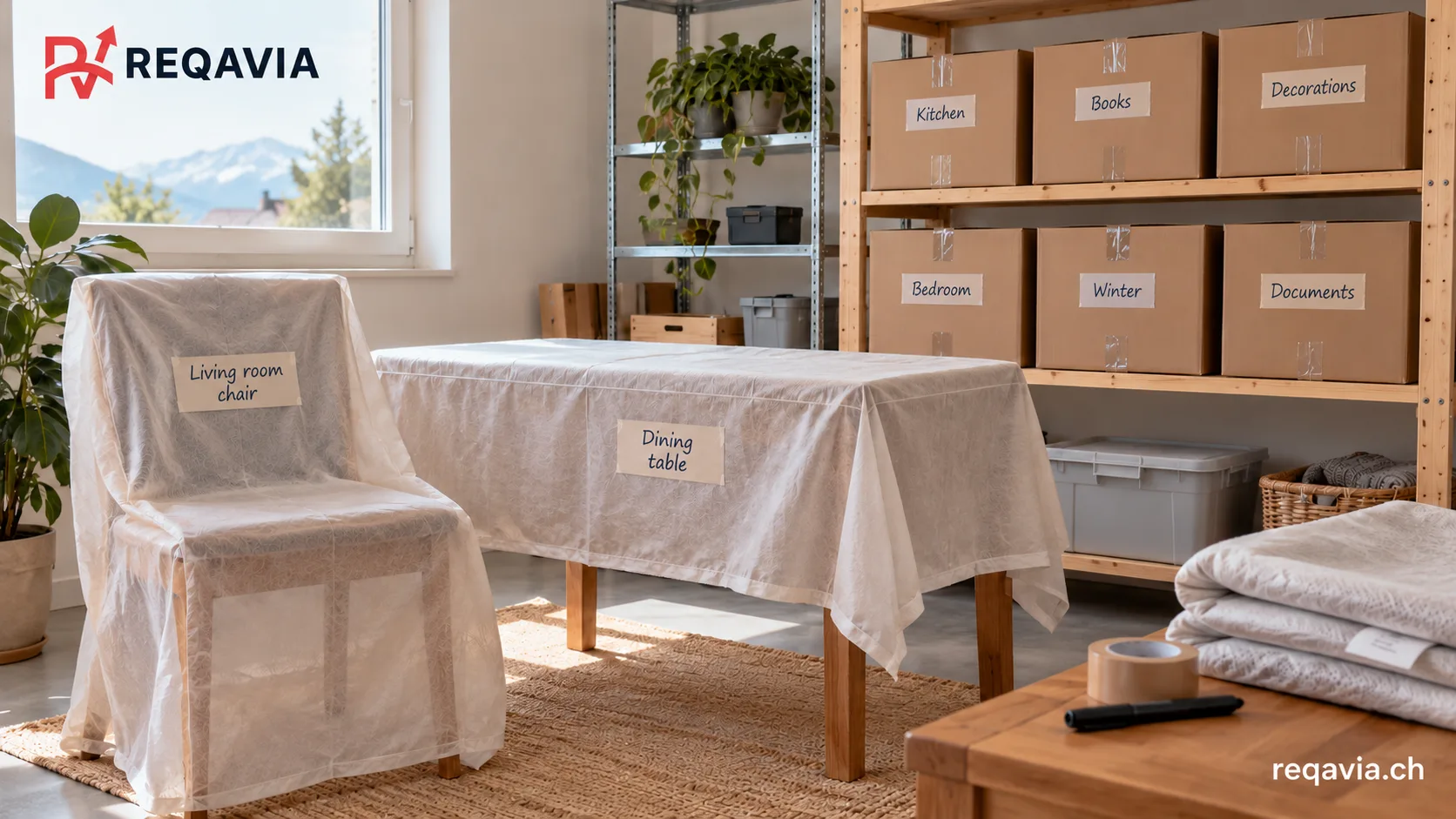
If renovation moves from room to room, furniture may end up being shifted around the home every day. Before renting storage, ask the person managing the work to explain the stages: which rooms will close, what needs complete clearance and when furniture can actually return. The end of painting does not always mean a room can immediately receive everything. Ask for the instructions applying to the product and completed work.
Separate belongings by their role
Some items block access to walls, some need protection from dust and others are needed daily. Keep essential clothing and utensils in a defined living area outside the work. For furniture you will not need throughout the project, compare taking it out and bringing it back with repeated movement in a cramped home. Staying on site is not automatically cheaper once effort and disruption are included.
- Photograph each piece before moving, especially edges and easily scratched surfaces, and decide what will be dismantled.
- Arrange boxes by room and return stage. Kitchen equipment needed early should not sit behind furniture for the last room to be finished.
- Agree a provisional return date with clear scope for changes, and ask about extension or rebooking costs.
- Keep safe routes through the home. Do not use stairs or the exit as a waiting area for furniture or materials.
Do not bring everything back just because the date has arrived
One particularly frustrating mistake is a truck arriving while floors or walls still need time according to the work instructions. Confirm readiness with the contractor before fixing the return. Check that the carrying route is clean and clear of tools that could damage furniture or obstruct the team.
Conversely, do not automatically extend storage for the entire home because one room remains unfinished. Returning belongings in stages may suit you, provided you know the cost of access and partial loading. Arrange the store for that from the start: a good inventory can prevent dismantling a full unit just to find one bed.
Information for your request
State the type of work, affected rooms, largest pieces, expected period and whether you want one delivery or staged returns. You can describe your storage need through REQAVIA and seek painting separately if required. Agree each party's responsibilities directly, so you are not relying on coordination between mover and contractor that nobody has arranged.