
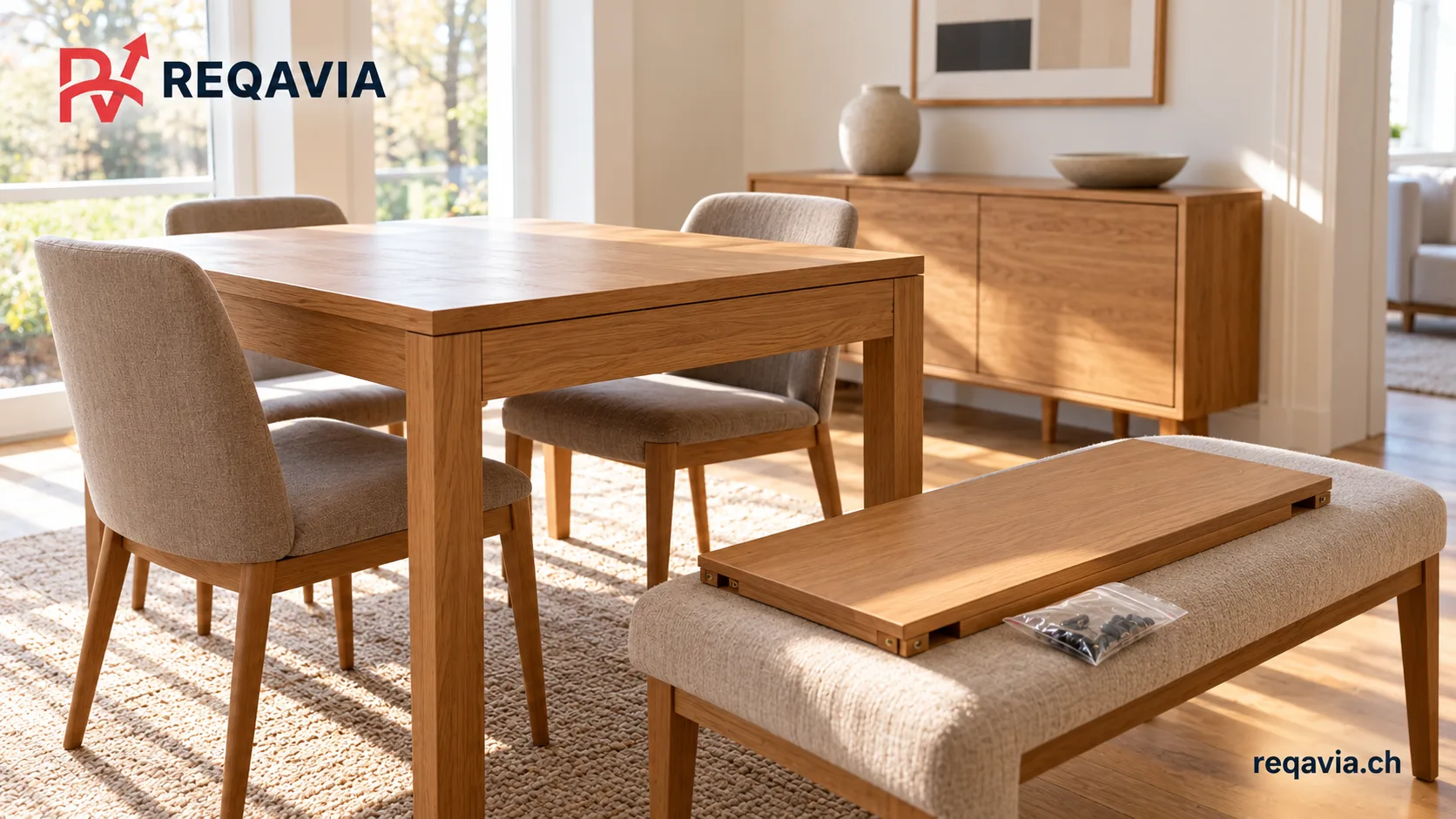
An extendable table can arrive safely in storage while the leaf that makes it useful is left in a cupboard at home. Before packing, treat the table, its extension leaves and its relevant fittings as one identified group. Locate all the parts first. A photograph of the table closed is not enough to describe what needs to be collected or returned.
Find the parts before booking the work
List the leaves you actually have and where each is kept. Some may be stored separately from the table, while others belong within its design. Record what you know without forcing a stuck mechanism to reveal hidden parts. If opening or preparation needs assistance, ask for that assessment as a distinct part of the job.
Look for instructions already in your possession and record the known model or identifying details. Compare any loose leaves with the table’s record rather than assuming that a similar finish proves they belong together. If a leaf’s identity is uncertain, mark it as uncertain and resolve the question before packing. Do not discard an apparently spare panel while that check is pending.
Record dimensions that answer different questions
Measure the table in its agreed transport or storage configuration. Record the dimensions and number of separately stored leaves and any other pieces the company will handle. Note known surface damage, missing fittings and the condition of the mechanism as you know it. Do not describe a mechanism as tested if it has not been checked.
If you are considering sale or reuse, also establish the extended dimensions where this can be done appropriately. The receiving room needs space for the table as intended to be used, not simply as it appears when closed. Give actual dimensions and included parts rather than promising seating for a particular number of people. If a leaf is missing, make that limitation clear.
Give a small component the same identity as the table
Use one group code for the table and a linked identifier for each leaf or fitting package. Put identifiers on suitable packaging or another agreed location that will not damage the finish. Record where each part is packed, especially if it cannot travel or be stored directly beside the main table.
Photographs taken privately before wrapping can help match the separate pieces later. Keep the written inventory accessible too. A label saying only “wood panel” can be mistaken for leftover renovation material; a linked table identifier tells the handling company why that piece matters. Avoid mixing fittings from several furniture items into one unidentified bag.
Agree handling without inventing a method
Ask the company how it proposes to protect the surfaces and edges for the actual material and condition. Do not use an extension leaf as a temporary shelf or a support for other boxes. Confirm whether dismantling, carrying, storage and reassembly are included, and who will check the accessories at each stage.
A jammed mechanism, damaged fitting or uncertain connection needs appropriate assessment before manipulation. Do not tell the crew to pull harder, remove an unknown part or substitute a fitting simply to finish loading. If specialist work or replacement parts are needed, identify who will arrange them and whether this changes the collection plan.
Decide whether storage supports a real use
Compare the space and layout of the future dining room with the table’s intended configuration. If you are unlikely to extend it there, consider why you want to retain the complete set and when that decision should be reviewed. Keeping the leaves together preserves the possibility of later use; it does not mean storage for an indefinite period is automatically worthwhile.
On retrieval or handover to another owner, reconcile all the parts before the occasion when the table is needed. Resolve any missing component before scheduling reassembly.
For a REQAVIA storage request, describe the table as extendable and include dimensions, leaf count, known condition, access and required preparation. The request uses text; helpful photographs can be shared privately with the company afterwards. REQAVIA is an intermediary. Prices, agreed work and execution remain directly between you and the company.