
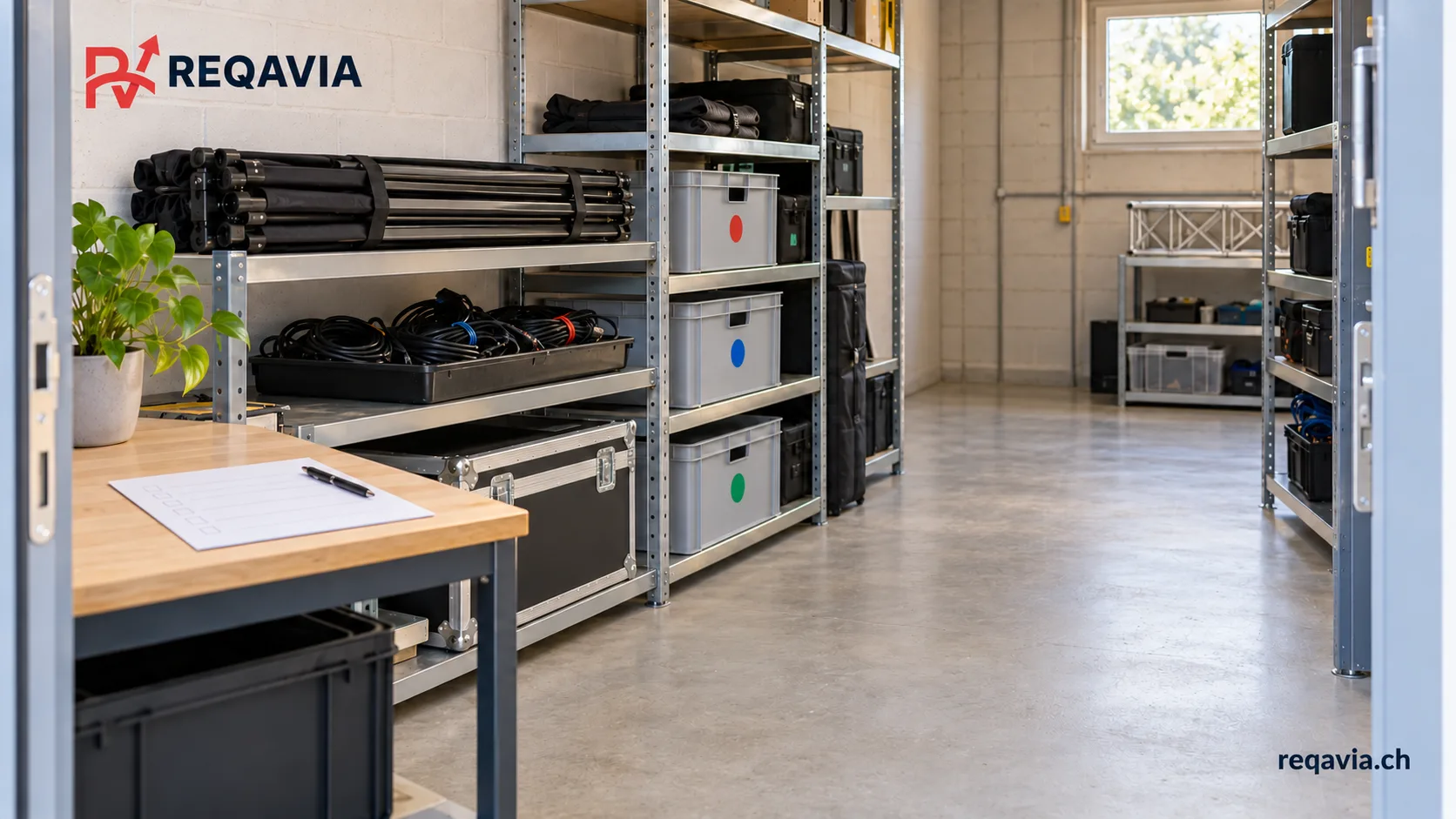
Another event is approaching, a stand is missing and nobody knows who has the cables. Shared storage helps only if checking equipment out and returning it also work. Start with a usable inventory, clear responsibilities and complete equipment kits. You can then decide what storage space and transport suit your club or association.
Establish ownership and permission to decide
Separate equipment owned by the club from personal loans and items hired for a particular event. A table left behind is not automatically a donation. For uncertain items, record who will clarify ownership. Appoint an inventory coordinator and a deputy. Also decide who can approve loans, buy replacements and authorise a permanent transfer or disposal. These responsibilities should be clear to a new volunteer, not dependent on one longstanding member’s memory.
Turn loose equipment into identifiable kits
- Group items by task, such as reception, presentations or setting up the room. Give each kit a distinct name and a fixed storage location. Its contents list should identify the individual components and their quantities.
- Record missing or visibly questionable components before marking a kit ready. Keep personally borrowed items identifiable even when they form part of a shared kit.
- At collection, record the kit, responsible person, event and agreed return. Add the actual return date and outstanding differences when it comes back. Keep personal contact details limited to what this arrangement needs.
- Separate returned equipment awaiting a check from equipment available to use. A simple register status is enough: a box put back on its shelf does not show that all its contents returned.
Choose storage around actual use
Note how often equipment is collected and whether this happens in the evening or at weekends. Ask separately about entry hours, staff availability, loading aids and lift access. Check whether assembling kits on site is permitted; storing equipment and preparing an event are different uses. Give frequently used kits an accessible position and leave the space needed for the agreed handling arrangements.
For large items, gather packed external dimensions, known weights and information about the entire route: clear door openings, narrow sections, the lift and loading area. Mark unknown details as unknown. Ask the relevant company to assess heavy, awkward or delicate equipment and any uncertain transport route. An inventory cannot replace that assessment.
Try a complete collection and return
Ask a volunteer who did not pack the equipment to find a kit through the register and prepare its collection. Can they identify what is missing and who may decide? Then work through the return. Correct confusing names immediately. State who can be reached when the coordinator is absent and how authorised people obtain access. Do not put access credentials on publicly visible box labels.
Before buying a replacement, check the last loan and temporary storage locations. Schedule a review after the season: what will be used again, what needs assessment and what may be passed on after approval? A transfer needs a confirmed recipient. Uncertain ownership remains an unresolved decision, rather than permission to clear the item away.
Give the company a usable brief
- Equipment groups, quantities, large individual items, known dimensions and condition; expected storage duration and collection frequency.
- Collection and storage addresses, access hours, floors, lift and proposed loading and unloading area.
- Authorised contact and deputy, together with the agreed way of recording the handover.
- Requested work: storage, transport or expressly approved disposal of specified items.
Describe these needs in the text of your REQAVIA request. REQAVIA is an intermediary; you agree prices, the contract, execution and changes directly with the company. If photographs are useful, share them directly and privately during coordination. Request storage and, where needed, transport for your club equipment once the inventory and responsibilities are clear.