
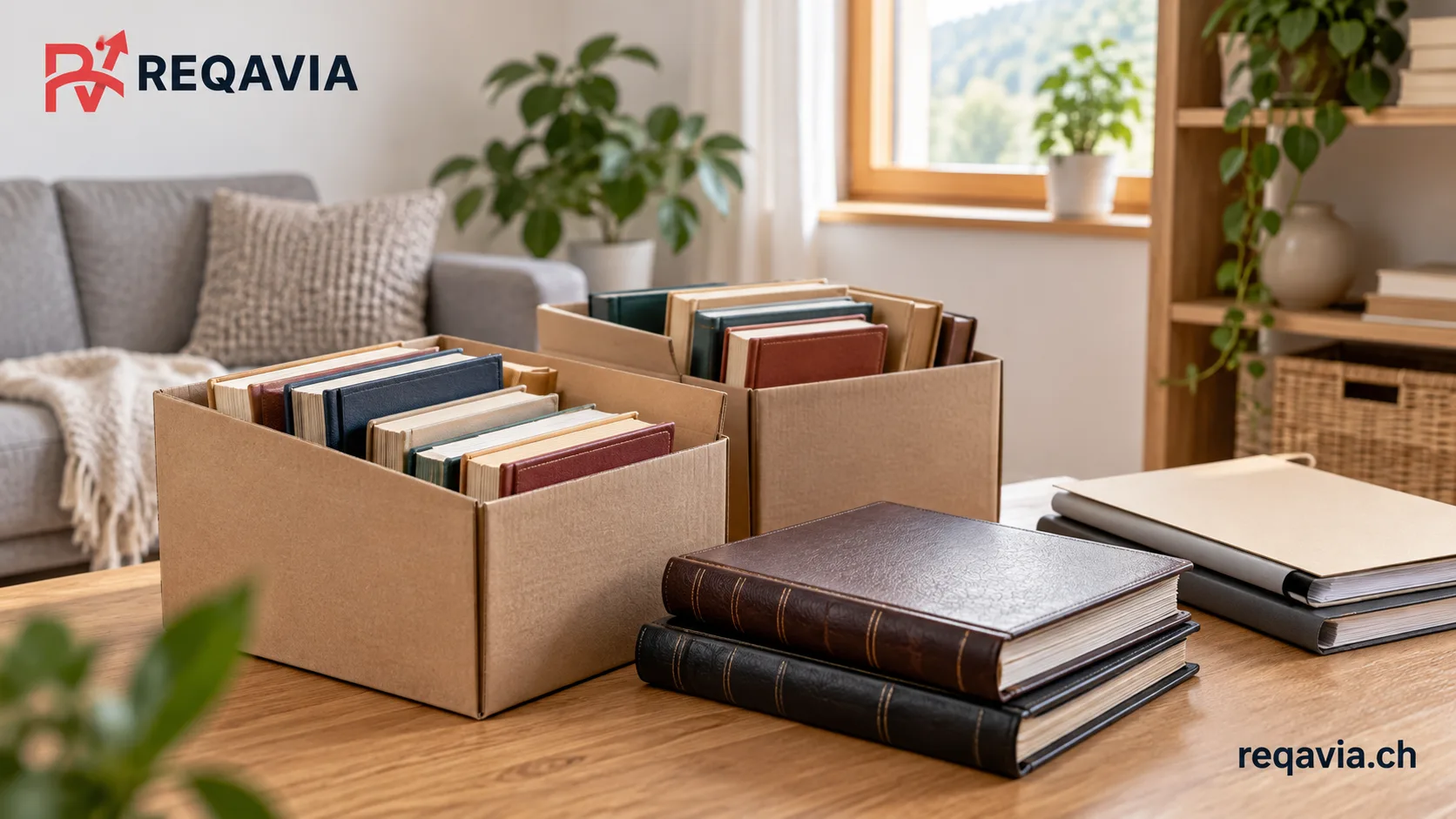
Replacing a table may be easier than recovering a unique family photograph or original document. Do not treat books and files as just more furniture boxes. Start with what must stay with you: identification, current contracts, papers needed soon and documents for managing the move. Prepare the remainder according to sensitivity and how often you will need it.
An inventory that protects access
- Separate documents into needed soon, archive and review before disposal. Do not infer legal retention periods from a general tip; they depend on the document and relevant organisation.
- Keep a simple index with box numbers and categories, without sensitive details on the outside. Store a copy outside the unit.
- Divide books among small, manageable boxes and check they can be moved safely before sealing. A box filled with paper can become heavy quickly.
- Keep reliable digital copies of important photos and documents where appropriate, and check that they open. A digital copy does not replace the original for every purpose.
The location is part of protection
Check damp, water marks and how containers are arranged, and ask the provider to explain storage conditions and incident procedures. Do not add apparently damp papers to sound material. If you find mould, seek suitable specialist guidance; a random cleaning product may damage paper rather than save it.
A common mistake is marking twenty boxes «books» and later needing one file among them. Keep boxes likely to be needed soon accessible and separate family photographs from papers easily obtained again. Think about who can enter the unit too, especially when files concern other people.
Before disposing of papers and devices
Do not put personal information into openly visible collection cardboard. Choose destruction appropriate to its sensitivity and check old devices and media before handing them over. Deleting a visible file is not always secure erasure. Fast clearance should not take priority over data left in a drawer or computer.
In a REQAVIA request, mention papers and photographs, container count and retrieval frequency without disclosing private contents in the description. If pictures would help estimate the volume, share photos of closed containers directly with the company during coordination. Discuss preservation and access directly with the company. Keep originals you will need soon with you so a simple errand does not become a search through storage.