
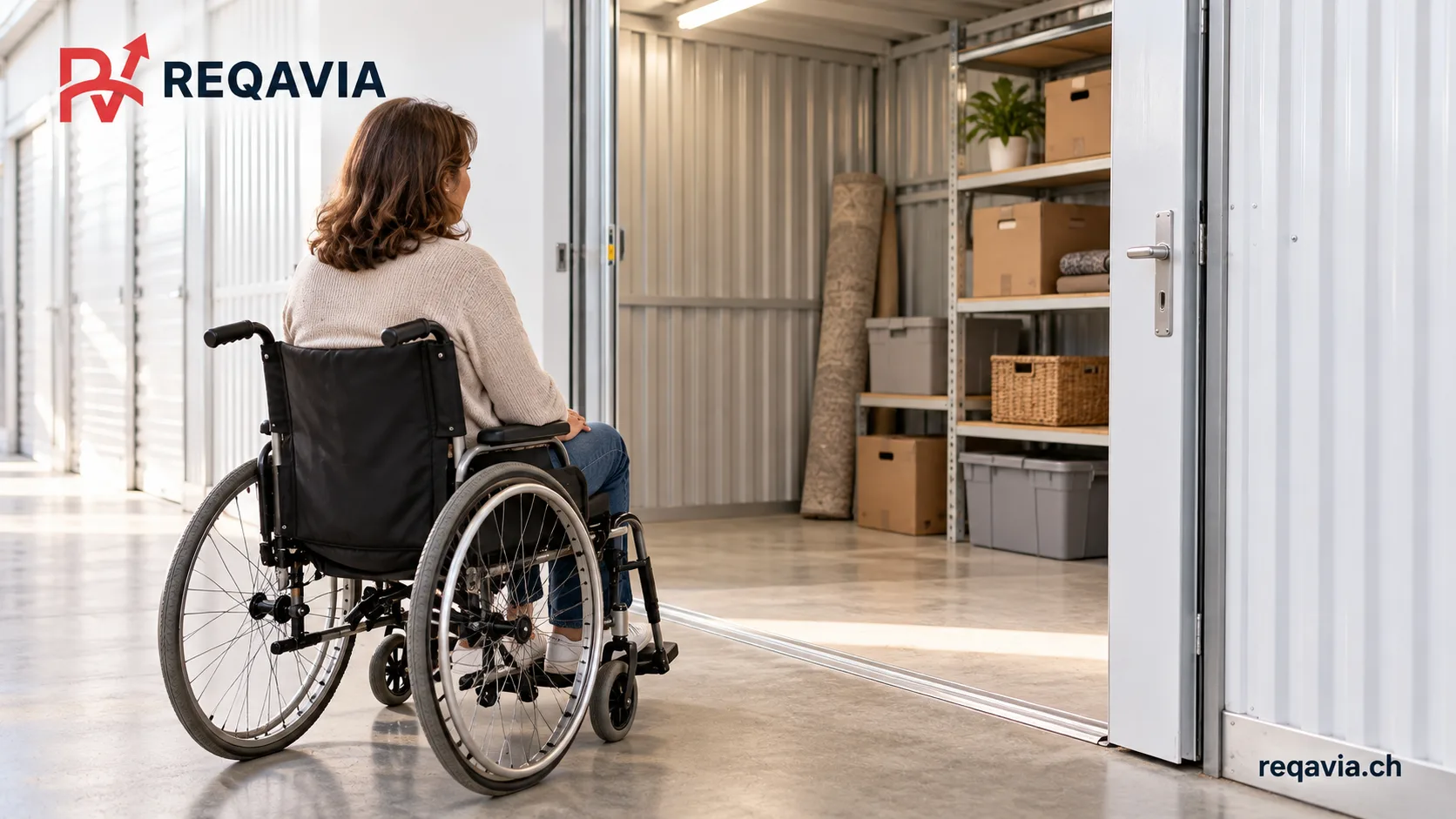
An easy-to-reach building entrance does not establish that you can use a storage unit with a wheelchair or walker. Check the complete route to the unit offered and access to an item you will need. Your way of moving, your mobility aid and the agreed support matter. Ask to see the specific space before relying on a general description such as “easy access”.
Turn your requirements into points you can check
Write down what you need in everyday use to pass through, turn, reach controls and open doors. Start with your actual movements and mobility aid rather than a universal dimension from a checklist. Consider a companion and belongings you may bring on a visit. You can explain these practical requirements without disclosing a diagnosis or unnecessary medical details.
Ask for confirmed information about the narrowest point, thresholds, door openings, lift and space outside the unit. Check the height and operation of the access reader, intercom and lock. Distinguish measured information from points still needing verification. A photograph gives an impression but does not replace a missing measurement.
Walk or wheel through a realistic visit
Arrange a viewing with the mobility aid you will use later. Check the route from your arrival point to the unit and back, within what you can do safely. Must you hold a door while moving something? Does unlocking require a position you find difficult? Can you reposition outside the doorway? Record difficulties rather than playing them down during the viewing.
Ask when access and assistance are actually available. Clarify what happens if the lift fails, an entry card stops working or an intermediate door is locked. Also ask how the emergency arrangements account for your particular visit. Someone who happens to be nearby is not the same as reliably agreed assistance.
Plan for the unit after it is filled
Lay out the interior around the belongings you will retrieve regularly. Sketch their positions and the space needed to move. Check that this space will remain after furniture goes in. An empty unit may seem convenient at the viewing, only to become awkward when boxes stand in front of the items you need.
Keep frequently used belongings in a position you can readily reach and arrange suitable help for heavy or awkwardly placed items. Discuss stability, clear passages and permitted arrangements with the operator. Do not try lifting or manoeuvring that you judge unsafe. If practical accessibility remains difficult to assess, an appropriately qualified person can review the situation with you.
Compare independent access with agreed assistance
Do not compare floor area alone. Ask whether appointments are needed, who can help, what that assistance covers and what it costs. An arrangement where the company prepares selected belongings at an agreed handover point may suit you better. First establish that the particular provider actually offers it; the word “storage” does not automatically include this service.
If a trusted person makes some visits, agree the permitted access procedure with the operator. Define which belongings they can collect and how the inventory will be updated. Remaining in control also means being able to follow decisions without personally carrying every box.
Describe the storage arrangement you need
In your text-based request through REQAVIA, describe the passage and turning space you need, control-access requirements, expected visit frequency and requested help. Ask to view the actual unit being proposed. Necessary pictures can be shared directly and privately with the company.
REQAVIA is an intermediary platform. You agree access, assistance, price and delivery directly with the company. Before deciding, separate confirmed arrangements from open questions. Choose once the points essential to your use have been resolved.