
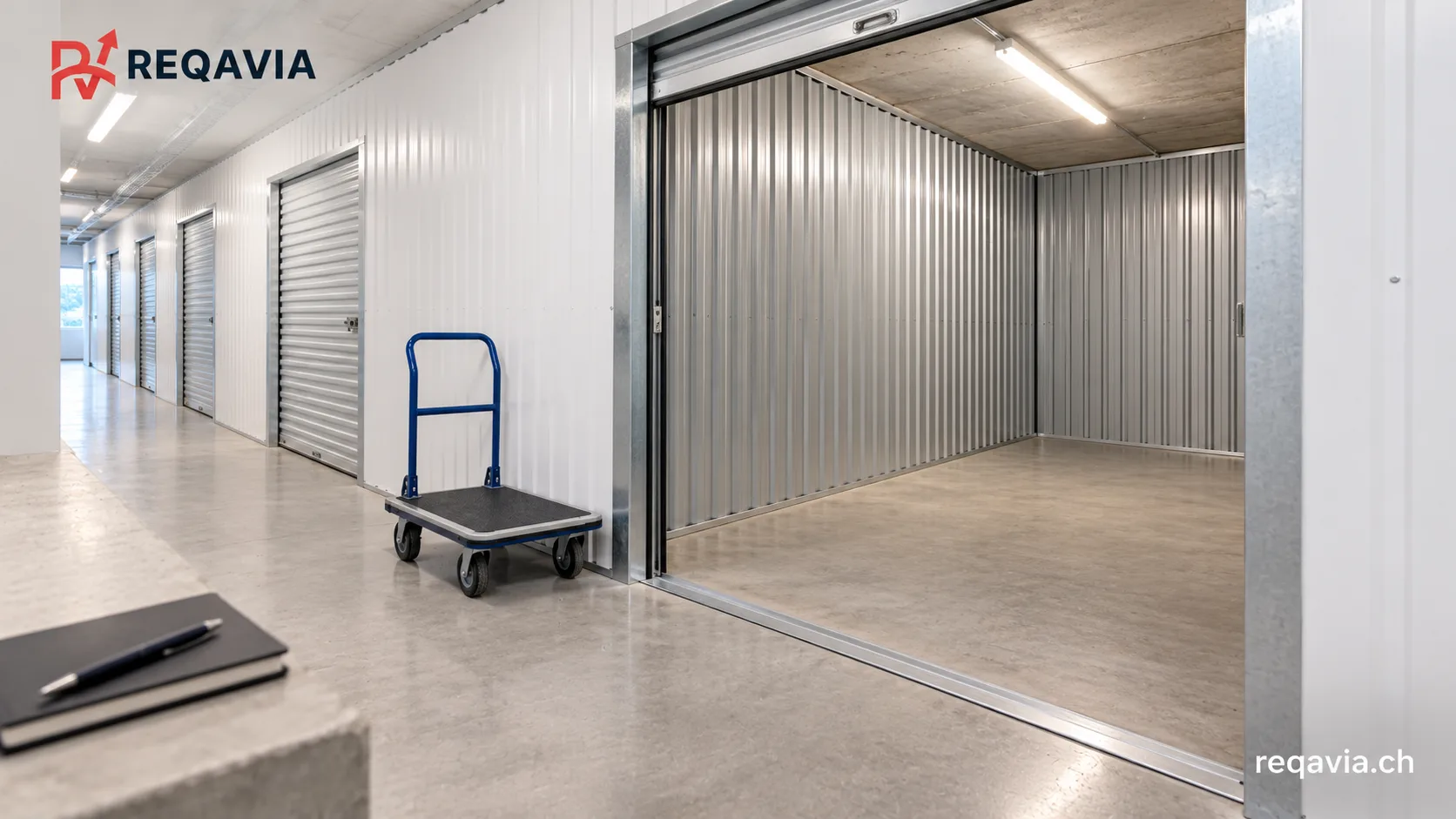
A storage unit can look spacious in a photograph and still be awkward for your furniture or collection times. Use a visit to check the complete journey from unloading to the unit, then ask how the service will work after you move in. Bring your inventory and the dimensions of the most difficult item; a general impression of cleanliness is not enough.
Bring the details you will need
List the large pieces, approximate number of boxes and anything you expect to retrieve during storage. Record furniture dimensions in the condition in which it will arrive, including packaging and any planned dismantling. Identify the item most likely to cause a problem at a doorway or turn. Take notes without recording other customers' belongings or access details.
Walk the actual route in both directions
Start at the loading point the operator says you may use, rather than the visitor parking space. Follow the distance to the entrance, stairs or lift, corridors, turns and unit door. Ask whether that same route is available at your intended arrival time. Look at the return journey too: collection may involve a different vehicle or fewer people.
With permission, measure relevant openings and ask for usable unit dimensions, lift dimensions and stated capacity. Measurements help identify questions; they do not by themselves prove that a large piece can be manoeuvred. Ask the moving or storage company to assess a difficult route. Do not bring a heavy item simply to test it during the viewing.
Check what handling equipment is available, whether it must be booked and where it may be used. Confirm whether assistance is included, separately charged or unavailable. A trolley visible in a corridor is not evidence that you may use it whenever you arrive.
Observe conditions without trying to diagnose them
Note visible water marks, damp patches, unusual odours or damaged surfaces and ask what caused them. Request an explanation of the action taken and what happens if the problem returns. Ask what environmental conditions the operator actually maintains, in which parts of the building, and whether any conditions are specified in the agreement.
The Federal Office of Public Health's [information on moisture and mould](https://www.bag.admin.ch/de/feuchtigkeitsprobleme-und-schimmel) explains that they can damage buildings and furnishings, and that the cause of moisture must be addressed. An unexplained moisture problem deserves assessment before you commit your belongings.
A dry-looking room on one day does not establish year-round conditions. Visible ventilation or a dehumidifier does not establish a particular level of climate control. For delicate instruments, artworks or other sensitive possessions, first obtain suitable specialist advice about their needs, then ask whether this unit can meet them. Do not disturb suspected mould to investigate it yourself.
Separate three different timetables
Ask about customer entry hours, delivery or collection hours and staff availability. They may differ. Explain when you actually need access and whether someone else might collect on your behalf. Confirm the authorisation process and what happens if access fails, a delivery is delayed or you need help outside staffed hours.
Read the conditions around the space
Request the rules on accepted items, restricted materials, permitted use and arranging partial collections. Clarify the complete charging basis, any deposit, minimum term, notice procedure and conditions for changing unit size. Ask what security measures and insurance arrangements mean for your agreement, including exclusions; do not infer protection from a camera or a locked entrance alone.
Leave with answers you can compare
For each site, record what is confirmed, what needs a written answer and what fails an essential requirement. Give practical access and suitability priority over floor area alone. If a decisive point remains uncertain, request clarification before agreeing. Keep the description, offer and conditions together so that later changes can be checked.
For a storage request through REQAVIA, describe your quantity, largest dimensions, storage period, access frequency and any handling or environmental needs. Use a written description; share useful photos privately with the company when coordinating. REQAVIA is an intermediary. The storage arrangement, price and service are agreed directly with the company.