
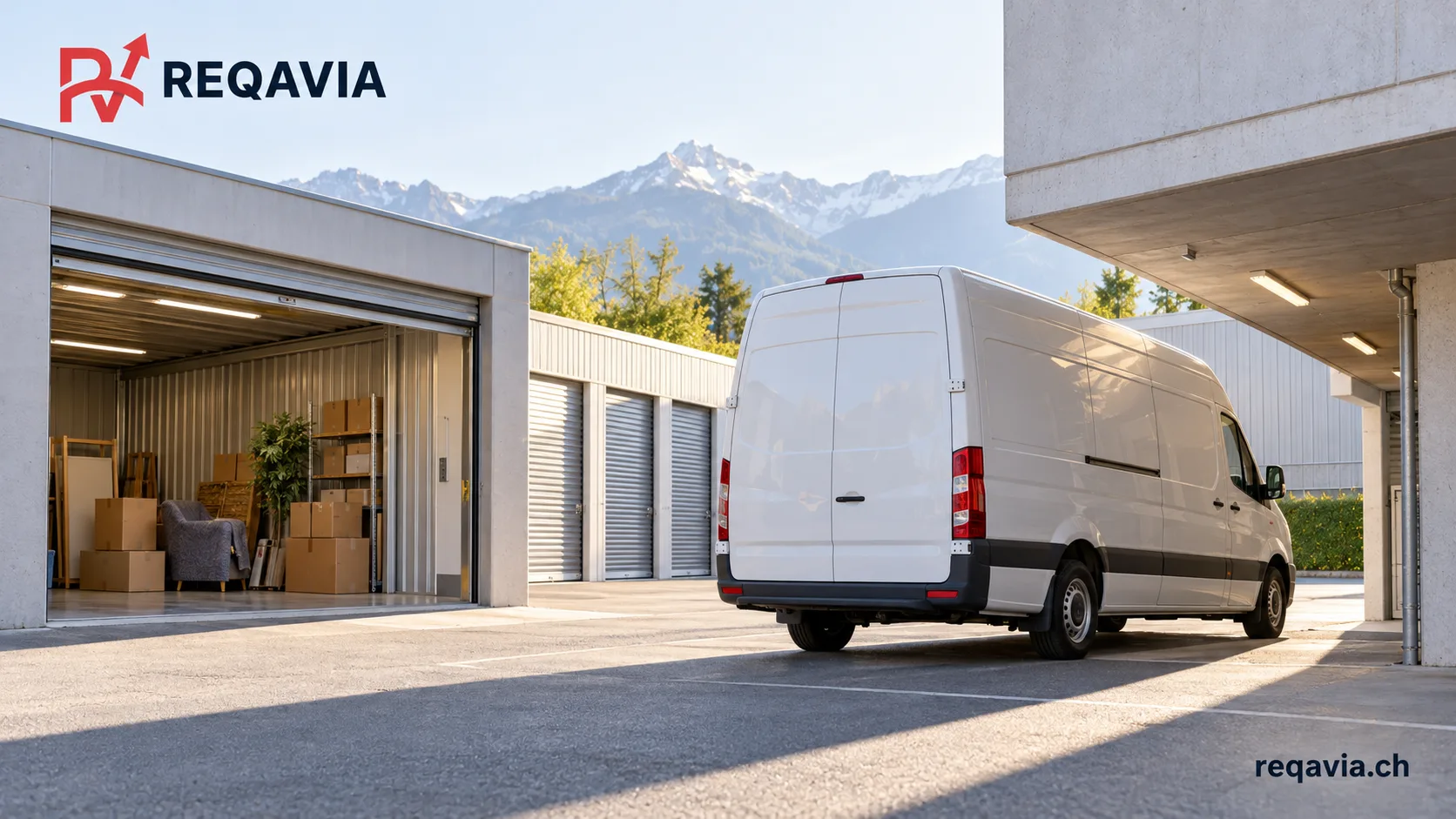
A storage site that you can enter in a small car may still be unsuitable for the vehicle bringing your furniture. Before confirming the delivery, match the proposed vehicle to the complete route: street entrance, gate, ramp, loading position and the journey from there to the unit. The size of the storage door answers only one part of the access question.
Get site information and vehicle information separately
Ask the operator for current written restrictions on vehicle access. Record the relevant entrance, stated height or width limits, any vehicle restrictions, and the date of the information. Check whether these apply to the delivery route or only to the customer car park. A photograph can explain the setting, but it should not become a guessed clearance measurement.
Ask the carrier to identify the vehicle it actually plans to send and the dimensions it needs checked. Give it the operator’s information, including anything still unconfirmed. Do not infer suitability from another van seen on site. Changes to the proposed vehicle require another check, even if the booking time stays the same.
Agree where loading will happen
Find out whether the loading area must be reserved, when it is available and whether other customers share it. Confirm who opens the gate, whom the driver contacts and how the vehicle reaches the correct entrance. Include the postal address as well as clear directions to the loading point; a map pin alone can lead to the wrong side of a building.
Ask about an authorised fallback if the bay is occupied. If the plan involves the public road, clarify any permissions with the responsible local authority rather than assuming the storage address includes a right to stop outside. Tell the carrier about expected waiting arrangements before it prices or schedules the task.
Describe the last part of the journey
Record the carrying distance from the agreed vehicle position to the lift and then to the unit. Describe steps, thresholds, slopes, turns and doors along that route. When measurements are needed, state what was measured and in which units. Distinguish a confirmed clear opening from an estimate; mark unknown information instead of filling the gap with a confident guess.
“Lift available” is not a complete description. Ask the operator for its relevant dimensions, permitted load and any arrangements for moving goods, then pass these to the carrier. Also describe how the doors operate and whether the route is shared. Suva’s prevention advice supports planned handling and appropriate aids for moving loads; the company should decide how to apply that to this route. [Suva: handling loads](https://www.suva.ch/de-ch/praevention/nach-gefahren/gefaehrliche-materialien-strahlungen-und-situationen/koerperliche-belastung-und-ergonomie/umgang-mit-schweren-lasten).
Let the carrier assess difficult access
A narrow turn, uncertain overhead clearance, steep ramp or limited space to deploy loading equipment calls for an assessment before arrival. Ask whether a site visit or additional information is needed. Do not test the route by driving under an uncertain obstruction or by trying to carry a bulky piece through a tight passage yourself.
Possible alternatives may include a different agreed loading point, another suitable vehicle or a revised appointment. Ask the operator and carrier which option is actually permitted and feasible, and obtain the resulting scope and price before accepting it. Do not assume extra carrying or additional trips are included automatically.
Keep the access record for collection as well
Retain the agreed route, contact person and unresolved points with your storage paperwork. Before retrieving the furniture, check for temporary works or changed access arrangements. Give anyone attending on your behalf the current instructions, not an old description from your first visit.
In a REQAVIA text request for storage, describe your goods, location, timing and known vehicle or loading requirements. Explain whether you already have a carrier and which details need confirmation. Useful photos can be shared privately with the company during coordination. REQAVIA is an intermediary; storage terms, any separately agreed transport, prices and execution are settled directly with the relevant company.