
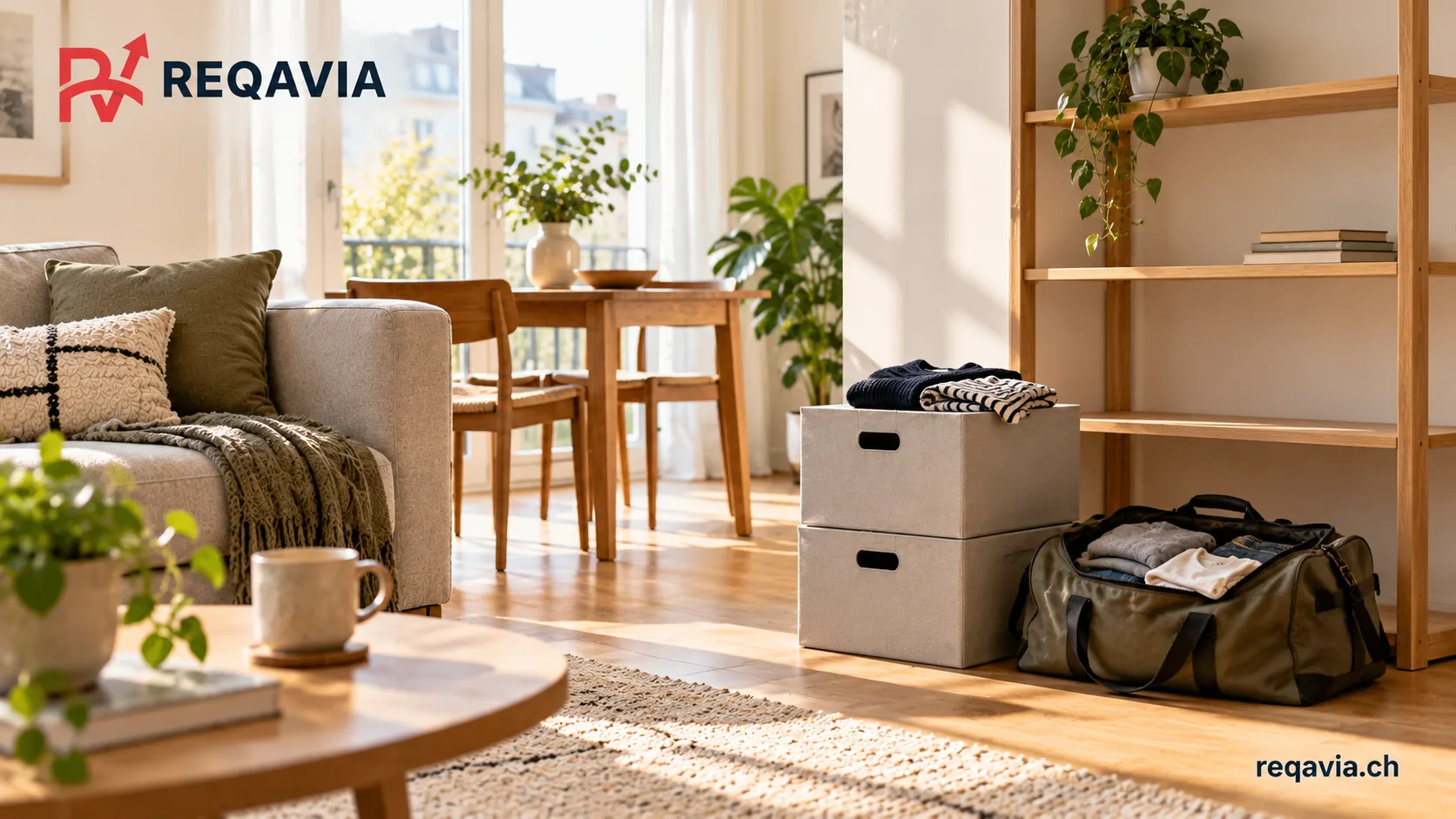
For a stay in a furnished apartment, retrieve the belongings you need during that stay rather than everything intended for your eventual home. Start with what the apartment already contains and the space actually available. Then select a limited batch from storage. This avoids replacing one storage problem with a living room full of furniture that has no agreed place.
Check the temporary home before choosing the load
Review the furniture and equipment inventory supplied for the apartment. Check the cupboards, desk space, bedding and kitchen items relevant to your routine. Note genuine gaps rather than assuming you need your own version of everything. If you want to move or remove existing furnishings, discuss this with the responsible person and check the agreement before arranging transport.
Measure the space for any larger item you are considering, including the route through the entrance and internal doors. A table that fits your future home may not suit the furnished room you will use now. Do not dispose of, relocate or mix supplied furnishings into your own storage load merely because they are inconvenient.
Build a stay-specific retrieval list
Choose everyday clothing, work essentials, documents you need access to and a manageable selection of personal items. Use the expected length of stay, available laundry arrangements and actual routines to decide quantities. Separate this list from furniture and boxes intended for the permanent home. If the end date is uncertain, record that uncertainty rather than retrieving for every possible future scenario.
Put the identifiers of the selected boxes next to their broad contents. Where a needed item is inside a mixed box, decide whether you want the whole box or an agreed partial retrieval. Keep essential documents and personal valuables under an arrangement suitable for them rather than burying them in an unspecified furniture shipment.
Check how the boxes can be reached
Send the selected identifiers to the storage operator or company through the agreed coordination channel. Ask who retrieves them, whether an appointment is needed and what preparation is possible. Two cartons behind a large cabinet may require more work than their number suggests. Do not assume that a small collection is always quick or that access is available without notice.
If the retrieval is difficult, compare the actual effort with using something already available temporarily. Ask for the proposed handling and any quoted charges before deciding. Where heavy furniture or an unclear storage arrangement obstructs access, let the company assess the task. Avoid rearranging an unfamiliar stack simply to reach a box without an agreed plan.
Keep two inventories at the apartment
On arrival, record which personal items entered the apartment and mark them as temporarily withdrawn from storage. Keep the apartment's original inventory separately. For similar kitchenware, linen or small furniture, use a non-damaging identification method you have agreed where necessary, or keep a clear written description. The goal is to recognise your property again when leaving.
Do not overwrite storage records as though the goods had disappeared permanently. Record their temporary location and whether they are expected to return to storage or go directly to the next home. If you open and repack a box, update its contents while keeping a link to the original identifier.
Review before requesting another delivery
After settling in, check which missing things actually affect daily life. A planned review is more useful than repeated unplanned trips for individual objects. Compare the remaining duration, available space and retrieval effort before adding a second batch. Keep the eventual departure in mind so that temporary comfort does not create a larger move later.
In a REQAVIA storage request, describe a partial retrieval to furnished accommodation, the selected boxes, difficult access, dates and likely duration. Ask the company which retrieval and transport arrangements it can provide. REQAVIA is an intermediary; scope, price and the agreement are settled directly with the company.