
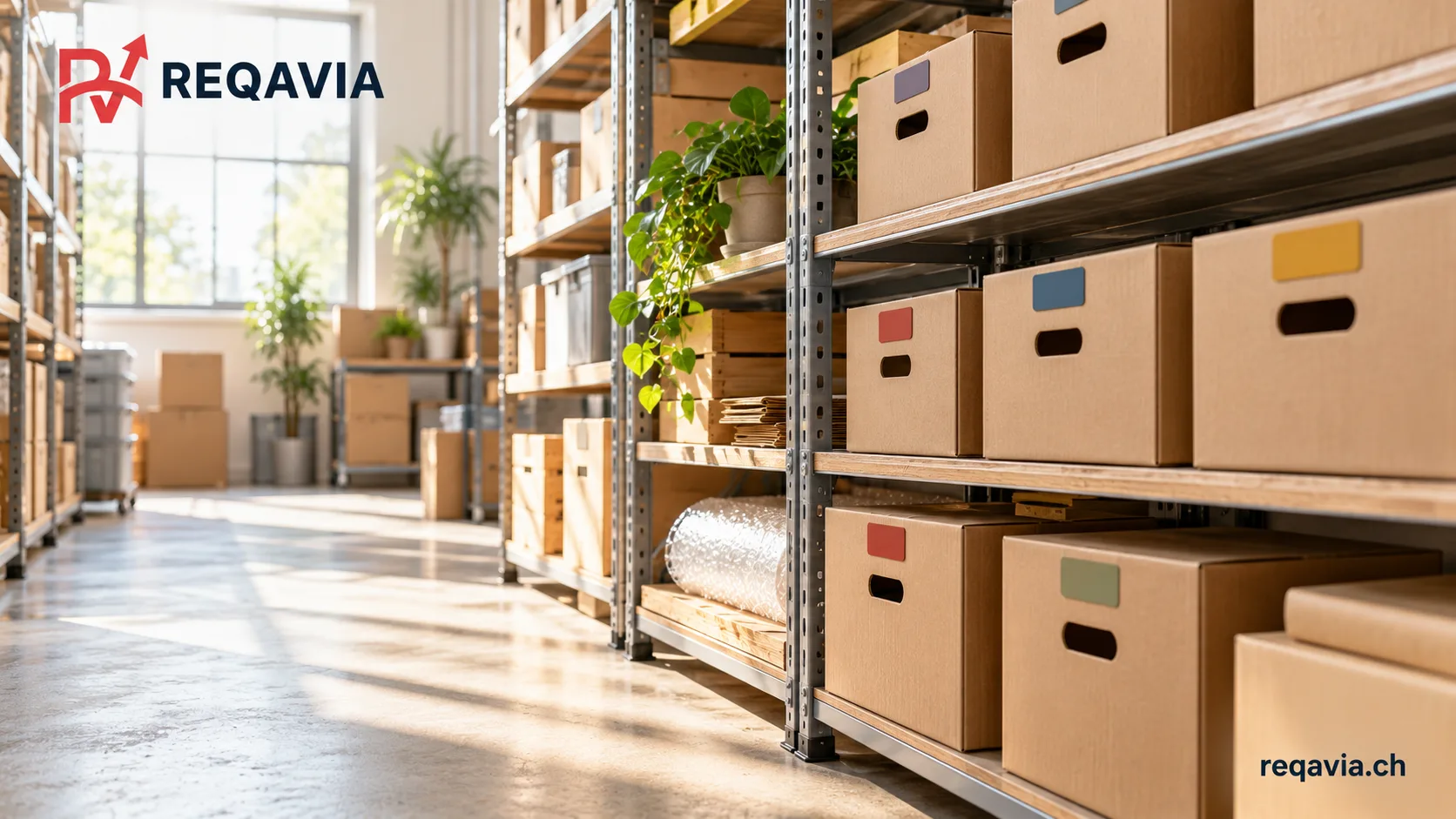
A numbered box is only easy to find if its number remains visible after storage. Before the load is fully arranged, decide which side will face the accessible route and place the identifier there. Keep detailed contents in your private inventory. A clear number on the lid is not enough when another box will cover it, and a perfect list cannot show a label facing the wall.
Choose an identifier you can actually read
Use a short, distinct reference for each box and write it clearly enough to recognise from the position where you will look for it. Check it under the lighting available at the unit. Colour can help group boxes, but keep a written reference as well so that similar colours or different lighting do not become the only way to distinguish them.
Avoid detailed personal information on the outside. A reference linked to a private list can identify documents or possessions without announcing their contents to everyone passing. If you change an existing reference, keep a link between old and new numbers. Otherwise earlier notes and photographs may cease to point to a recognisable box.
Agree the facing side before the stack grows
Discuss the proposed layout with whoever will place the goods. Which side of each row or shelf will remain accessible? Put the identifier on that face and repeat it on another suitable side if useful. Do not cover essential handling instructions or put an adhesive label directly on a surface that could be damaged by it.
For hired containers, ask what labelling or marking the provider permits before treating the whole batch. Test the arrangement with a short row first. Stand where you will normally enter and check whether you can recognise the boxes without reaching behind them. Correcting one trial row is easier than discovering the problem after all the furniture is in place.
Add a simple location to the list
Record a broad location beside each identifier, such as the front shelving or a named row. Use descriptions another authorised person can understand. Avoid a complicated coordinate system unless you will keep it current. The location supports the box identifier; it should not replace it, because a box may move during a partial collection.
A general photograph can help you remember the arrangement. Keep it free of unnecessary personal papers, visible credentials and sensitive contents. It does not replace readable labels or a current inventory. If the company needs a view to discuss access, share that relevant image directly and privately during coordination rather than putting private details into the service request.
Test the system before leaving
Choose several references from the list and try to locate them from the available aisle without moving the arrangement. Note which labels are hidden, too small or difficult to distinguish. Also check a box you expect to retrieve soon, not only the convenient ones at the entrance. Ask the company to resolve access problems while the layout is still being established.
If you discover hidden labels later, do not pull apart a heavy or potentially unstable stack merely to improve the numbering. Ask someone able to assess and organise the handling. Record the correction and any new position afterwards. The inventory should describe the arrangement that remains, not only the original unloading plan.
Keep visibility after each withdrawal
When part of the load leaves, review the boxes left behind. A previously hidden side may now face the aisle, or a replacement box may hide the next label. Update contents and location together whenever repacking changes either. This small check prevents a successful first layout from becoming unusable over time.
In a REQAVIA storage request, describe the goods, your expected retrieval pattern and the need for identifiable, accessible placement. Ask the company what arrangement it can include. REQAVIA is an intermediary; access, handling scope, prices and the agreement are settled directly with the company.