
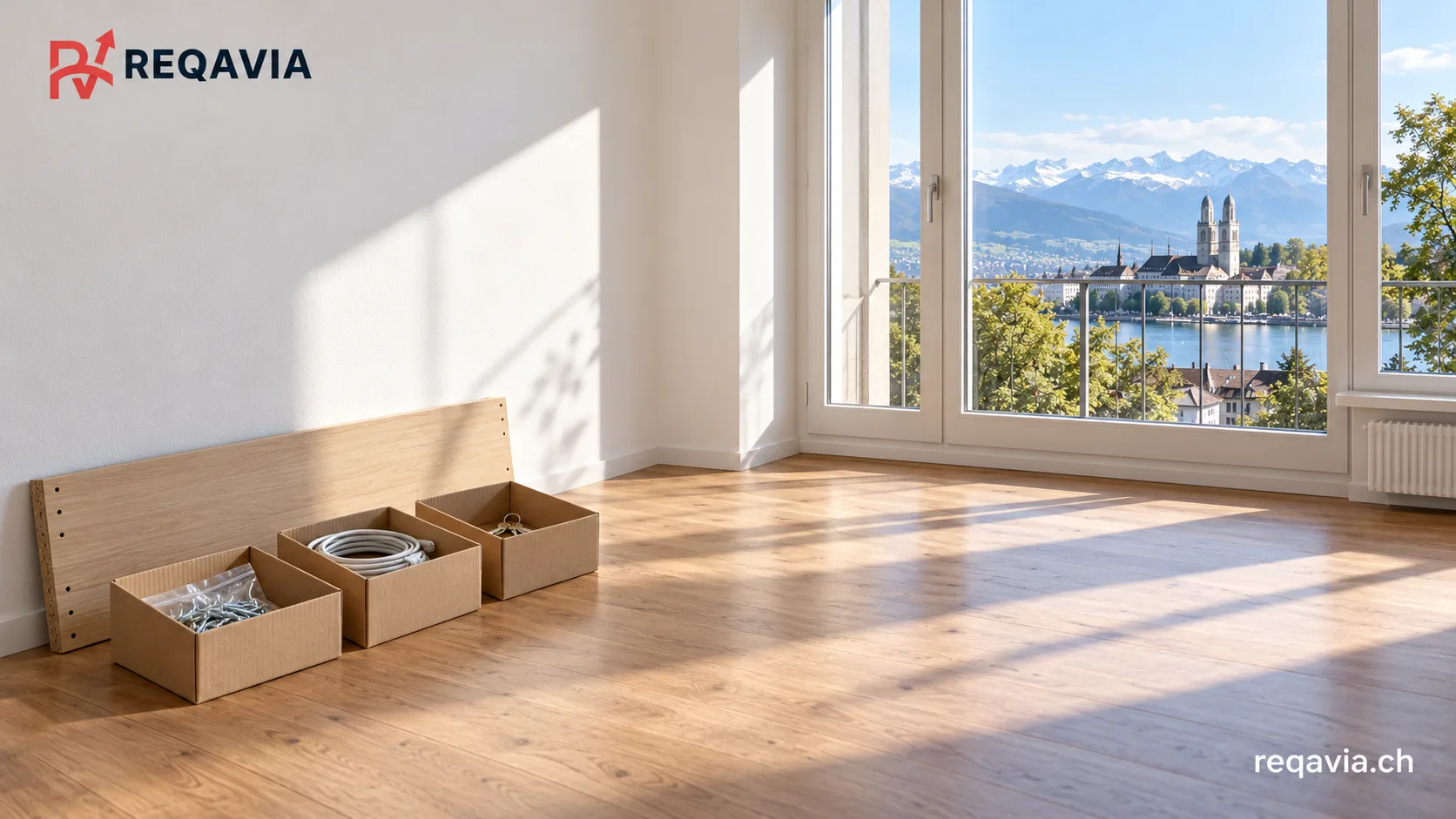
The cupboards and sofa have gone, but a shelf, a cable and a bag of screws remain. Before booking another collection, work out whether these are unfinished parts of an earlier handover, items needing an owner’s decision or additional removal work. Putting everything into a miscellaneous bag makes those distinctions harder. A short list can turn the final visit into a defined task.
Start with what is physically still there
Walk through the cleared rooms, accessible storage spaces and the agreed collection area. Give each remaining object or clearly related group a simple reference. Note where it was found, its approximate size and what it might belong to. Keep a private photograph if useful, but make the written entry understandable without it. “One shelf, found beside the former wardrobe” is more useful than “a few leftovers”.
Compare the list with the furniture and boxes already taken away. A fitting may need to follow a sold cupboard; a key may belong to borrowed equipment. Do not attach an unidentified part to whichever piece looks closest. Ask the person who knows the furniture, and keep the part separately identified while you wait. Leave fixed building fittings alone if their ownership or purpose is unclear.
Choose an action for every entry
Use three practical groups. First, items to return or add to an existing handover: confirm the recipient, exact part and proposed delivery. Second, items awaiting a decision: name the person to contact and a date to follow up. Third, items approved for removal: establish the destination and who will arrange it. An unanswered message does not turn someone else’s belongings into an agreed disposal load.
For a missing fitting, ask whether collection by the recipient or an already planned visit can resolve it. Check that everyone agrees before relying on that arrangement. If another transport service is needed, describe the item and ask about suitable packaging and acceptance. Do not improvise shipment of sharp, heavy or awkward objects simply because they are smaller than the original furniture.
Keep doubtful items in a clearly identified place that is not a corridor or shared access route. The person who holds the list should know who can release them. Agree a follow-up date instead of letting “we will sort it later” become permanent. If the premises must be handed back, settle the temporary location with the responsible person before that deadline.
Describe the materials and the actual collection scope
The Federal Office for the Environment specifies separate collection for [electrical devices](https://www.bafu.admin.ch/de/elektrische-und-elektronische-geraete) and [batteries](https://www.bafu.admin.ch/de/batterien). Tell the company about these separately. For other uncertain materials, ask the municipality or intended collection point what it accepts in the condition you have. Small size does not establish an appropriate collection route.
Do not dismantle an unfamiliar device or force apart mixed materials to fit a presumed waste category. For loose sharp fittings, ask the company how it wants them safely contained and identified. Describe the number of containers, their contents and any particularly heavy item. Do not rely on “one bag” to communicate a load that still needs sorting.
Separate what the original agreement covered from items added afterwards. Ask the company to confirm the work completed, the remaining work and any revised price or timing before a new visit. A leftover item alone does not determine who caused the problem or who pays. Keep the relevant list and messages together so the discussion concerns specific work.
Close each item, then close the room
Mark an entry complete only when its agreed action has happened: returned, received, retained by the identified owner or taken for the confirmed disposal route. Where useful, record the recipient and date. After the remaining items leave, check the agreed areas once more and keep unresolved entries visible.
For a further disposal collection, send REQAVIA a text description of the confirmed load, access and timing. Mention anything still awaiting a decision. REQAVIA is an intermediary; the agreement, price and work are arranged directly with the company. Share any useful photographs privately with that company during coordination.