
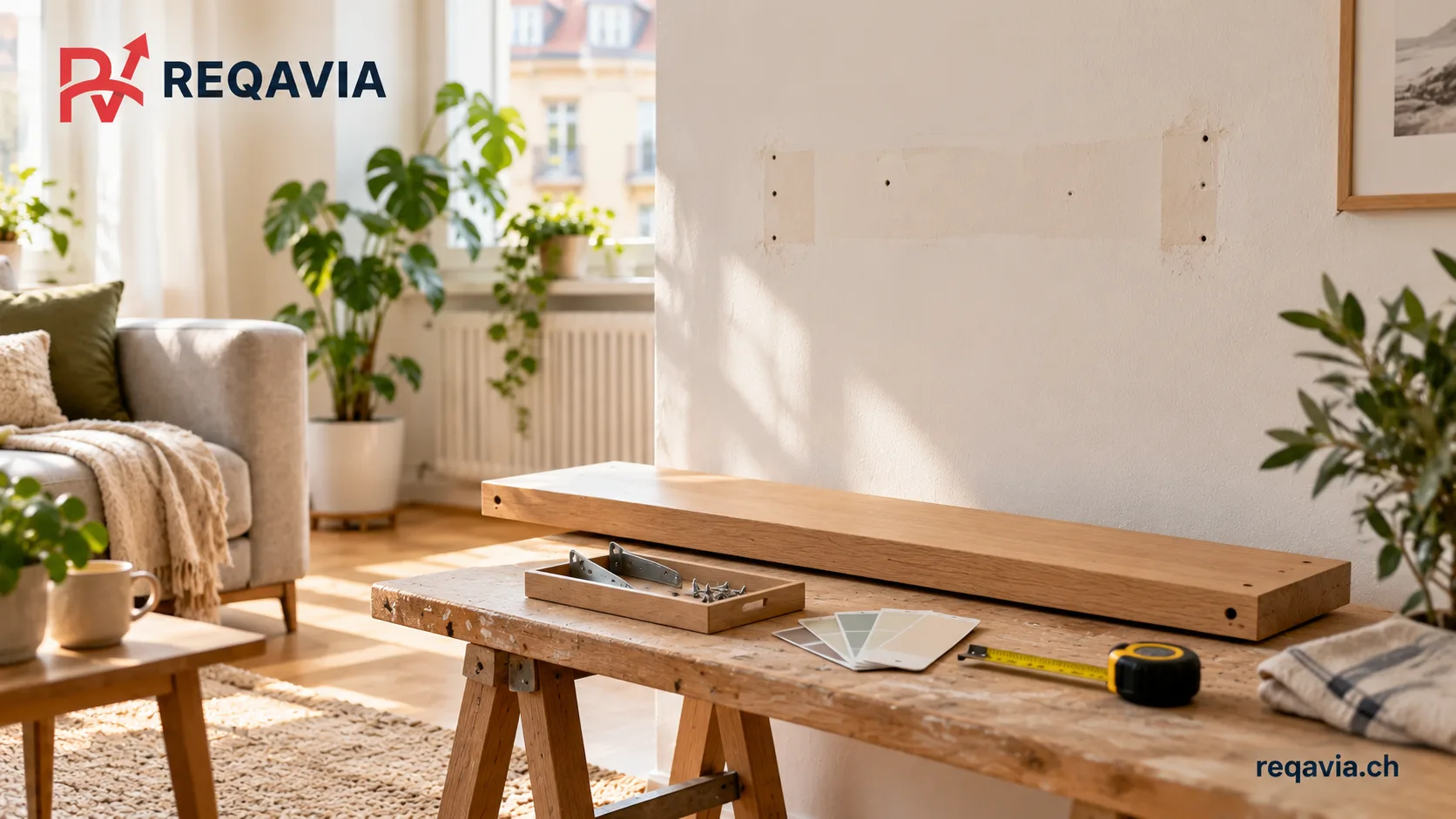
After shelves come down, ask for a quote that describes both the fixing areas and the surrounding wall. Counting holes alone does not define the finish you want. First decide which shelves will return and where. Then let the painting company assess the visible condition and explain whether its offer covers local preparation, a wider painted area or both.
Make a record before and after removal
Before agreed removal, note the shelf positions and which brackets belong to them. Decide who removes the shelves and who will reinstall any retained items. Do not quietly add dismantling to a painting visit. Where a shelf is heavy, unstable or attached in an unfamiliar way, arrange suitable assessment rather than trying to expose the wall yourself.
Once the agreed removal is complete, describe the whole affected area. Record the approximate number and position of visible fixing holes, bracket outlines, colour differences and other marks. Include the wall dimensions and whether the surface is smooth, textured or unknown. A close photograph of one hole can miss the larger patch that the new arrangement will reveal.
Keep photographs of the overall wall and the details privately. Note visible condition without diagnosing the cause of cracks, looseness or staining. If the company sees something beyond routine preparation, ask it to explain the concern and what assessment is needed before work proceeds. Filling the visible opening should not become a substitute for resolving an uncertain condition.
Decide what happens to the shelves
Mark each shelf as returning in the same place, moving to another position or leaving permanently. Share a simple layout with the person responsible for reinstallation. Ask which mounting details must be coordinated before the wall is finished; do not assume existing holes or fixings can simply be reused.
If the furniture layout is undecided, tell the company. Compare postponing the affected work with finishing the wall and arranging a separate later installation. Avoid two conflicting instructions: asking the painter to close every mark while the installer expects to use the old layout. Keep fixing decisions with the appropriate installer, not with a guess about where a bookshelf might go.
Separate preparation from appearance
Ask the company to describe the proposed preparation of the affected areas, then the boundary of the paintwork. Does the quote cover only individual spots, the wall up to its natural edges or another defined section? Request an explanation of the expected appearance and any limitations in matching the existing colour, sheen or texture. The old colour reference alone is not an agreement on an invisible local repair.
Where the choice is uncertain, ask whether an agreed sample or preliminary assessment would help decide. Compare the same target result across offers, including protection of nearby furniture and flooring. Do not select a smaller repair solely because its description sounds simpler if the visible transition is the issue you actually want addressed.
Agree what happens when more becomes visible
Some parts of the wall may remain hidden until the shelves are removed. Ask how new findings will be recorded, explained and priced before additional work. Specify who can approve a change and whether it affects the schedule. “Repair holes” should not act as open permission for any further work, nor should an unknown condition be ignored to preserve the original timetable.
Arrange a review at the appropriate stage before shelves or furniture cover the area again. At completion, compare the visible result and included tasks with the agreed scope. Keep the final mounting plan with the work record so a later installation does not reopen decisions that were supposedly settled.
Give the company enough information
In a REQAVIA text request, state the wall and shelf count, approximate dimensions, visible marks, future layout and responsibility for removal and reinstallation. REQAVIA is an intermediary; price, scope and execution are agreed directly with the company. Share useful photographs privately with it during coordination. Request a clearly bounded repair and painting proposal for the wall you will actually see.