
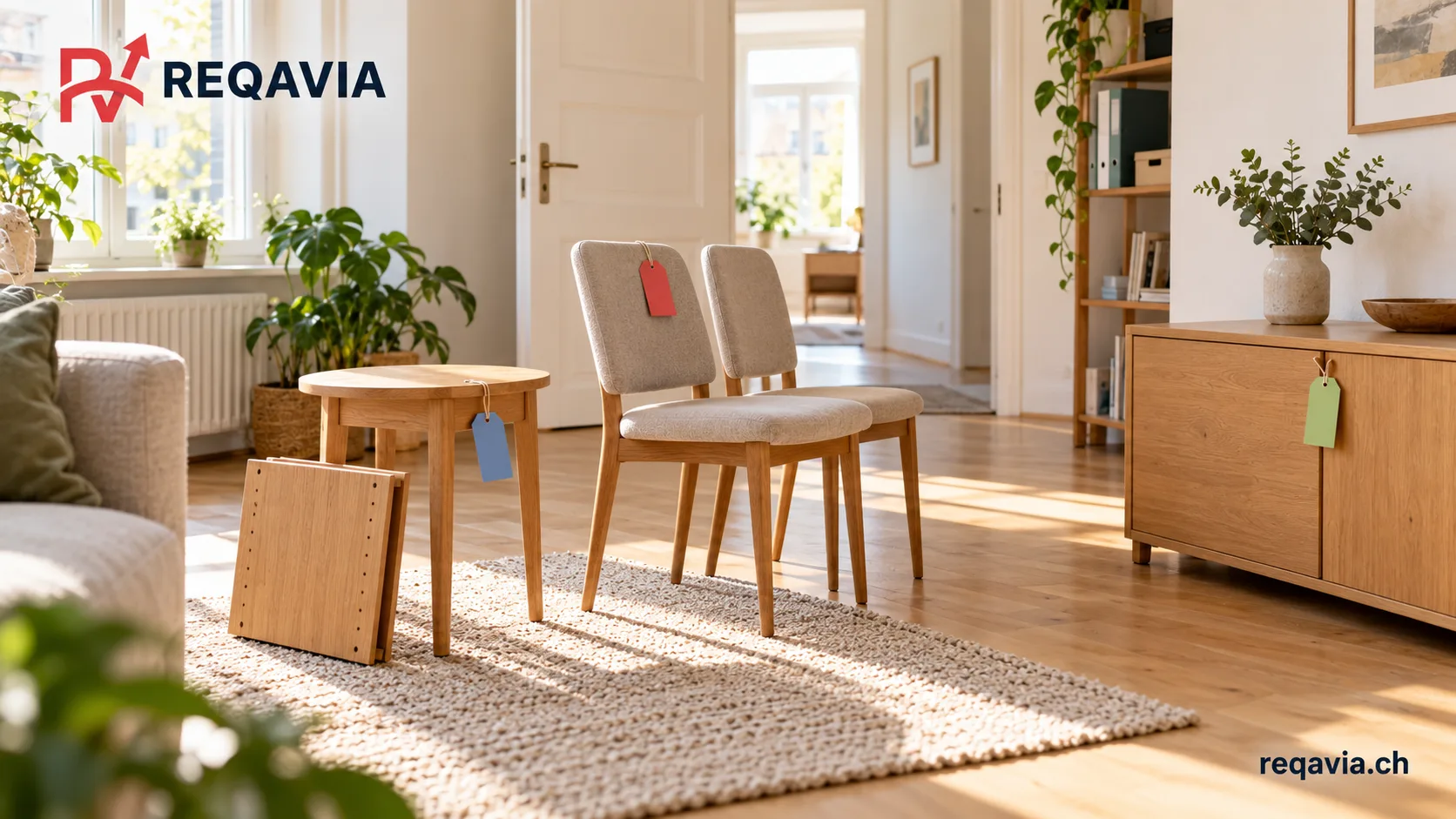
When several people are collecting things from your home, make one list linking each item to a recipient, a time window and a confirmed transport plan. Keep belongings in their usual safe place until the agreed handover. A promise to collect does not tell you whether the vehicle fits the item, who carries it downstairs or what happens if the person never arrives.
Define exactly what each person will receive
Give every item a neutral reference, such as A1, and record its dimensions, condition and included accessories. Send the intended recipient only the relevant information and photos. State whether drawers, shelves, fixings or a matching chair are included. Nearby objects are not automatically part of the arrangement.
Separate anything with unresolved ownership or permission. Agree changes with the responsible person before adding an item to a collection. Keep personal documents, keys and family belongings outside the visitor route. Your private list can contain names and contact details; visible item labels only need the neutral reference.
Confirm transport, not just attendance
Ask each recipient to confirm the vehicle, carrying help and any agreed dismantling. Describe the floor, lift, stairs, door openings and difficult turns. Give the item's actual size rather than assuming a familiar furniture name tells someone whether it fits. If parts will be removed, decide who does it and who keeps the fittings together.
For a heavy, fragile or awkward piece, ask a suitable company to assess the route when safe handling is uncertain. Do not let the deadline turn an unplanned lifting attempt into an experiment. A recipient who arrives without the necessary help has not fulfilled the transport plan merely by being on time.
Give collections enough room in the schedule
Allocate separate windows so people do not meet with bulky objects in a narrow passage. Allow for checking the item and preparing it for departure, not only loading. Tell each person how to announce arrival and whom to contact if delayed. Keep the schedule private instead of circulating everyone's phone numbers.
Arrange any required building access or loading permission beforehand. Keep the entrance attended during visits and show each person the agreed item. Do not leave the door open for people to choose from a pile while you deal with another collection elsewhere.
Keep waiting furniture out of shared routes
Use an agreed place inside the home for items awaiting collection. Do not move them to a pavement or common staircase simply to make the room look finished. [BFB/CIPI’s fire-prevention guidance](https://www.bfb-cipi.ch/brandverhuetungs-tipps/detail/brandschutz-in-den-fluchtwegen) says stairs and corridors must remain clear. Ask the property contact about the actual building arrangements if space is limited.
Before an item leaves, compare its reference and accessories with your list and the recipient's agreement. Mark it handed over once the actual collection is complete. Update changes immediately; a label left behind on an empty space is an unreliable record of what still needs removal.
Decide the response to a missed collection
Tell recipients how long you can keep an item and when you need a fresh confirmation. If the home must be emptied by a particular date, work backwards from that deadline. Do not offer the same item simultaneously to several people while leaving each believing it is reserved for them.
Choose a realistic alternative for an uncollected piece: a newly agreed pickup, professional transport to a confirmed destination or disposal that you have authorised. Check the circumstances before changing a previous arrangement. A transport or disposal company should receive the updated remaining load, not an estimate that assumes all promised collections happened.
Request help for what actually remains
List confirmed remaining items, uncertain pickups, dimensions, access and the final date in your text request through REQAVIA. Specify whether you need moving to a known address or disposal, and ask the company to confirm the scope, handling and exclusions. Share useful photos directly and privately during coordination.
REQAVIA is an intermediary; price, agreement and execution are settled directly with the company. Reconfirm the final list after the last private collection so the arranged service corresponds to the belongings still in your home.