
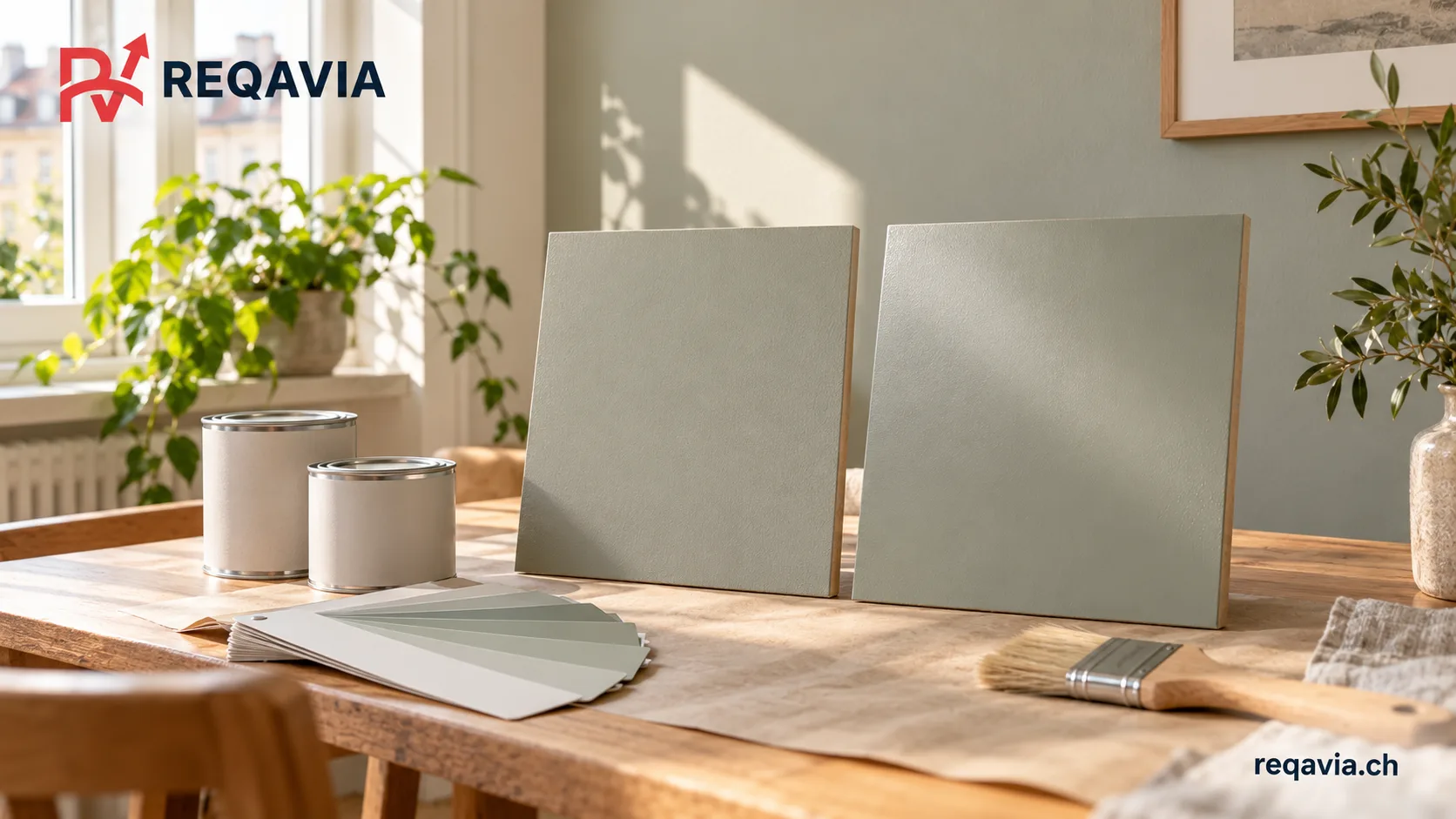
Two paint products bearing the same colour code are not a complete specification for the same finished appearance. Before accepting a substitution, ask for a sample of the actual product on a representative surface. Agree what you are matching: the named colour reference, an existing wall or a neighbouring door. Those are different approval targets, even when everyone quotes the same code.
Choose one reference everyone can identify
If the aim is to match an existing surface, identify the exact area rather than pointing generally at the room. Record its known age, previous care and visible differences between exposed and protected areas. A patch behind a picture may not be the reference you want for the visible wall. Ask the painter which area can serve as a useful comparison.
Collect existing labels, invoices or finish records if you have them. An old tin may help identify a product, but do not assume its remaining contents are suitable for a new sample. Use phone photographs to explain the location, not as the sole reference for approving the colour.
Write down the finish, not just its number
Record the colour system name and full code, including any suffix, alongside the exact proposed product and declared sheen. Add the substrate, such as a previously painted plaster wall or a wooden door, and the intended preparation. A wall coating and a door coating should not be treated as interchangeable simply because they carry the same colour reference.
NIST’s summary on colour and appearance identifies gloss as one aspect of appearance alongside colour. A separate NIST article explains how lighting affects the perceived colour of objects. We therefore recommend assessing the proposed finish where it will be seen.
NIST: colour, gloss and visual appearance
NIST: how lighting affects colour perception
Request a sample of what will actually be applied
Ask for a sample made with the proposed product and preparation on a suitable test area or representative board. Clarify who prepares it, whether sample work is included in the quotation and when it will be ready to judge. A generic colour card alone does not document the finish of this particular application.
If two products are being compared, label each sample so the decision remains traceable. Keep both in the same plane and lighting rather than comparing one by a window with another in shade. Review them after the painter confirms they are ready for assessment; do not make the final decision from wet paint.
Compare in the room and describe the difference
Look in daylight and under the lights normally used in that room. Compare from the usual viewing position and then from an angle that makes reflected light noticeable. Say what troubles you: a different hue, more shine, a texture difference or a visible boundary around the repair. Avoid changing both the lamp and sample position between comparisons without noting it.
For a local repair, ask whether a small touch-up can meet the agreed expectation or whether repainting a continuous wall or door face should be considered. Compare the area, preparation and cost of each option with the company. Repainting more surface is a decision to discuss, not a universal requirement or a promise of perfect matching.
Keep a clear approval record
Identify the accepted sample, product, colour code, sheen, location and date. Confirm the area to be painted and ask for another review if the product or preparation changes. If a close match is important and the samples remain inconclusive, seek a painter experienced in colour matching before authorising the full work. Do not try to correct the mixture yourself.
In a painting request through REQAVIA, describe the reference surface, approximate area, postcode, known finish and whether you need matching or a new colour. The form uses text; any useful photos can be shared privately with the company during coordination. REQAVIA is an intermediary. You agree the sample process, scope, price and execution directly with the company.