
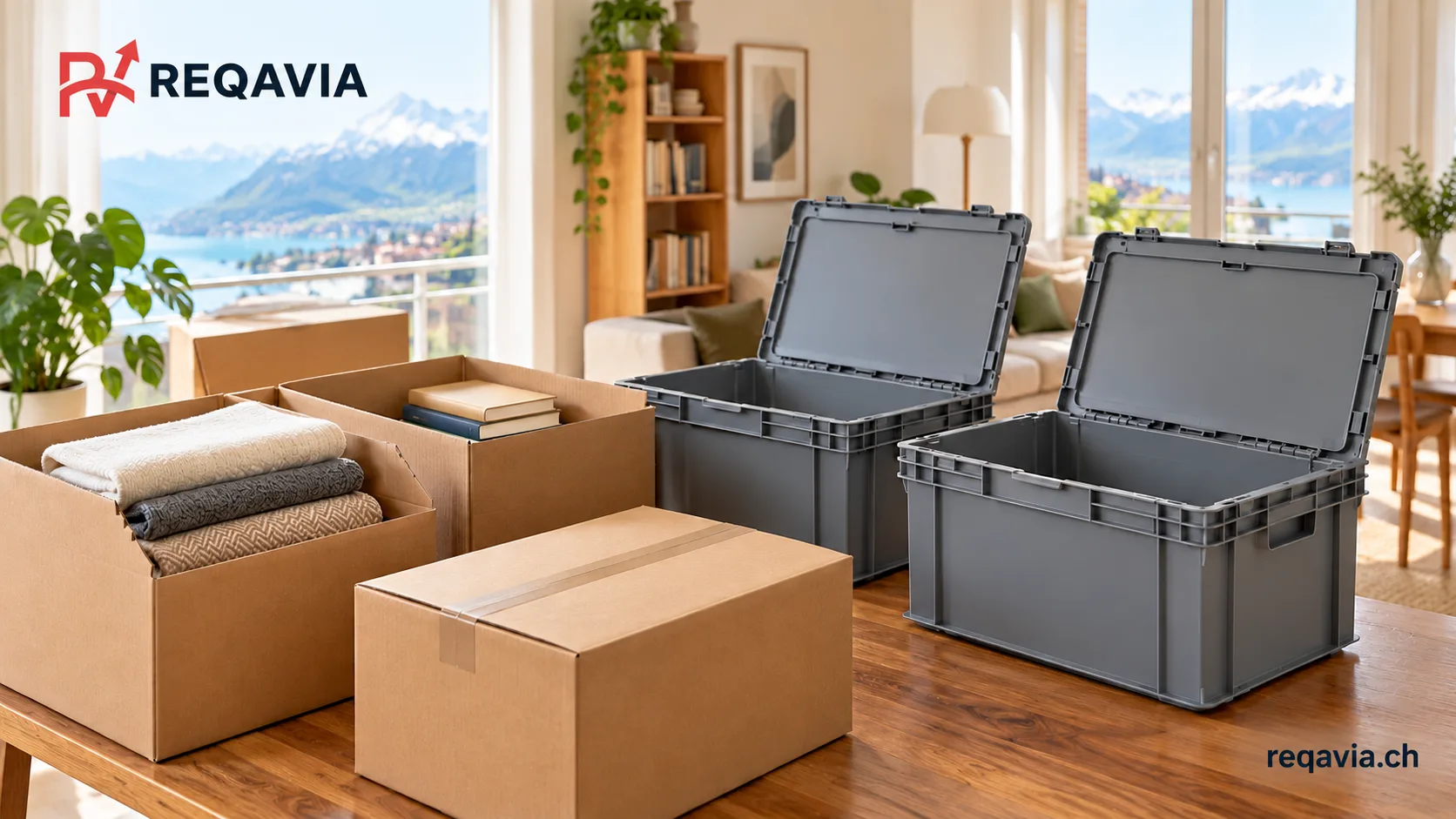
If rented moving crates will stay in storage longer than expected, arrange their return before putting them away. Compare a written rental extension with transferring the contents into suitable containers you own. The practical deciding factors are the actual return deadline, later access to the crates and the work needed to empty them. Check the end of storage and the end of crate rental as two separate dates.
Start with the actual rental details
Plan the entire period from receiving the crates through packing, transport and storage to emptying and actually returning the last one. Counting only the days when the vehicle is in use is insufficient. Check your rental agreement and handover records, then clarify the agreed services and deadlines with the crate supplier.
- Return: by when must the crates reach which location? Is booking collection sufficient, or must the handover already have happened?
- Quantities: how many crates, lids and separately supplied accessories must go back? Record available identifiers and any damage already documented.
- Extension: is it available, what billing period applies and how will a change be confirmed? Ask about returning only some crates as well.
- Collection: who arranges it, which time windows are available and must someone be present to hand over the empty crates?
- Storage access: can you reach each crate, or must the storage provider make it available? How much notice is needed?
Extend the rental or repack before storage?
An extension may suit a predictable additional period when repacking would involve substantial work. Have the end date, quantity and charging basis confirmed. If the finish date is still uncertain, set your own review date so the decision does not remain open without attention.
Repacking before storage may suit an approaching return deadline when there is enough working space. Compare your own containers, protective materials, working time and empty-crate return with the confirmed extension; savings are not automatic. Choose containers for the contents, weight, fragility and planned stacking, rather than price alone. A mixed approach may suit you: rented crates for items needed soon and suitable containers you own for longer storage.
If the crates are already stored, check access first. One container behind all the furniture may require preparation by the storage provider or movement of other belongings. Clarify those services before arranging collection of the empty crates. Also confirm suitable packaging and storage conditions with the provider.
Repack without losing the inventory
- Prepare a clear work surface and a separate area for completely empty rental crates. Keep access clear and make space before opening containers.
- Work through one crate at a time. Transfer its inventory reference and contents description to the new containers; add distinct sub-references if you split the contents.
- Keep related components together. Check for moisture, damage or leaks and resolve these issues before closing the belongings up again.
- Observe the intended load and stacking limits of the containers you use. Have the company assess heavy, fragile or difficult-to-reach contents instead of dismantling an unstable stack yourself.
Suva’s handling checklist highlights suitable aids and safe routes for moving loads. Arrange the necessary support before moving crates that are difficult to reach.
Suva: checklist for handling loads
Complete the return itself
Check empty crates, lids and accessories against the original list. Review the agreed instructions for cleaning and removing labels. At handover, record the date, quantity, recipient and visible discrepancies, and request a receipt. Photographs can supplement the condition record, but do not replace clarification with the crate supplier. Also check the agreed procedure for missing or damaged crates.
A common mistake is entering a return date in the calendar without arranging access, emptying and handover. Check the sequence early enough to make a change before the deadline if necessary.
Describe the work in your request
Use REQAVIA’s text request to describe your moving or storage needs: crate numbers and dimensions, types of contents, storage access, return deadline and assistance wanted with repacking or return transport. Check directly whether the company offers these additional tasks. Share necessary photographs privately with it. REQAVIA is an intermediary; you agree the service, price and execution directly with the company.