
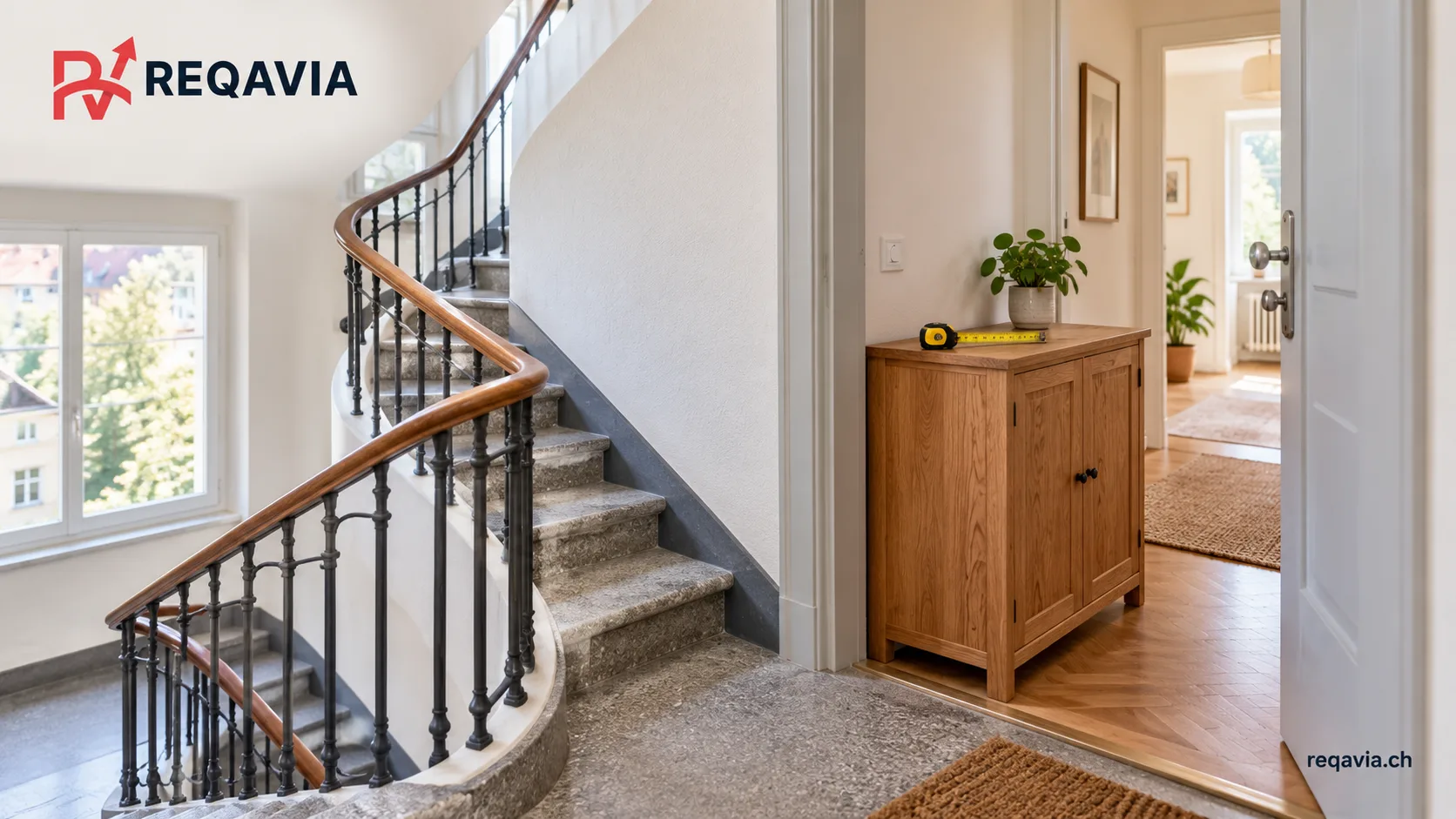
“Fourth floor, no lift” is important information, but it leaves much unanswered. Is the staircase straight? Is there room to turn on the landing? Does a narrow flat entrance create the main obstacle? These details can change the people, equipment and time needed. Describe the furniture’s entire route to the vehicle so the company can identify questions before the removal day.
Make a short photo record of the route
- Start in the room, then photograph its doorway, the corridor, the flat entrance, stairs and building entrance. Show difficult points from two directions. Conceal residents’ names, letters and other personal information.
- Record the furniture’s length, width and height, along with the narrowest openings and important landings. Use the same measurement unit throughout. A doorway width alone does not prove that a long sofa can turn immediately afterwards.
- Identify parts that can actually be detached, such as table legs or removable shelves. Do not assume that every large wardrobe can be dismantled without damage. Mention uncertain joints and any existing defects.
- Include the route from the building to the vehicle: outside steps, uneven surfaces and approximate carrying distance. If the stopping location is still uncertain, describe it as an unresolved point.
When to request an advance assessment
Ask for an assessment before the job if an item is unusually heavy, fragile or of unclear construction. A tight stairway turn is another reason. A visit helps establish constraints and responsibilities; it does not guarantee any particular method. Moving furniture through a window or altering the building is not an automatic fallback. Suitability, responsibility and any permissions or approvals needed for that situation must be established first.
Agree what happens if the item will not fit: who authorises further dismantling, what work is included and how changes are approved. Settling a price and then trying to force the furniture out risks damage and injury. Suva’s prevention guidance on heavy loads highlights planning and suitable handling aids.
Prepare the building and the request
Choose a time consistent with building rules and coordinate relevant arrangements with the person responsible. Clear the route without blocking other residents’ access. Do not remove a shared door or handrail yourself. Ask the company how it will protect surfaces and manage people passing through during the work.
You can submit a moving or clearance request through REQAVIA with a written description of the furniture, measurements and access route. Share any photos directly and privately with the company during coordination. REQAVIA connects the parties; the method, team, equipment, price and scope are agreed directly with the company carrying out the work. This gives competing quotes a common factual basis.