
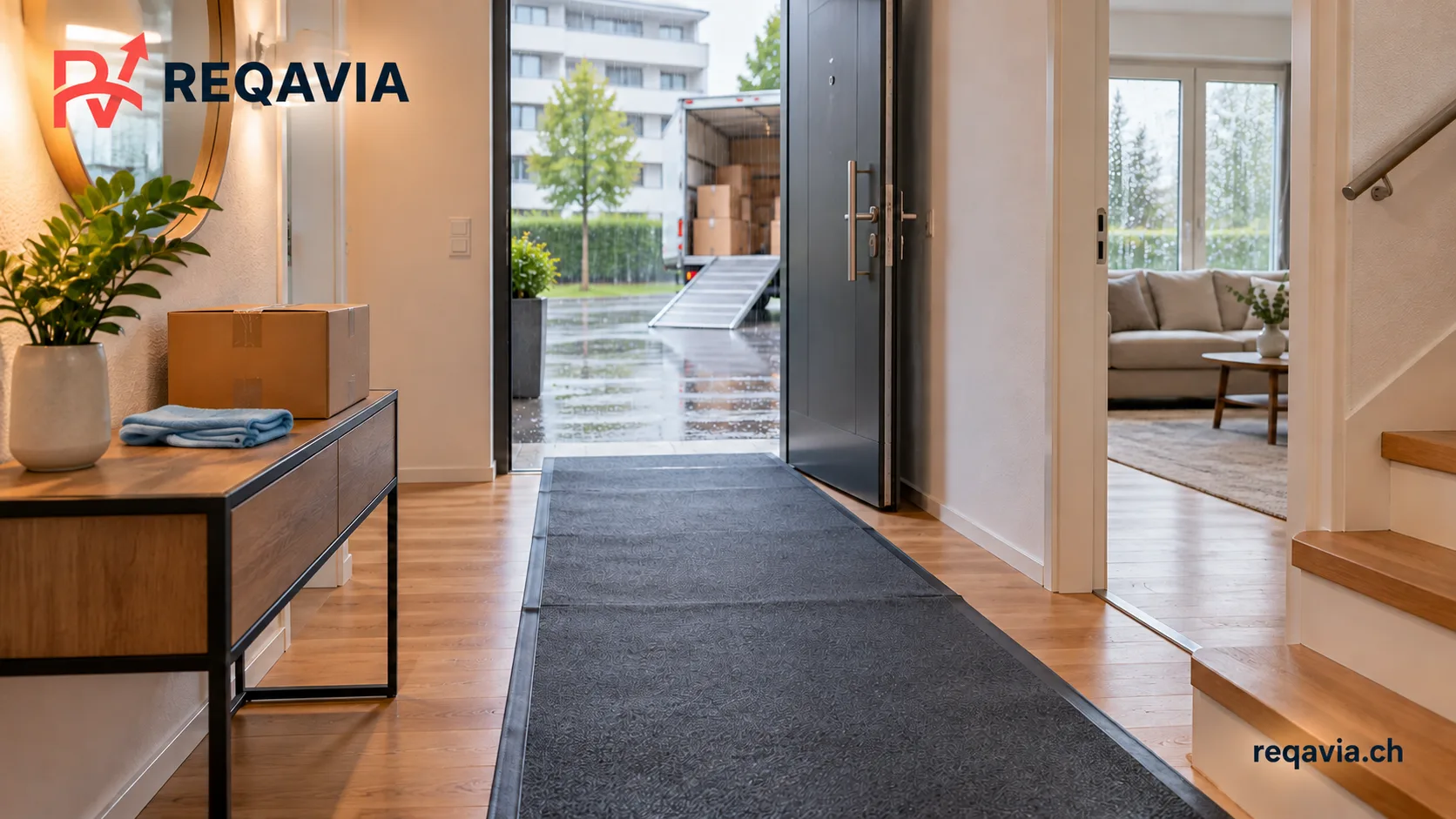
When rain overlaps with your move and end-of-tenancy cleaning, first agree where people and equipment will travel. Ask the company whether that route should be cleaned after the last load. Cleaning a hallway while wet shoes and trolley wheels repeatedly cross it creates a coordination problem that an earlier start alone will not solve.
Map the journey from vehicle to room
Describe the distance between the expected unloading point and the entrance, whether any part is sheltered, and the stairs, thresholds and lift involved. Identify the surfaces along the route: a tiled entrance, wooden hallway and carpeted room may need different protection. Say when you do not know the material rather than guessing.
Check which doors must remain usable and where residents will pass. Agree with the team where wet wrapping, umbrellas and used protection can be handled without blocking the entrance, stairway or shared corridor. Do not turn a communal landing into a temporary storage area without permission. Keep children and pets away from the working route.
Choose the sequence before two teams arrive
If furniture has to pass through every room, finishing the move before cleaning may be the workable option. If some rooms can genuinely be kept out of the carrying route, the company may clean them earlier. Ask it to assess the layout; an imaginary line across a busy corridor does not create a separate work zone.
Name one contact who can coordinate the movers and cleaners, and exchange the relevant arrival times. If the cleaning offer assumed an empty flat with no traffic, tell the company when that assumption changes. Agree whether a later visit or final pass is needed, who will do it and how any price change will be approved. Do not assume repeated cleaning is automatically included.
Let the surface and safe movement determine protection
Ask the company how it will select, place, inspect and remove protection suitable for the floor and the carrying equipment. Mention recently finished or sensitive surfaces and pass on care information you already have. Do not apply adhesive tape or improvised covers first and ask about compatibility afterwards.
Loose sheets, curled edges and wet coverings can create new obstacles. If protection shifts or water gathers, alert the team and have the route made safe before carrying continues. Do not insist that workers remove suitable work footwear or use slippery shoe covers merely to keep the floor looking clean.
[Suva’s building-cleaning prevention guidance](https://www.suva.ch/de-ch/download/checklisten/stopp-den-stolper--und-sturzunfaellen-beim-reinigen-von-gebaeuden/stopp-den-stolper--und-sturzunfaellen-beim-reinigen-von-gebaeuden--67189.d) calls for checking hazards on site, adequate lighting, marking wet floors and blocking particularly hazardous areas. Agree who monitors these points while conditions change. A warning sign alone should not become a reason to keep carrying through an unsafe passage.
Review after the last trip, not the first clean
Confirm that furniture collections, deliveries and other visits are finished before the final floor clean. Arrange removal of the temporary protection and check the previously covered areas. Keep access to freshly cleaned or wet sections under the team’s control until they are safe to use. Do not step into a slippery area simply to take a photograph.
During the walkthrough, distinguish new dirt from a scratch, swelling or another possible defect. Record observations without trying a stronger cleaner or forceful rubbing on an unidentified mark. An uncertain surface problem or persistent water entry needs assessment by the appropriate specialist or property manager, not another improvised cleaning attempt.
Put the coordination problem in the request
For a moving and cleaning request through REQAVIA, describe the addresses, floor, lift, carrying distance, known surfaces, overlapping work and handover timing in text. Update the company directly when weather and access become clearer. Useful photos can be shared privately with it during coordination; the request form does not accept photo uploads. REQAVIA is an intermediary. You agree the work, price and execution directly with the company; a request does not itself confirm a booking or handover acceptance.