
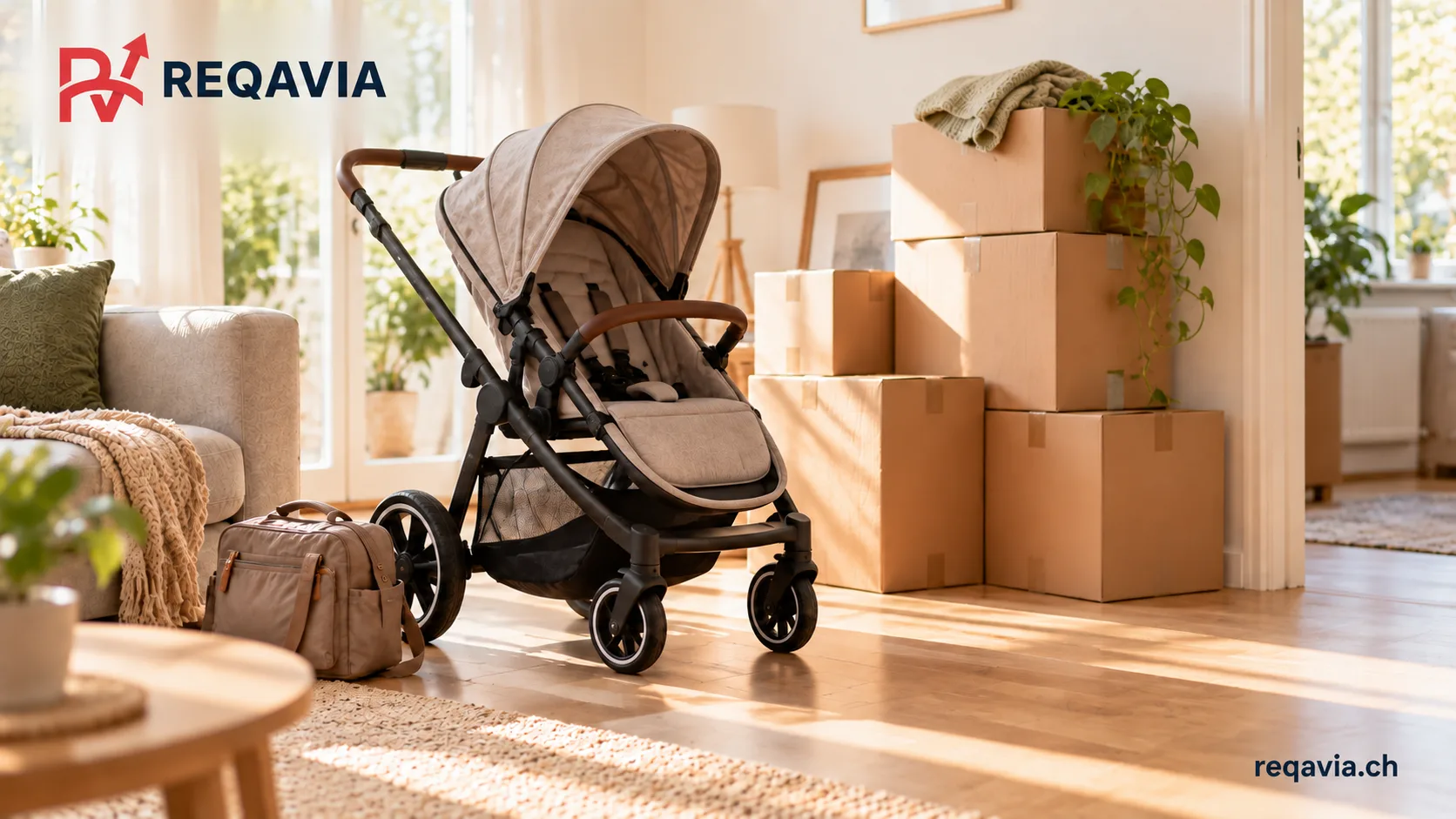
If you need the pushchair while your furniture is travelling, do not let it disappear with the first load. Decide who will accompany your child and when the family will use the pushchair, then choose how it travels. Even a carefully packed pushchair is little help if it is inaccessible in the vehicle during the wait between homes.
Divide the day into three periods of use
Walk through the day with the person caring for your child, looking beyond the departure time. Handing back the old property, travelling and getting access to the new one may involve different time windows. Record three points explicitly:
- Until when will you need the pushchair at the old address?
- Who will have it during the journey and any waiting time?
- When must it be ready to use at the new address?
Compare two options. If it stays with the family, confirm space and arrangements for carrying it separately. If it travels with the moving company, agree when it will be handed over and a realistic window for retrieving it. A label alone does not ensure that the pushchair can be taken out of a loaded vehicle whenever you want.
Keep the equipment you actually need together
Record the model and components: frame, seat or carrycot in use, hood, compatible adapters and necessary covers. Separate the day's equipment from accessories that can wait. Do not place an essential connector in a random clothing box. Empty the shopping basket before handover and remove personal belongings; the mover cannot know which bag is meant to stay with you.
For a pushchair travelling packed, give the intended package's external dimensions and the number of separate pieces. Measure it after folding following the instructions for your model, without forcing an unfamiliar mechanism. Agree who folds and packs it and whether the intended container fits. A brand name or the description “small pushchair” is not enough to plan the space it needs.
Separate handover, childcare and delay arrangements
Name a person responsible for your child and a contact for the moving company. Taking possession of a pushchair is not an agreement to provide childcare or transport the child. If one person coordinates both, avoid making them help with loading while simultaneously supervising the child. Plan a suitable waiting place away from the working area and an alternative if the wait becomes longer.
If the pushchair stays with you, say so during the initial walk-through and mark it clearly. If it goes with the company, confirm the collection point, recipient and desired early retrieval time. Ask specifically what is possible if there is a delay. A separate bag of daily essentials stays with the caregiver regardless of who transports the pushchair.
Check before and after transport
Check the pushchair in advance using its instructions. A sticking folding mechanism, damaged component or unreliable lock needs competent assessment before the move; do not expect the moving crew to repair it. The Swiss Council for Accident Prevention, BFU, advises correctly securing children in pushchairs and applying the brake when stationary. Follow the intended use of your particular model.
BFU: travelling safely with children, German guidance
On arrival, check the components, visible condition and setup according to the instructions before your child uses it again. If there is damage or an uncertain locking mechanism, do not improvise a fixing. Document the problem and use the alternative you arranged until a suitable professional has assessed the pushchair.
Make the transport request unambiguous
Include the pushchair in your REQAVIA text request for moving only if it will actually travel with the company. State packed dimensions, accessories, both addresses, timings and when you need access at the destination. Share useful photographs directly and privately with the company during coordination. REQAVIA acts as an intermediary; agree the scope, price and execution directly with the company. Have the agreed arrangements included in the transport description.