
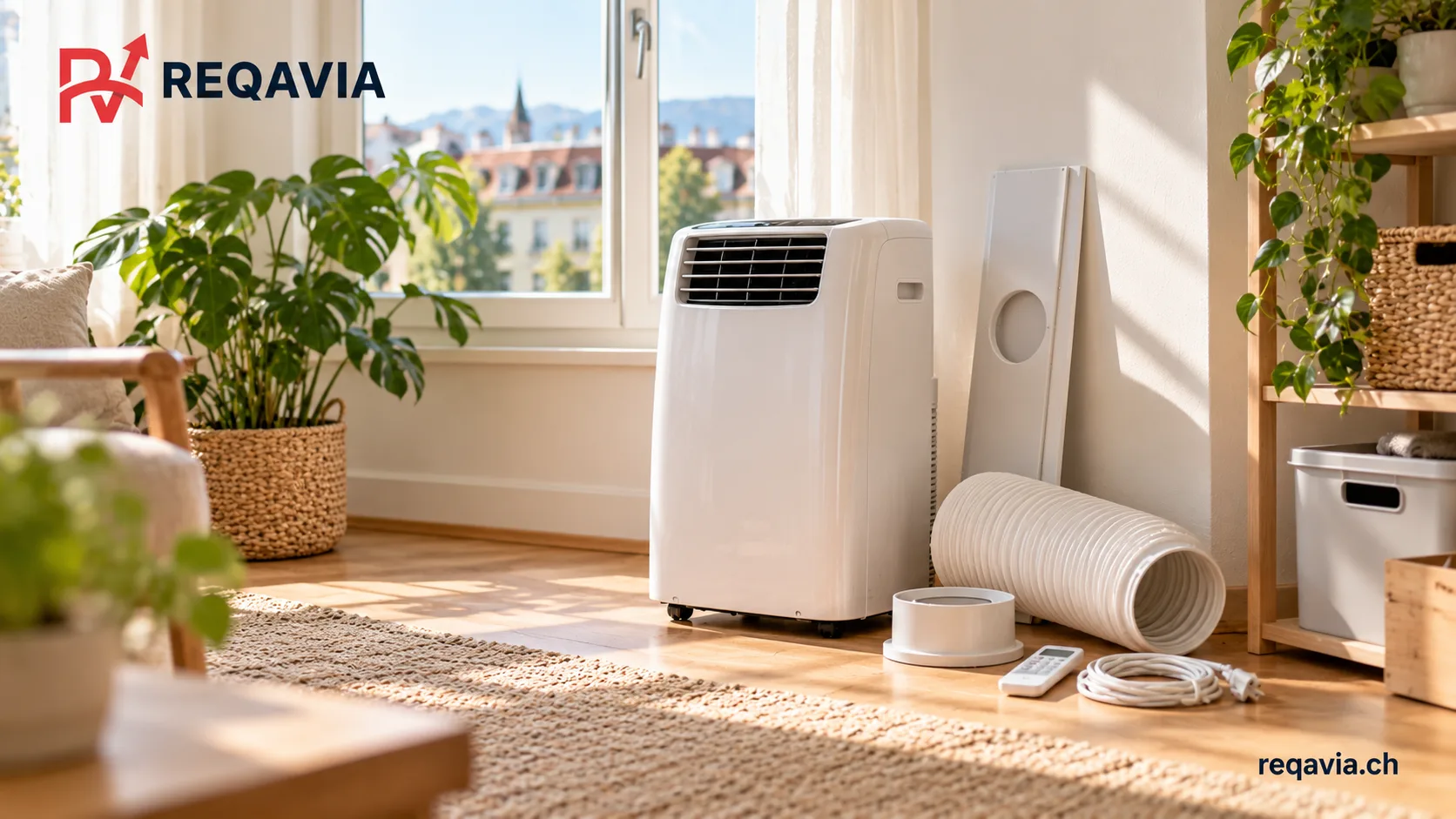
A portable air conditioner is not necessarily ready for storage simply because it is unplugged and its hose has been removed from the window. Establish the preparation needed for your model and inventory the complete kit. That makes retrieval a coordinated task. A missing connector or an unresolved preparation step should remain visible before storage, rather than being discovered when the next warm spell arrives.
Make “ready” a meaningful status
Find the model reference and your own operating documents. Record who will carry out the preparation specified there and which questions still need answers. This guide gives no universal draining procedure, transport angle or waiting period before restarting. Instructions for a different appliance should not be transferred automatically. If the documents are missing or the condition is uncertain, ask a suitable specialist to assess the preparation required.
Distinguish “preparation outstanding”, “preparation completed” and any known fault in the inventory. Include a date and the responsible person. Storage does not resolve a defect. Disclose observed damage or leakage before acceptance and establish whether technical assessment is needed first. Do not expect the storage company to perform maintenance or repairs that have not been described and agreed as part of its work.
Inventory one connected set
Gather the exhaust hose, connectors, window fittings, remote control and other components actually present for an inventory. Count them and describe distinguishing features instead of writing only “accessories included”. A private photograph of the laid-out kit may provide a useful reference. If anything is missing, keep it on the outstanding list; do not describe a set as complete when its contents have not been checked.
Prepare protection according to the components’ shapes and your own technical documents. Do not force a hose into an undersized box or detach fixed components merely to reduce the space required. A separate accessory package needs an inventory reference connected to the appliance. If the packages occupy different positions, record both locations so that part of the kit is not left behind during collection.
Agree acceptance and the handling route
Give the company dimensions, any weight stated in your documents, packaging details and the preparation status. Describe stairs, thresholds and narrow sections between the current position and the proposed storage location. Wheels on the appliance do not establish that the whole route can be managed without assistance. Handling should be planned around the actual appliance and access, rather than improvised when it arrives.
Confirm acceptance and an appropriate storage arrangement explicitly. A nearby electrical socket does not authorise operating the appliance or draining water at the facility. Define the service, any preparation charges and the process for making the kit available at the end. Also establish who delivers the equipment and who retrieves it. Compare offers against that same scope and information, including any tasks still excluded.
Consider the next window and room
If the appliance will later be used in another home, record the window arrangement and unresolved installation questions there. Keeping every component does not guarantee that an old window insert fits a new opening. Have suitability assessed separately and clarify any necessary local agreement. Plan retrieval with time for inspection and preparation under your own instructions; storage is not an automatic promise of installation.
In a REQAVIA text request, include the model, dimensions, accessory packages, known condition, preparation status and intended storage period. Ask the company to clarify remaining acceptance or access questions. REQAVIA acts as an intermediary; you agree services, prices and execution directly with the company. Useful photographs can be shared privately during coordination. Describe the situation in the request form without uploading images or files.