
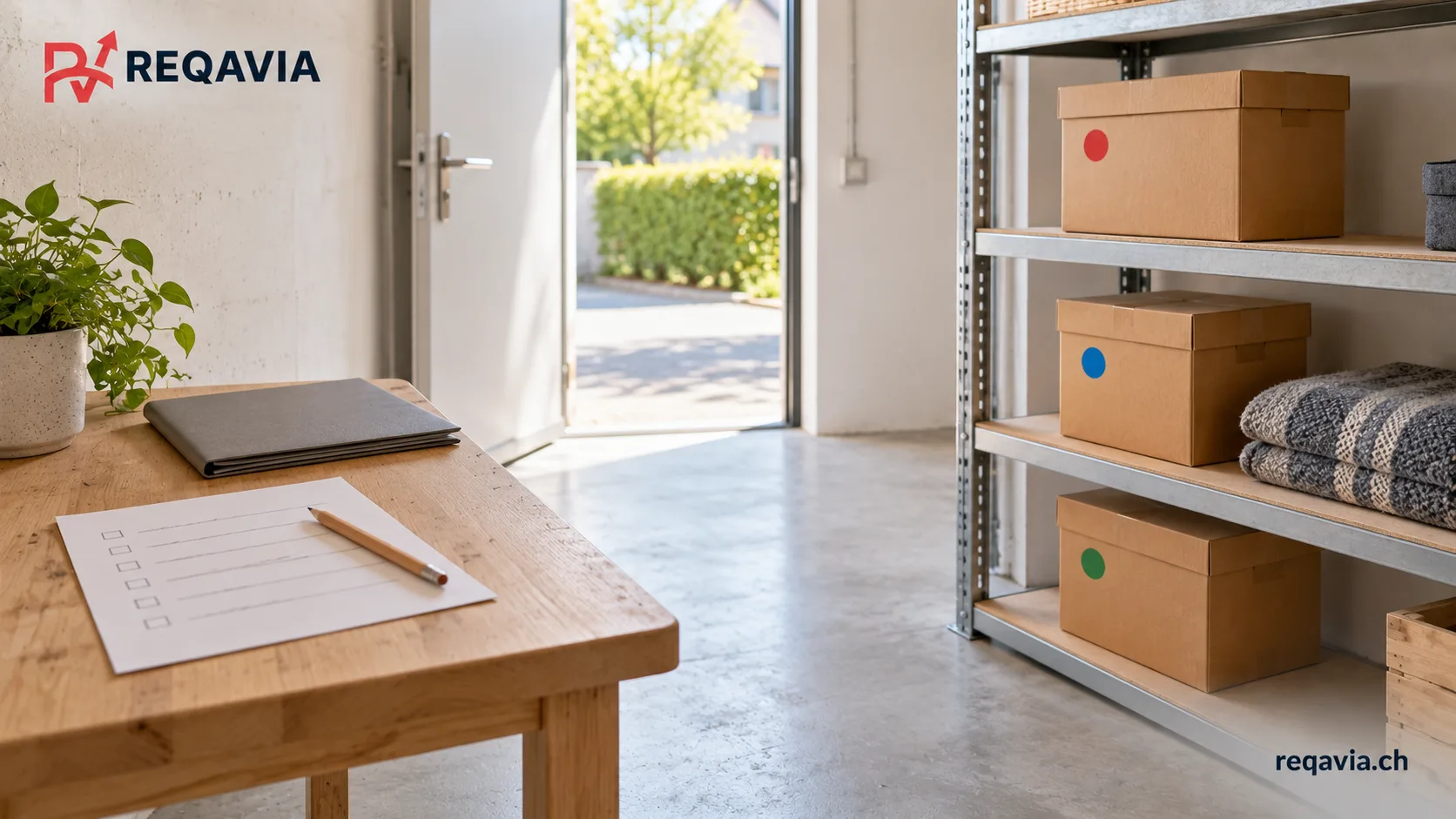
You do not need an app to keep a useful storage inventory. Give every box and large individual item a fixed number, describe its contents briefly and record its location. The system remains usable when entries are understandable and updated with each change. Start with a few fields you can realistically maintain.
Four sheets with distinct jobs
- Inventory: record the number, general contents and location. Add the owner where belongings come from several people, plus any associated accessories. Personal documents and sensitive details should not appear on a list everyone can see.
- Storage map: sketch the door, zones and positions of groups. Give zones distinct names. “Zone A, by the door” is clearer than “at the back”, which can mean different things from different viewpoints.
- Movement log: record what leaves, when, who takes it and whether it is expected back. Distinguish taking a whole box from removing only some contents.
- Arrangements sheet: keep appointments, company contact details and known procedures for visits or collections together. Store it where you can consult it outside the unit. Keep access codes and passwords separately in a protected place.
An entry such as “B12 – adult winter boots – zone A, by the door” shows the useful level of detail. “Winter things” is too vague when spread across several boxes. Mark the container legibly. Coloured dots can supplement the identifier but should not replace its unique number.
Choose one reference version
Decide which copy is authoritative and who updates it. If several people use the storage unit, establish how they report collections. Give the version a clear date. You can make a copy or photograph for your own reference; after changes, everyone needs to recognise which version is current.
If contents move into a new container, retain their identifier and record the packaging change. If divided between two containers, use distinct identifiers such as B12a and B12b and note the split against B12. Do not silently reassign old numbers to different belongings: an earlier note could then point to the wrong contents.
Record the whole collection
- Find the number in the list and on the map before opening boxes.
- Compare the contents you find with the entry. Mark unverified information explicitly.
- Enter the complete or partial removal in the movement log straight away. Update the contents description when necessary.
- Correct the location of moved containers in both list and map. When items return, add the date, contents and current position.
Leave enough space for handwritten additions. In a multilingual household, two descriptions can share the same number. Do not make them separate inventories. Short, precise words are more useful than abbreviations understood by only one person.
Test with a small collection
Test the sheets yourself or ask another person involved to find a particular object and record its removal. If you have to open boxes at random or call the owner, something is missing. Add that specific detail. Avoid writing a long list from memory after leaving the storage site.
Include large or fragile individual items too. Record only known dimensions and characteristics, marking uncertainties. If an object cannot be described adequately for storage planning, or its handling needs are unclear, ask the storage company to assess it.
Turn the inventory into a storage brief
For your text storage request through REQAVIA, summarise the number of containers and their general contents, large items, approximate dimensions, intended duration and access needs. Private details from the full inventory are unnecessary. Share useful photographs directly and privately with the company. REQAVIA acts as an intermediary; you agree the storage scope and price directly with the company, which provides the service.