
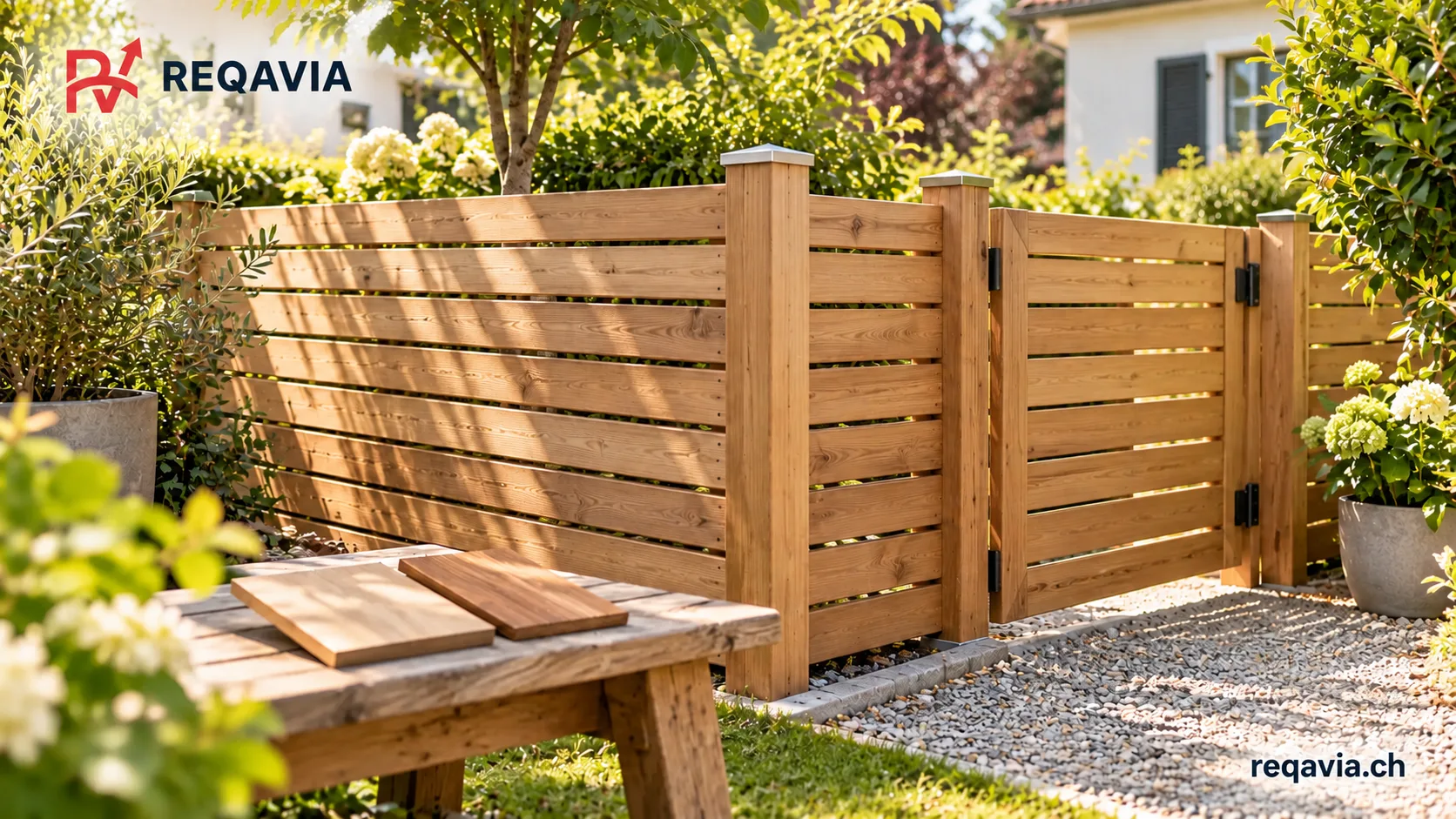
Fence length alone does not describe a painting job. Slats, posts, edges and gates may add work that is missing from a quotation for the visible face. Before comparing offers, draw a simple plan and name exactly which parts and sides you want treated. Then check who can authorise the work and how the painter will reach each section. An inaccessible face should be a known exclusion, not a discovery on the day.
Make a section-by-section description
Divide the fence at corners, gates and changes of construction. Give each section a reference and note its approximate length and height. Describe whether boards are closely fitted, spaced or overlapping. These details help a company understand the work without treating a rough length-by-height figure as an exact paintable area. If a measurement cannot be taken safely, mark it as unconfirmed and request an assessment.
- Name the garden-facing and outward-facing sides of each section.
- Count gates and posts, and specify whether edges, tops and other accessible faces are included.
- Identify metal fittings, bases or neighbouring elements that must remain unchanged.
- Record restricted sections and explain why access is uncertain.
Confirm the decision-maker for shared or neighbouring parts before asking the company to work on them. If you are a tenant or manage the job for someone else, clarify the approval with the responsible owner or management. Do not assume the fence’s position alone establishes who may choose its appearance or permit access from the other side.
Arrange access as part of the job
Look at the route along both faces. Plant pots, shrubs, stored objects or a neighbour’s shed may prevent the painter reaching the timber. Agree who will move what, where it will be placed, how plants and surrounding surfaces will be protected, and who restores the area afterwards. Access to another property needs an explicit arrangement before it becomes part of the schedule.
Ask whether the proposed method needs space beyond the narrow strip you can see. If one side cannot be reached, have the quotation state precisely what will remain untreated. Also confirm gate access during the work, particularly if it is used by residents or deliveries. Do not improvise a passage through the work area after the job has started.
Separate timber repairs from the finish
Point out loose boards, cracks, visibly deteriorated sections or a gate that does not close properly. Do not pull or dismantle a weak part just to photograph it. Ask for an assessment and a separate decision on any repair or replacement before painting. Clarify whether the painter accepts that additional work or whether another suitable trade must complete it first.
Describe the existing finish if known. Where layers or materials are uncertain, let the company assess preparation before anyone sands or strips them. You do not need to identify a coating by trial and error to submit a useful request. Record which surfaces can be priced now and which depend on that assessment.
Approve a representative sample and a workable schedule
Decide whether you want the timber grain visible or a covering finish. Review a sample representative of the existing fence, including repaired timber where relevant, and discuss colour and sheen together. Do not assume one colour reference guarantees an identical appearance on every old and new board. Ask how weather-related delays, protecting unfinished sections and continued access would be handled, without imposing a universal drying time.
Check the same sections at handover
Use your plan to review agreed faces, edges, posts and gates, then confirm removal of protection and any outstanding items. Keep the accepted finish details for future maintenance. In a REQAVIA text request, describe dimensions, condition, sides, access and approval status. REQAVIA is an intermediary; scope, price and execution are agreed directly with the painting company. Share photographs directly and privately during coordination so the company can assess the actual fence.