
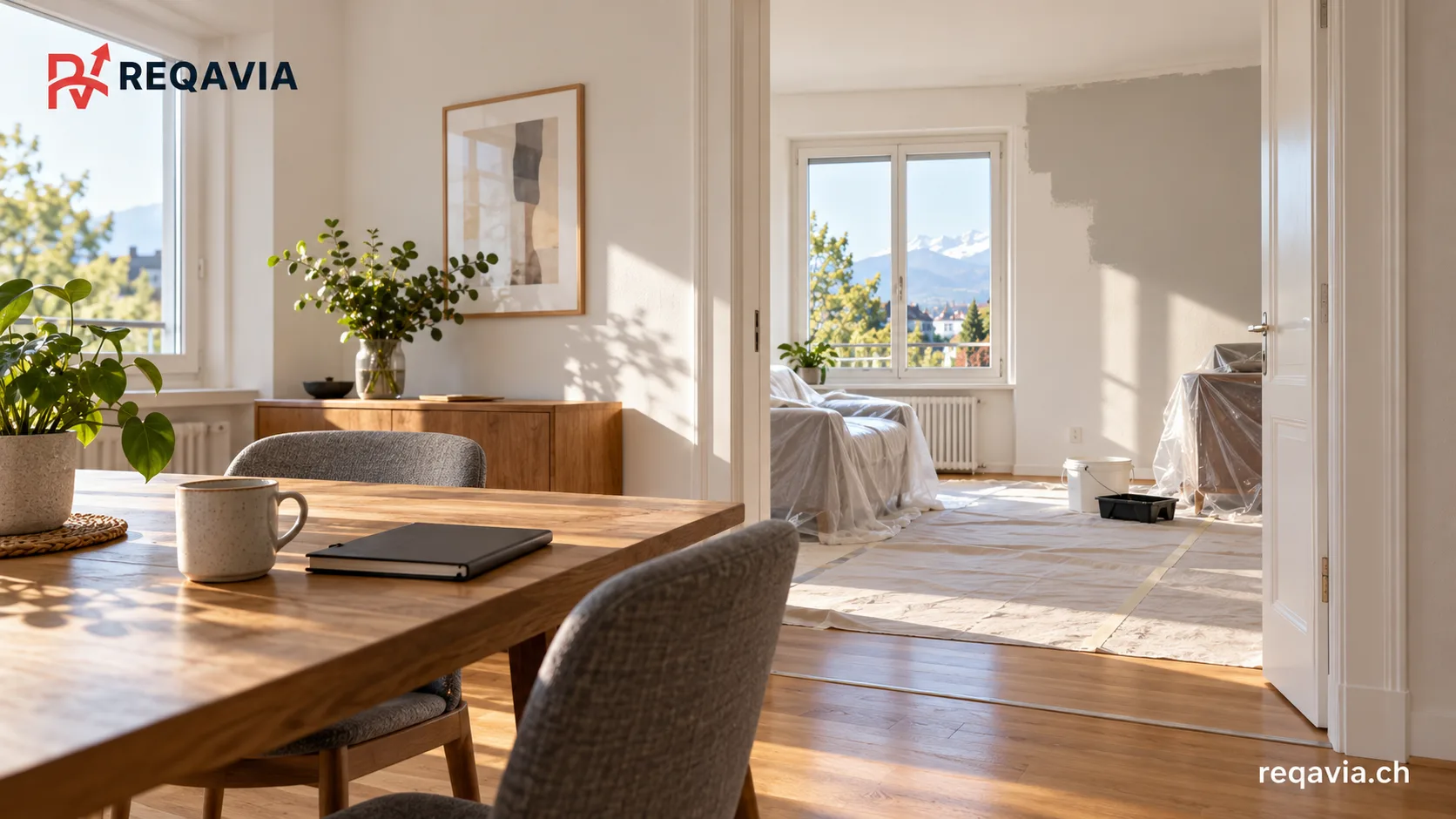
If you want to remain at home during painting, ask for a schedule based on rooms you can actually use. Start by recording where you can sleep, eat and work, and which routes you need every day. The company needs to assess whether that arrangement suits the proposed work and materials. A workable timetable includes an alternative for each room that will temporarily be unavailable.
Connect each room with your daily needs
Make a short entry for each room: its use, approximate size, furniture, requested work and possible alternative space. Separate walls, ceiling, doors and other surfaces. Mention fixed commitments such as work calls or caring routines. Identify which activities can move and which need an available place at a particular time.
Discuss access to the bathroom, kitchen and exit explicitly. Plan areas for children and pets outside the work zone. Explain particular needs that affect the sequence without putting unnecessary personal information into the request. If a health condition affects your arrangements, seek appropriate individual advice before committing to remaining in the property.
Choose the order around your alternatives
Start planning with a room whose function you can move elsewhere. Decide where its furniture and contents will wait. Another room can serve as storage only if it is not simultaneously needed as your office, bedroom or the next work area. Highlight these overlaps before the company sets its sequence.
Agree who will move furniture and put it back, and whether that work is included in the quote. Keep essential routes clear and do not use the exit as temporary storage. If no workable sequence emerges, discuss different stages or temporary accommodation with the company. Wanting to stay needs to be matched by a room arrangement that can function.
Treat preparation as its own stage
For each room, ask about clearing, protection, surface preparation, painting and clearing up. Have the company explain which areas will be unavailable at each point and who will confirm when they can reopen. A room where walls are being prepared should not also become the unplanned storage space for all your belongings.
Mention known marks, loose areas and previous alterations. Have unknown older materials or unexplained damage assessed before committing to a tight programme; do not undertake your own preparation on them. Agree that newly discovered conditions will be described before their effect on work, price and timing is approved.
Plan the return to each room explicitly
The [Federal Office of Public Health](https://www.bag.admin.ch/de/materialemissionen) recommends adequate waiting time before occupying renovated rooms because newly applied materials release emissions. Ask the company for ventilation and use instructions specific to your job. Completion of the final coat does not automatically mean that the bedroom is available again for your plans.
For each room, clarify when furniture can return and what conditions apply before sleeping or spending extended time there. Record the required arrangements and your contact person. Keep an alternative available if the room can be used later than expected. A general number of hours, or relying on smell alone, is not a sufficient agreement about returning.
Make a short plan for the next day
Choose one person to review progress with the company: what is finished, what remains unresolved and which room must be ready tomorrow. Agree a place for tools and materials outside areas used by children and pets. Additional requests should be confirmed with updated work and timing before they delay the next room.
Write a request with the important constraints
For example: “We will remain in the property. Work is planned in … rooms, on these surfaces: … . Room … can serve as an alternative; we need the bathroom and kitchen at … . Please include furniture moves, protection and returning rooms to use in the programme.” Add your available dates and points that need a visit.
Submit this text as a painting request through REQAVIA. Useful photographs can be shared later, directly and privately with the company. REQAVIA is an intermediary; you make the agreement and arrange the price and work directly with the company.