
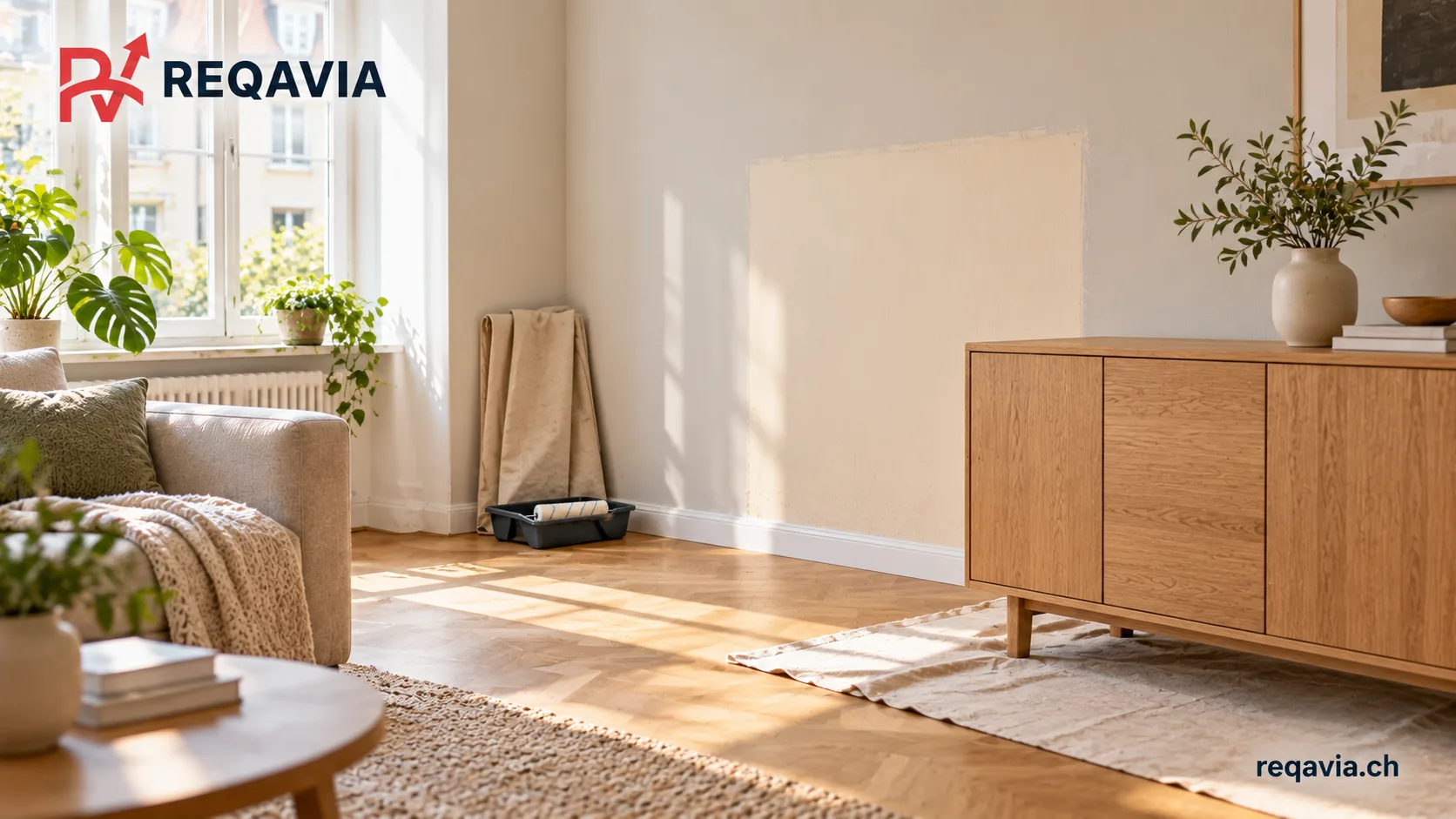
If you may move a cupboard or replace a large bookcase after painting, include the wall it currently hides in the scope discussion. Otherwise, your new layout could expose an area deliberately left outside the work. You do not need to move every piece automatically. Decide which surfaces should be painted, which remain excluded and how the company will reach them before accepting an offer.
Describe the room as it will be used
Start with the current arrangement and the likely next one. Mark furniture that will stay, move within the room or leave altogether. If you have not chosen a replacement, explain the uncertainty rather than giving the painter a furniture outline that may soon be wrong. Give walls stable references, such as “opposite the window”, instead of naming them only after a movable cupboard.
A simple sketch can help during direct coordination. Note approximate wall dimensions and the width and height of the furniture that blocks them. A floor plan alone does not show how much wall a tall unit hides. Add a description of the visible height, corners and lower edges, without climbing or moving something unsafe just to obtain a measurement.
Compare two clear scopes
Ask for a defined option that includes the areas you expect to reveal and, where useful, an alternative covering the complete wall. Compare preparation, furniture handling, protection and access as well as the painted area. A smaller painted surface does not mean the same preparation or movement is included.
If a unit will remain in place, identify the exact boundary of the work. Check whether that edge will be visible from the doorway or after a nearby chair moves. Record exclusions for concealed sections, corners, skirting or fittings where relevant. Do not rely on “paint around the furniture” as a description both sides will necessarily interpret alike.
When the future layout is undecided, ask what would be involved in returning later to paint the excluded area. Have the company explain the likely scope and how it would assess the appearance. Do not assume a later small patch is already included or that its result can be promised before assessment.
Separate moving from dismantling and installation
List who empties furniture, moves it, protects the contents and puts it back. Confirm whether the painting company actually includes the required handling. A freestanding low cabinet, an anchored tall unit and a connected appliance need different arrangements; their presence is information for the assessment, not permission to disconnect or dismantle them yourself.
Tell the company about fixings, unstable parts, difficult access or uncertain wall materials. Ask for appropriate professional assessment before removal, drilling or alterations where these are unresolved. Do not loosen anchors or move a heavy piece alone to take a photograph. If safe access cannot be arranged, agree an exclusion or another sequence before work begins.
Agree protection and the order of work
Identify a temporary furniture position that leaves the agreed working and walking routes clear. Ask the company how it will protect the furniture, floor and adjacent finishes, particularly sensitive surfaces. Agree who supplies and removes protection. Avoid applying unfamiliar tape or coverings yourself simply because a surface must be covered.
Once a hidden area is accessible, have the company inspect its condition and confirm any preparation changes before carrying them out. Keep one updated scope rather than adding instructions through several family members. If the work changes, confirm the additional tasks and price directly with the company.
Check concealed areas before returning furniture
Arrange a review of the painted areas before furniture hides them again. Record what was included and any outstanding point, and keep useful photographs privately. Ask when each piece may return near the wall and what care instructions apply to the actual work. Do not choose that time yourself from appearance or touch.
In a REQAVIA painting request, describe the current and proposed layout, affected walls, approximate dimensions and handling still needing agreement. The form accepts text; share sketches and photos privately and directly with the company during coordination. REQAVIA is an intermediary. Scope, furniture handling, price and execution are agreed directly with the company.