
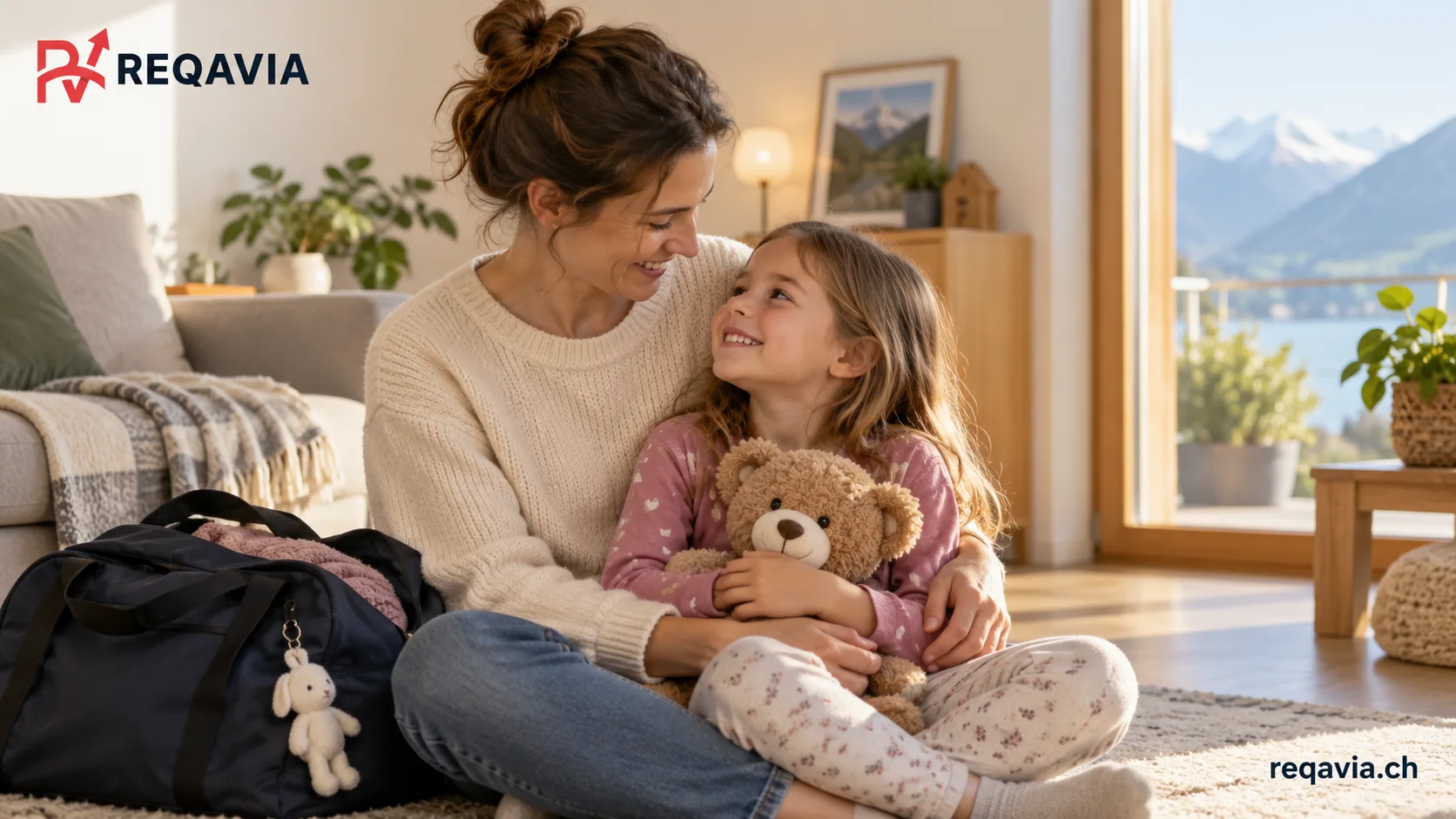
Moving day brings open doors, people working and boxes travelling between rooms. Children do not make the plan impossible, but responsibilities need to be clear. One person should not have to supervise the team and care for a child at every moment. Decide who will look after the children and where they will spend the busiest stages, according to your family’s needs and options.
Reduce the decisions needed on the day
- Prepare a bag for each child covering the day and following night, including a familiar item and spare clothing as needed.
- Keep meal and rest routines where practical, rather than adding visits and extra errands.
- Choose a suitable quiet space away from the work or arrange alternative care. A room full of unstable boxes is not an appropriate waiting area.
- Explain the plan in an age-appropriate way and where belongings will be found. Small tasks should not involve carrying loads or entering the work area.
Before the team arrives, establish who answers moving questions and who accompanies the children. If one parent goes out with them, the other still needs the furniture plan, keys and contacts. Avoid several people making uncoordinated decisions: conflicting instructions prolong activity around the home.
Create an initial familiar place at the destination
The whole child’s room does not need to be finished immediately. A quiet spot and a familiar object make arrival easier to understand. Before use, check that furniture has been assembled appropriately, particularly sleeping and storage furniture. Do not use half-assembled pieces because everyone is tired, and keep tools and small packaging parts out of reach.
A common mistake is loading the child’s bag with the boxes or allowing a child to follow a toy through the carrying route. Keep the bag with the family and tell the team which belongings are outside its load. If the plan changes, give a clear update to the person providing care instead of expecting them to infer new arrival times.
In a REQAVIA request, you can mention children in the household and the need for clear stages without sharing unnecessary personal details. Agree arrival, routes and priorities directly with the company. A well-organised plan gives everyone a defined role and leaves the family energy to settle in when the work is finished.