
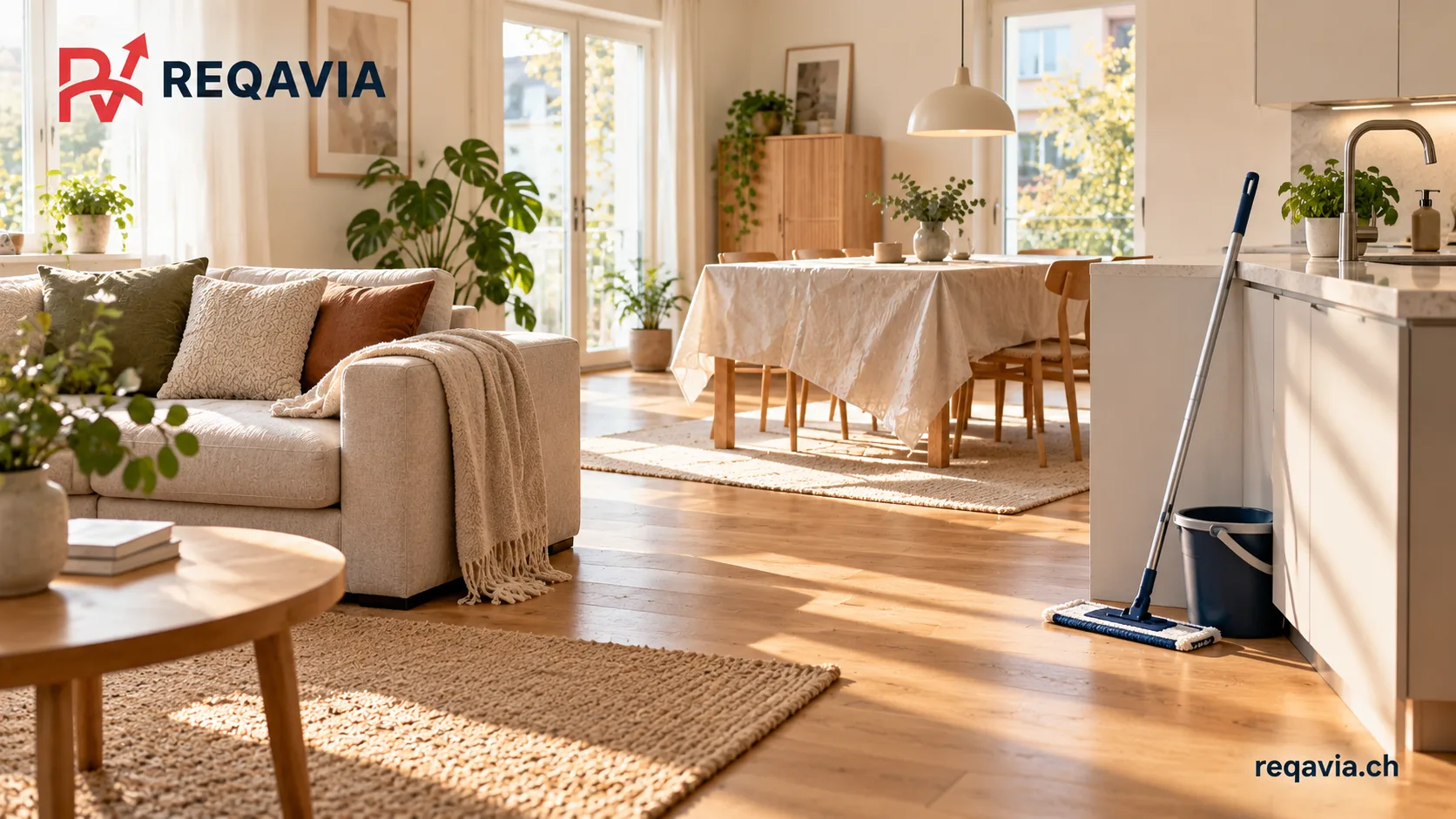
For an open-plan kitchen clean, describe both the work area and the furnishings beside it. A dining table, sofa or television may sit close to the surfaces being treated even when you only want the kitchen cleaned. Agree what is included, what needs protection and where the team can move its equipment before the appointment.
Draw the boundary in words
List the kitchen elements you want cleaned: worktops, island, cabinet fronts or interiors, agreed appliance parts, splashback and floor. Specify the relevant sides and whether contents will be removed. Do not use “the kitchen” as the only definition when a worktop continues into a dining counter or the same floor extends through the living room.
Name nearby elements separately. Is the dining table included, merely beside the work, or a place that must remain untouched? Where should the kitchen-floor cleaning stop? Use stable features, such as the edge of an island or a doorway, rather than an imagined line that only you can see. Ask the company to confirm that it understands this division.
Describe the furnished surroundings
Tell the company what remains close to the work: upholstered seating, rugs, timber furniture, electronics or personal objects. Note the approximate gap to the kitchen and any narrow access. If materials or finishes are unknown, say so rather than supplying a confident guess. Ask whether a visit or additional measurements are needed to plan the work.
Distinguish protection from cleaning. Excluding the sofa from the cleaning scope does not explain how the team will work beside it. Ask what preparation and protection the company proposes and who provides it. Do not select adhesive coverings or treatments yourself without checking their suitability for the actual finish.
Prepare what you can legitimately move
Remove food, paperwork and small belongings from the agreed working area to a known place. Include the nearby table edge if items there would interfere with the work. Do not hide possessions in an appliance or cupboard that is itself due to be cleaned. Keep the excluded items identifiable so they are not rearranged as part of the visit.
If a large piece blocks access, discuss moving it beforehand. Ask who can assess and perform that task and whether it is included. The cleaning appointment should not depend on an unplanned heavy lift or a device being disconnected on arrival. Describe visible cables and access constraints without attempting unfamiliar technical work yourself.
Agree movement through the connected room
Choose a place for equipment that keeps household access usable. Explain whether people will be home and which route they need. Ask when an area can be used again and how the company will communicate any temporary restriction. Do not make the living room the default storage place for every tool simply because it is next to the kitchen.
Confirm how the team will review the shared route and nearby surfaces at the end. Keep a distinction between an agreed cleaning task and checking that adjacent belongings remain in their previous condition. Where useful, record a relevant existing mark before work; avoid turning this into a collection of unnecessary private photographs.
Make the request specific
In a cleaning request through REQAVIA, state that the kitchen opens onto a furnished living room. Describe included elements, nearby materials, access distances, preparation and any furniture that requires assessment. Helpful photographs can be shared directly and privately with the company during coordination. REQAVIA is an intermediary; scope, price and execution are agreed directly with the company. Ask it to confirm the boundary and preparation plan before the visit.