
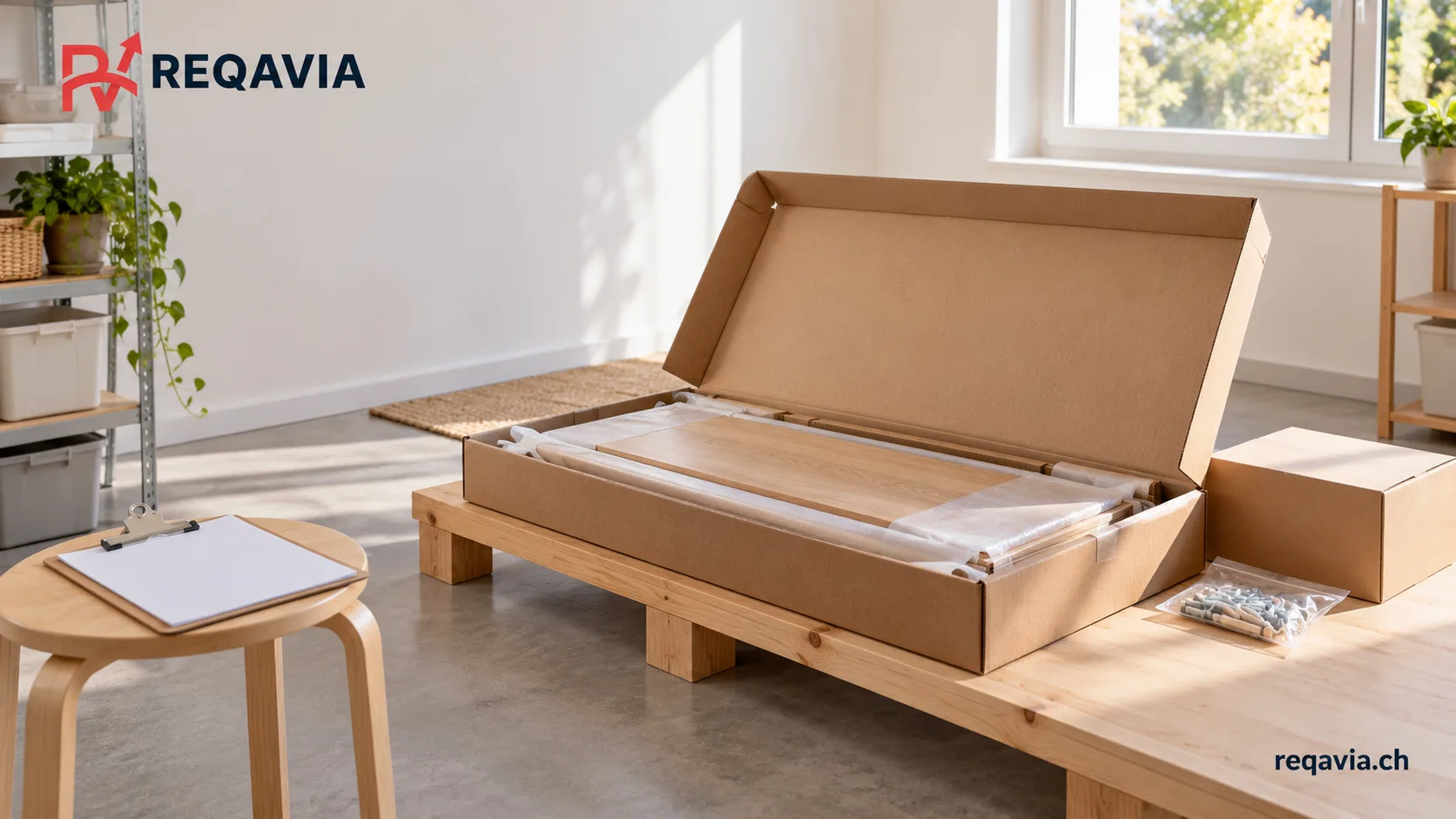
If new furniture will stay boxed in storage until you move in, plan its check before confirming the assembly appointment. “Packages received” does not mean “contents fully checked”. Ask the seller which inspection and reporting process applies to your particular purchase, and when to act. Do not assume a deadline from a different order applies. The immediate aim is an organised inspection, not complete assembly.
Give the inspection a time, place and clear scope
Bring together the order, invoice, delivery note and package list. Add the actual receipt date, existing correspondence and available photos. Ask for clarification if you cannot match a package to an item: a wardrobe may include several large packages and a small accessories box. Counting only the visible main packages does not establish that the furniture is complete.
- Match the packages: record their identifiers, associated furniture and current location. Mark missing or unassigned entries explicitly instead of identifying them as a similar-looking carton.
- Define the check: who examines the outside, who may open packages under the agreed procedure, and who records observations? A general receipt confirmation does not explain which contents were actually inspected.
- Set the place and time: ask the storage provider about suitable space and arrangements for opening and repacking. Agree the person, appointment, work and price; storage alone does not describe this additional task.
- Plan the return to storage: who repacks the checked parts, updates the inventory and puts them back? Also decide who contacts the seller if something differs.
Choose how much to open
An external check can record package identifiers and visible marks on the wrapping; it does not confirm hidden contents. If a particular component needs inspection, agree with the seller what to open and what to document. Where the check requires specialist knowledge or more room, arrange an appropriate person or space before preparing the onward shipment. Do not start assembly that you cannot finish and subsequently store appropriately.
When opening packages, work on one clearly identified furniture group at a time. Keep its labels, protective material, instructions and fittings together. Record which packages were opened and which remained closed. If the packaging or package count changes, update the list and mark the new association. Later questions can then refer to the same parts without mixing components from different furniture sets.
Keep observations easy to trace
Describe any discrepancy with its date, package or part number and a factual observation. Ask the seller for the intended reporting channel and keep the message and reply together. Do not present an unresolved suspicion as a confirmed defect. If a disagreement develops about a fault or the next steps, have your particular purchase assessed with its supporting documents.
Keep numbers and documents available outside the storage site as well. Agree how you can reach a package again if a photo or part reference is requested. Burying every carton at the back before arranging the check makes that work unnecessarily difficult. Share useful images directly and privately with the relevant company during later coordination.
Use the inspection result to plan transport and assembly
Before collection, bring together every package belonging to each item, its accessories and instructions. Do not discard a manual with packaging that appears empty. Tell the person assembling the furniture about unresolved questions before they travel. Confirm the appointment against the documented inspection result and the actual readiness of all required components.
In your text request through REQAVIA, describe the known condition, packages, storage access and unfinished preparation. Ask for a storage or transport quote that specifies additional tasks. REQAVIA acts as an intermediary; you agree scope and price directly with the company, which carries out the work. It can then plan around the furniture actually present and the checks actually completed.