
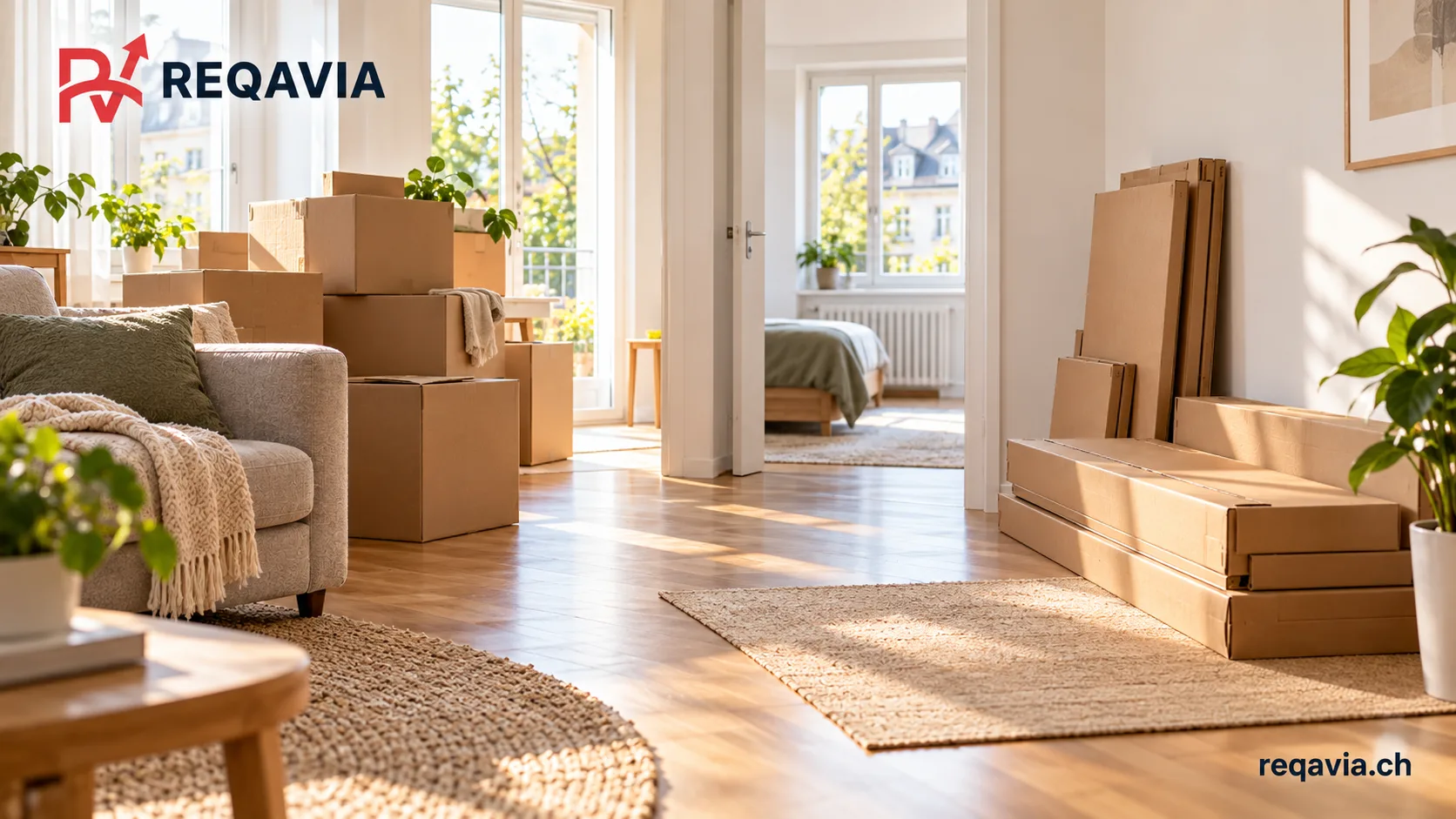
If new furniture arrives on moving day, treat it as a second job with its own access, receiving and assembly needs. Agree which team can use the entrance and lift first, and keep a separate space for the new packages. If both jobs require the same room throughout, consider a different delivery day before confirming overlapping appointments.
Establish what each team actually does
Check your furniture order: does delivery end at the building entrance, inside the flat or in the chosen room? Does it include unpacking, assembly and removal of packaging? Who must be present to receive it? Record the answers alongside the moving company's agreed scope, so that a gap between the two services becomes visible beforehand.
Do not assume the movers will accept purchases, assemble new furniture or move packages left by another team. Ask whether any of these tasks can be included and obtain a clear agreement. Equally, a delivery team may arrive expecting an empty assembly area. Nominate one adult coordinator who knows both arrangements and can contact each company's scheduling office.
Draw the route before choosing the sequence
Measure the relevant door openings and note narrow stair turns, lift access and the distance from the unloading point. For the new furniture, request the packaged dimensions as well as the finished dimensions. A flat-pack carton and an assembled wardrobe create different access questions. Give uncertain measurements to the relevant team for assessment instead of assuming that something which fits the room will pass through its entrance.
On a simple room sketch, mark three areas: where existing furniture goes, where unopened deliveries can wait and where assembly needs to happen. Leave the walking route and doorway clear. A communal landing is not a convenient substitute for an agreed receiving space. Check any use of shared areas with the building contact before making it part of the plan.
Plan for an overlap, even with different appointments
Compare the full arrival windows, not only the earliest advertised times. Ask how delays are communicated and whom you should call if one team is still using the lift. Decide in advance whether the second team can use another suitable area, must wait by agreement or needs a rearranged appointment. Clarify possible waiting or repeat-delivery charges directly with the company concerned.
Base the order on what the household needs that evening. A new bed may need assembly before the bedroom fills with boxes; a decorative cabinet can often be scheduled separately. If an essential item is delayed, decide what the family will use instead. Avoid a schedule that works only if both vehicles arrive at precisely the expected moment.
Keep receiving separate from directing the move
Have the order reference and package list available outside the moving boxes. When the delivery arrives, check the package count and visible condition in accordance with the delivery arrangement, and record any issue with that team. Do not let pressure from the other vehicle turn this into an unattended handover. Keep delivery records separate from the inventory of your existing possessions.
If a package cannot pass, a part is missing or assembly needs a task outside the agreement, stop and ask the responsible company how to proceed. Do not have an available worker improvise a fix merely to free the doorway. Helpful photographs can be shared privately with the relevant company during coordination.
Describe the overlap in your moving request
State both addresses, floors, lift details, expected delivery window, furniture involved, available receiving space and the work you want the movers to include. Identify any essential room that needs to be usable first. You can submit this description as a moving request through REQAVIA. The platform is an intermediary; availability, scope, price and execution are agreed directly with the company.