
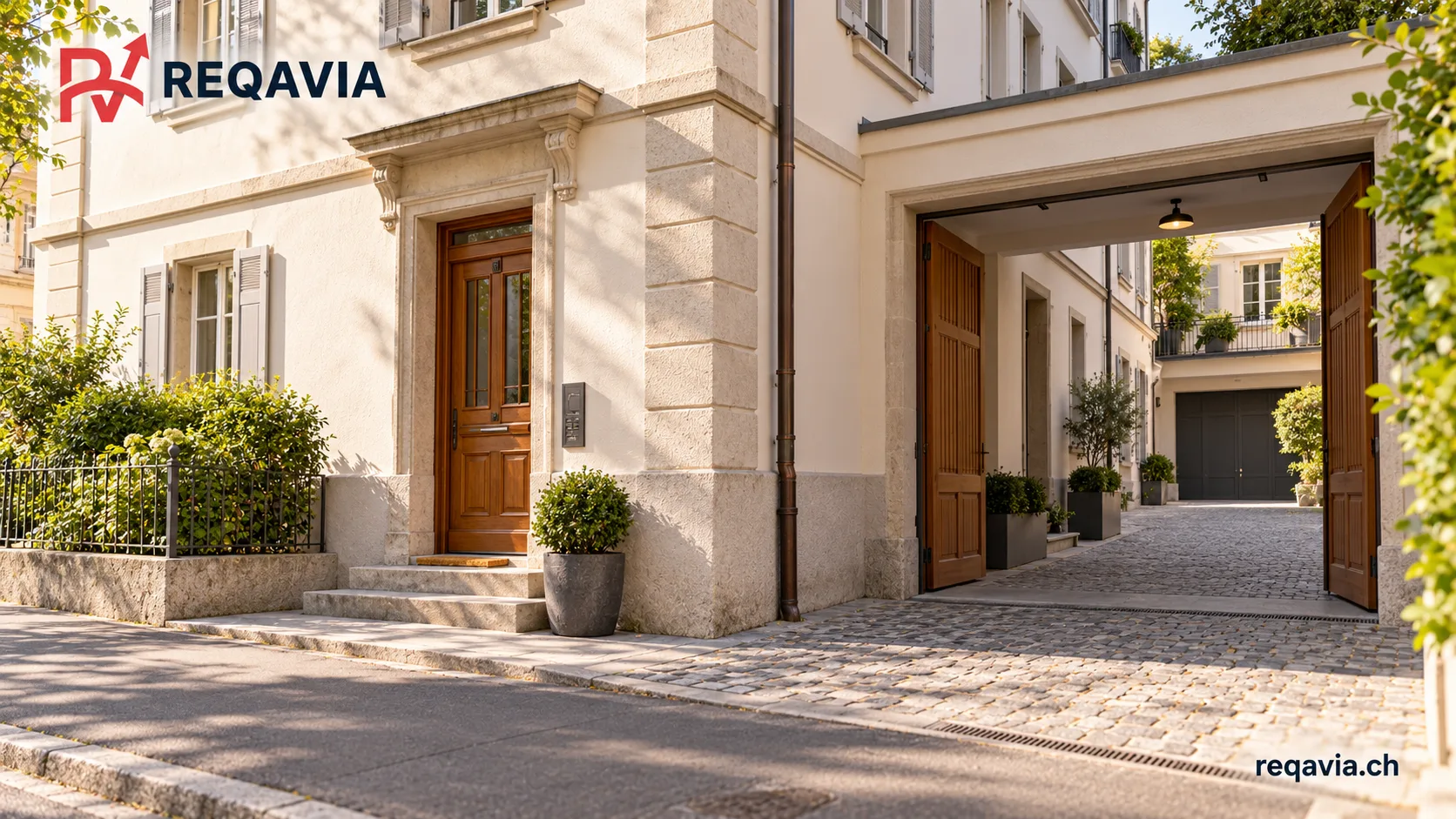
A correct street address does not always identify the entrance the moving team needs. Before moving day, distinguish three places: the official address, the agreed vehicle stopping point and the door used for carrying furniture. Give each a clear name and explain how they connect. A map pin alone may leave the crew at reception while your furniture must pass through a courtyard on the other side.
1. Walk the route as a first-time visitor
Start where someone arriving from the street would look for the building. Check the visible building number, which entrance serves your staircase and whether a pedestrian gate or courtyard lies between them. Avoid directions such as “round the back” without naming the street or a fixed landmark. A parked car is not a dependable reference.
Write a short sequence in the order the crew will encounter it: meeting point, entrance, internal passage, staircase or lift, floor and apartment. Keep collection and delivery instructions separate. If two entrances look alike, describe a stable difference, such as a recessed doorway or the side facing the courtyard. Check that the company understands the same route.
2. Describe the carrying route, not just the door
Estimate the distance from the proposed stopping point to the furniture entrance. Note steps, narrow gates, turns, thresholds and whether the route passes through shared space. Give relevant doorway or lift measurements when large furniture may be difficult to move. Mark estimates as estimates; a company assessment may be needed before selecting the vehicle or crew.
Ask who can authorize the proposed access and who will open any locked gate. A map pin identifies a place; it does not establish that a removal vehicle may stop there. Have the company and responsible building contact clarify the actual arrangement, including local restrictions, before treating it as settled. Do not assume a pedestrian entrance or garage is suitable for the vehicle.
3. Give one person responsibility for arrival
Choose a contact who knows the route and will be reachable when the team approaches. Agree a meeting point where that person can wait safely without blocking the pavement or an entrance. If someone else is handling delivery, send them the same final version of the directions and the company’s contact details.
Keep access codes, key arrangements and apartment occupants’ details out of the initial general description. If a photograph would resolve ambiguity, share it privately and directly with the company during coordination. Use a view taken from somewhere you may access and avoid including neighbours’ names or people unnecessarily. State what the picture shows rather than expecting the driver to interpret it.
4. Correct a wrong arrival calmly
If the team calls from the opposite side, establish where it actually is before giving more directions. Stop several household members sending conflicting instructions. Have the nominated contact explain a safe meeting location; leave vehicle movements to the driver. Do not ask someone to reverse or enter an unfamiliar narrow passage on the strength of a vague message.
When the usable stopping point changes, discuss the additional carrying distance and any effect on the agreed work before loading starts. If a gate remains locked or the only route is unsuitable for a large item, pause that part and ask the company to assess an alternative. Moving a problem to the doorway does not resolve access.
Include the access problem in your request
In your REQAVIA moving request, describe both addresses, the separate furniture entrances, approximate carrying distances, floors, lift availability and any access still needing confirmation. REQAVIA connects you with companies; you agree prices, access arrangements and execution directly with the chosen company. Clear arrival details let you discuss the actual move before everyone reaches the building.