
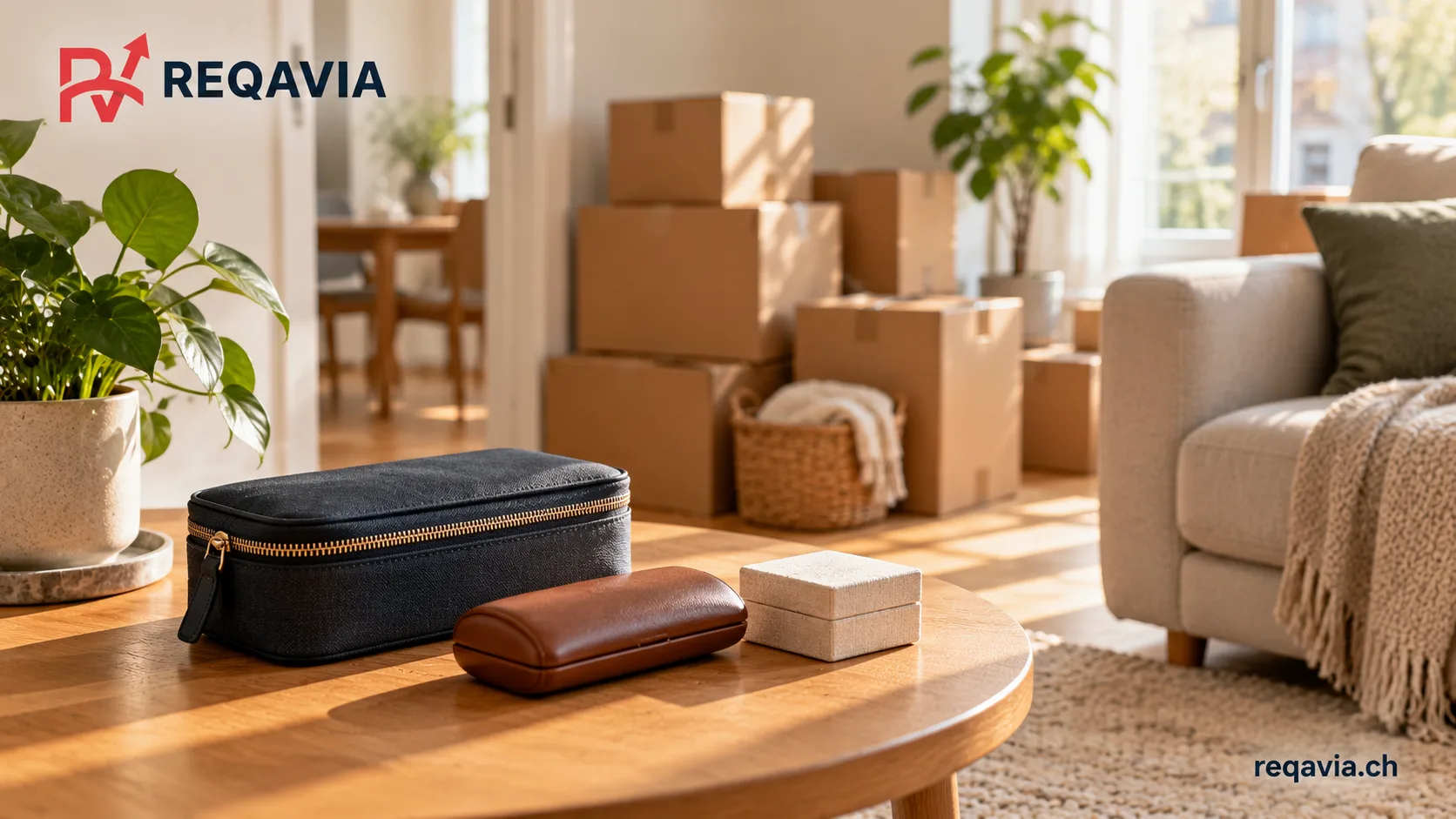
Before packing gathers pace, decide who will keep your small valuables from departure to arrival. A family keepsake, original document or piece of jewellery should not become an unidentified item in the last open carton. Make a private list, choose a clear route for each group and tell helpers what is excluded from the moving company’s load.
Define the group by importance, not size
Walk through the places where important small objects normally live: bedside drawers, document folders, display shelves and bags used infrequently. Include items whose personal importance would be hard to explain from their appearance. Separate this group before general packing starts, so a helper does not have to make value judgments while clearing a room.
Record enough information to recognise each item and its current condition. Keep any identifying photographs or documents privately and separately from the packed objects. The outer package needs a neutral identifier, not a list of values, document numbers or detailed contents. Share sensitive information only with the person or company that needs it for the agreed task.
Choose one continuous route
If you carry the group yourself, plan the whole journey, including waiting periods, meals and access to the new home. Name the person responsible and the person receiving it. Personal transport still needs a realistic custody plan; a bag passed between several relatives can be difficult to trace even when everyone is trying to help.
Decide what happens if that person becomes unavailable. Choose a replacement in advance and agree how the handover is confirmed. Avoid relying on an unattended vehicle, an open communal room or the assumption that someone else will watch the bag. Select arrangements appropriate to the belongings and your actual journey.
Discuss unusual items before accepting an offer
If a company is to transport this group, explain its nature privately before the move. Ask whether it accepts the items, how packing and handovers are organised, what records it requires and what the agreement says about responsibility and any insurance arrangements. Do not assume ordinary household transport covers every kind of valuable object.
Seek a suitably experienced specialist when the object’s fragility, significance or handling needs exceed what the company can assess. A condition concern should be resolved before packing, not by asking a moving crew to improvise on the doorstep. Keep the agreed scope and the named contact together with your private inventory.
Prevent accidental loading
Choose a clearly agreed area or personal bag that remains outside the company’s load. Tell helpers and the team that this group does not travel in the van, without announcing its contents. Make sure the exclusion remains clear after furniture and other bags have moved. If you relocate the group, notify the responsible person immediately.
Check it privately on arrival and record any handover to another person. If something is missing, establish the last confirmed location and who handled the package. Contact the relevant parties with specific facts. Someone being present during the move is not evidence that they caused a loss.
Give the company a useful request
In a REQAVIA moving request, describe the household load and state that a separate group will stay with you, so it is not counted among the company’s cartons. If you want a company to handle particular valuables, request a separate discussion of acceptance and conditions without listing sensitive details in the general description. REQAVIA is an intermediary; the contract, prices and execution are agreed directly with the company.