
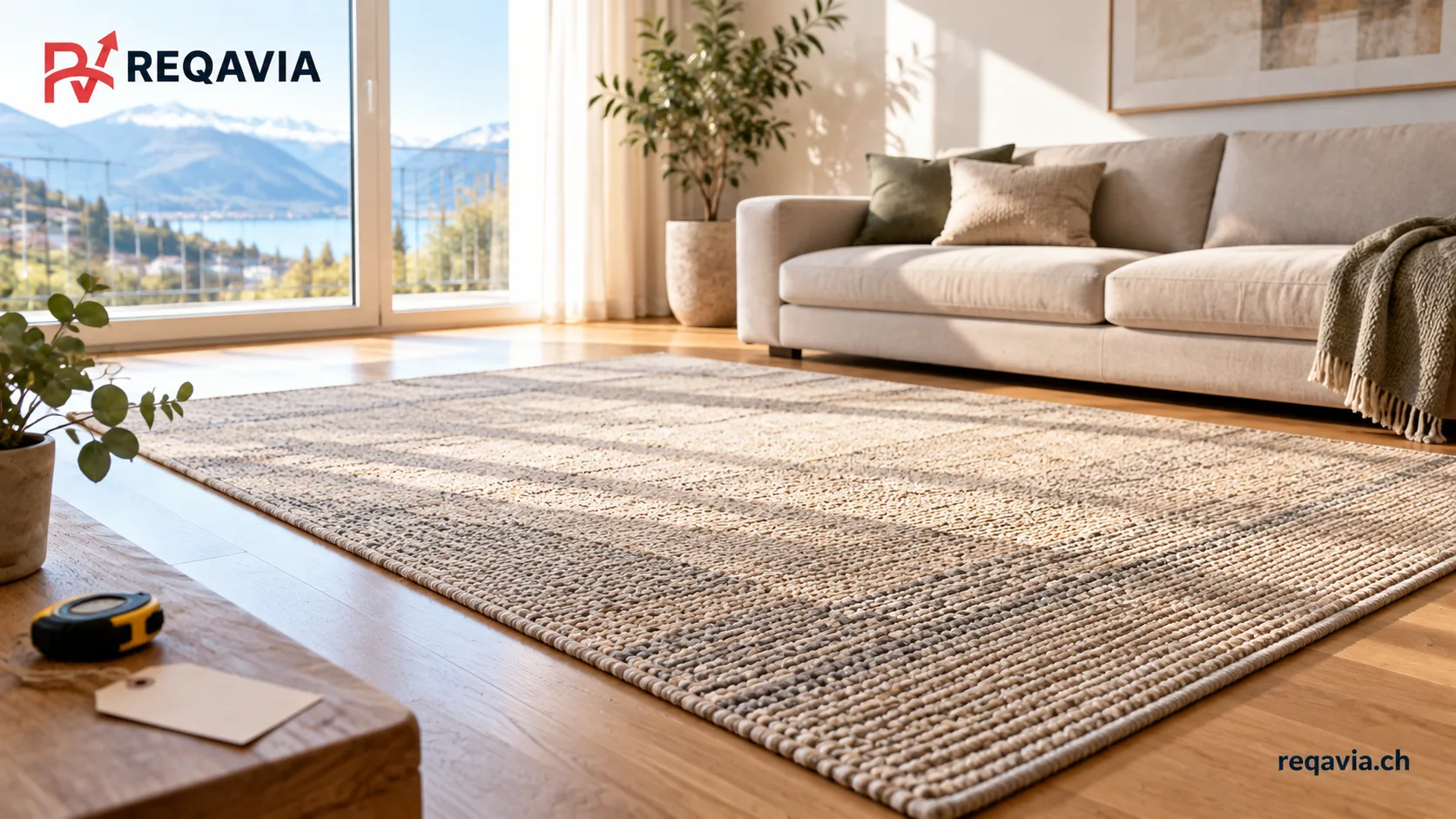
A large rug needs its own entry in your moving plan. Measure it and inspect accessible areas before the room is emptied. Tell the moving company whether it must shift furniture off the rug and pack it, or whether you will hand it over ready for transport. Those tasks affect the work involved as much as its dimensions.
Collect the essential information
- Record length and width, including projecting fringes. Read any available care instructions and note known materials and visible backing. If the composition is unknown, say so.
- Describe visible stains, loose edges, previous repairs and other concerns. Photograph only areas accessible without risky furniture moving. The hidden side can be checked when the rug has been properly freed.
- List the furniture standing on the rug and agree who will move it. Identify bulky pieces so the team does not discover additional clearance work only on arrival.
- Decide whether the rug will be laid out immediately or kept temporarily at the destination. Name the room or agreed intermediate location and ask for protection suited to that plan.
Choose preparation for the material and condition
Agree packaging using the care instructions, condition and transport route. Do not experiment with folding the rug ever smaller to fit a vehicle. Rolling, a suitable support or another method must suit its actual construction. For an old, valuable or fragile piece, have a textile specialist assess its preparation.
The Canadian Conservation Institute identifies weak and certain multilayered textiles as unsuitable for rolled storage. The method therefore does not automatically suit every construction.
Canadian Conservation Institute: limitations of rolled textile storage
If cleaning is needed beforehand, agree the method, collection and confirmed transport-ready date with the appropriate specialist. Allow the time they specify; you cannot assume one drying period for every rug. Avoid an improvised treatment the night before moving. If the rug is damp or mould is suspected, pause routine preparation and have the next steps assessed before packing.
Check the route using the packed dimensions
The area covered on the floor does not tell you whether the package will pass through the building. Once preparation is agreed, establish its total length and width or diameter, including protection and support. Give the known weight; if it is unavailable, ask the company to assess the handling resources needed.
Review the route out of the room, narrow points, stair landings and usable lift dimensions at both addresses with the company. Space to turn a long package matters particularly. Describe the path between the entrance and vehicle too. If feasibility remains uncertain, agree a visit or closer check before settling the appointment.
Identify the destination on suitable outer protection, without sticking a label directly to the fabric. Keep rugs intended for temporary storage separate in your list from those needed immediately.
Plan placement before the furniture
If the rug will sit beneath a sofa, table or cupboard, agree its placement before those items are put in their final positions. Coordinate unloading so the rug can be reached at the right time. Have its intended area prepared according to the care instructions and keep the access route clear during the work.
Afterwards, check the visible position and edges. If awkward folds or distortion remain, do not ask the moving team to pull or stretch the textile in a rush. Clarify whether separate textile work is needed. Compare visible concerns with the earlier condition record and raise any differences directly.
Specify the work you actually need
Ask for an offer distinguishing furniture clearance, preparation and materials, transport and agreed placement at the destination. Clarify any cleaning separately and what will happen if the confirmed readiness date changes.
In a REQAVIA text request for moving, describe the number of rugs, dimensions, condition, access and tasks required. Share necessary photographs directly and privately with the company during coordination. REQAVIA is an intermediary; you agree the scope, price and execution directly with the company.