
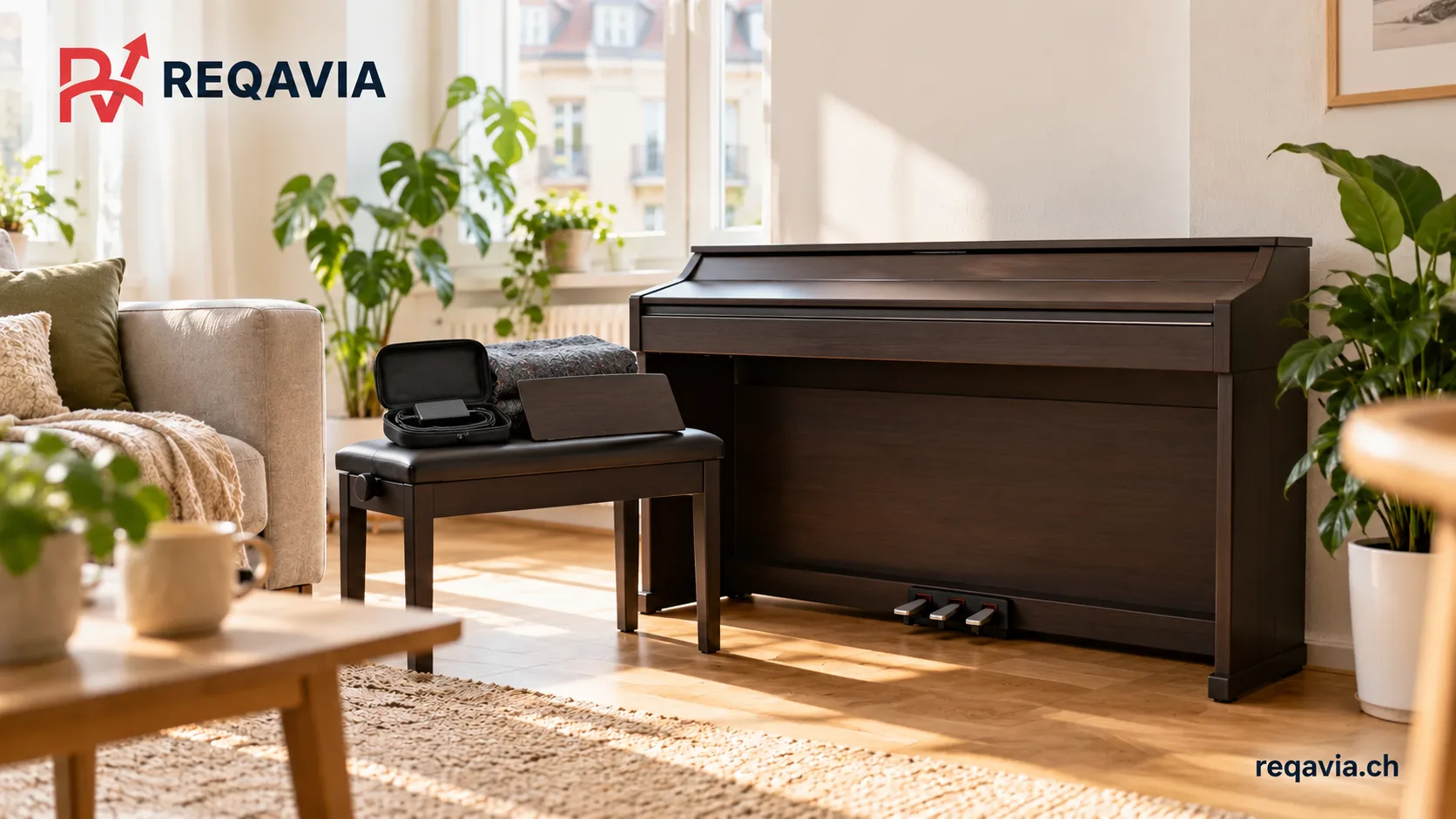
Your digital piano needs to reach your new home, but listing it simply as “a piano” leaves important questions unanswered. A portable instrument on a separate stand and a model built into a furniture-style cabinet need different assessments. Start with the model, configuration and access at both addresses. Then establish what stays assembled, what preparation is needed and what setup you expect on arrival.
1. Describe the instrument you actually own
Find the model in your paperwork or on a label you can reach safely. Do not lift or tilt the instrument to read it. Record width, depth and height, including fixed projections. Say whether these measurements describe the complete instrument, its stand or existing packaging. Give a weight only from reliable documentation; otherwise mark it as unconfirmed.
Note known repairs, loose parts and any additions. Tell the company whether you have the manual. Preparation, protection and any dismantling should be assessed against your model’s instructions by someone competent. A method used for a similar-looking piano is not enough.
2. Make a separate accessory inventory
List the bench, pedal unit, power supply, cables, music rest and other accessories, with quantities and destination room. Photograph the visible arrangement before agreed dismantling starts. Assign loose parts identifiable packaging; label that packaging without applying adhesive to sensitive surfaces. Internal connections should be handled by a qualified person. There is no need to open the electronic housing to prepare this inventory.
3. Check the entire route
For collection and delivery, describe the floor, stairs, tight turns and route between vehicle and entrance. Measure clear doorway openings and, where relevant, the lift entrance and cabin. A suitable lift does not remove the need to check the remaining passages. Ask the company to assess manoeuvring room with the proposed protective packaging included.
An unknown weight, narrow staircase, unstable stand or uncertain dismantling calls for assessment before moving day. Do not attempt a trial lift. Suva’s prevention guidance recommends planning heavy-load handling and using suitable aids. The company should determine staffing and equipment for the actual job.
Suva: prevention guidance for handling heavy loads (in German)
4. Compare the same scope of work
Ask quotations to identify packing, agreed dismantling, delivery into the room, stand reassembly and handling of packing materials. Establish who checks stability and the intended connections before use. Delivery into the room does not automatically include a ready-to-play setup. Clarify exclusions and how changes to access or scope will be agreed before extra work starts. At the destination, allow space to use the bench and reach the connections.
5. Compare condition before and after
Document visible marks before packing. If the instrument works normally, a short recording of ordinary use can supplement the condition record. Follow your own manual for switching off and preparation. This record is not a technical diagnosis and does not prove that a later fault was caused by transport.
On arrival, check the inventory, visible changes and agreed assembly. Report concerns with a factual description, date and photographs. Damaged electrical parts, an unusual smell or doubtful stability should be assessed before further use, rather than addressed through improvised repairs.
6. Write a useful moving request
Structure your description as: “Digital piano, model…, configuration and dimensions…, accessories…, collection and delivery addresses…, floors and lift…, difficult passages…, preferred date…, preparation and reassembly required…”. Identify missing information too. During coordination, photographs can be shared directly and privately with the company; the request form uses a text description.
Use these details to request moving services through REQAVIA. The platform is an intermediary: you agree the work, price and terms directly with the company, which performs the service. Ask for a quotation that addresses your particular instrument and the access you have described.