
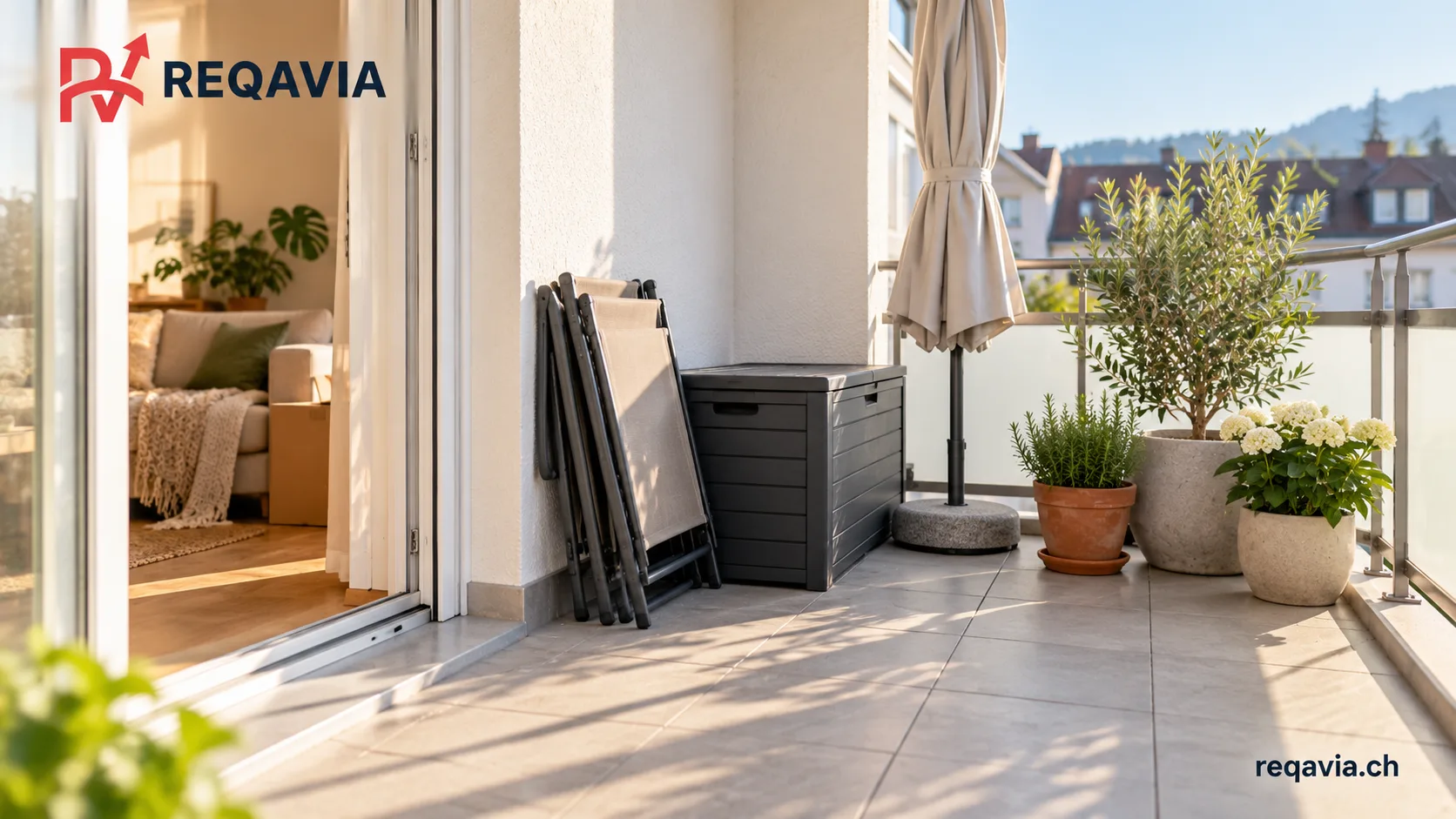
Treat the balcony as a separate area in your moving plan. Decide which belongings are coming with you, which will be collected and which belong to the property. Schedule cleaning once you know when the last movable item will leave. A quotation covering the indoor rooms does not automatically include the balcony or its contents.
1. Give each item a destination
Walk around the balcony and list the furniture, plant pots, parasol and base, storage box and removable floor coverings. Give every item a destination and a responsible person. “Someone will collect it later” becomes a workable arrangement only when the recipient and collection time are confirmed.
Separate your belongings from the building’s fittings. Ask the property manager what should remain at handover and how to handle privacy screens or other items you have attached. Have uncertain structures, connections and electrical fittings assessed before removal. The moving company needs to know about these requirements before loading begins.
2. Describe the objects and the whole route
Measure the length, width and height of bulky items. For plant containers, explain whether the soil and plants will remain inside. Identify a heavy parasol base explicitly. If a weight is unknown, say so; do not try to establish it by test-lifting a large container.
The route includes the clear balcony doorway opening, thresholds, tight turns inside the home, stairs, lift and distance to the vehicle. Distinguish checked measurements from estimates. Ask whether a site visit is needed and who handles authorised dismantling, packing and protection of the indoor rooms. A floor number alone does not describe the access.
3. Agree preparation and exceptions
Specify the condition in which outdoor furniture and containers will be collected. Who removes loose soil, who wraps dirty items, and where will everything wait? Keep a clear route. Do not leave prepared belongings in front of doors or in the communal stairwell.
Declare gas cylinders, unidentified liquids, damaged containers and other unusual items separately. Do not treat them as ordinary moving-box contents or empty unknown substances into a drain. The company needs to explain what it can accept and whether another specialist is required. Disposal is not automatically included just because an object is not coming to your new home.
4. Clean after the final collection
Ask the cleaning company to specify the surfaces: floor, accessible inner faces of the railing, doorway area and any other agreed parts. Clarify windows, exterior facade surfaces and special floor coverings individually. Being able to work from a safe position is a limit; climbing onto the railing is not a solution to a forgotten part of the quotation.
Point out loose flooring, damaged joints or unusual drainage conditions beforehand. Have uncertainties assessed before cleaning changes their condition. Neither a cleaning product nor a pressure-washing method should be chosen without understanding the materials and conditions on site.
The [Federal Housing Office](https://www.bwo.admin.ch/dam/de/sd-web/xKj1v2BhllVl/englisch.pdf) recommends discussing unresolved handover questions with the caretaker or landlord beforehand. Check the requirements agreed for your own home; scheduling a cleaner does not replace that discussion.
Prepare a request you can check
Compare quotations using the same inventory, carrying route and cleaning surfaces. Record who must be told if a collection is delayed and how an additional visit would be agreed. Inspect the empty balcony before using it again as a holding area for moving boxes.
In your text request for moving and cleaning through REQAVIA, describe the balcony area, belongings, dimensions, access and preferred sequence. You can then share any necessary photographs directly and privately with the company. REQAVIA is an intermediary platform; the scope, price and execution are agreed directly with the company.