
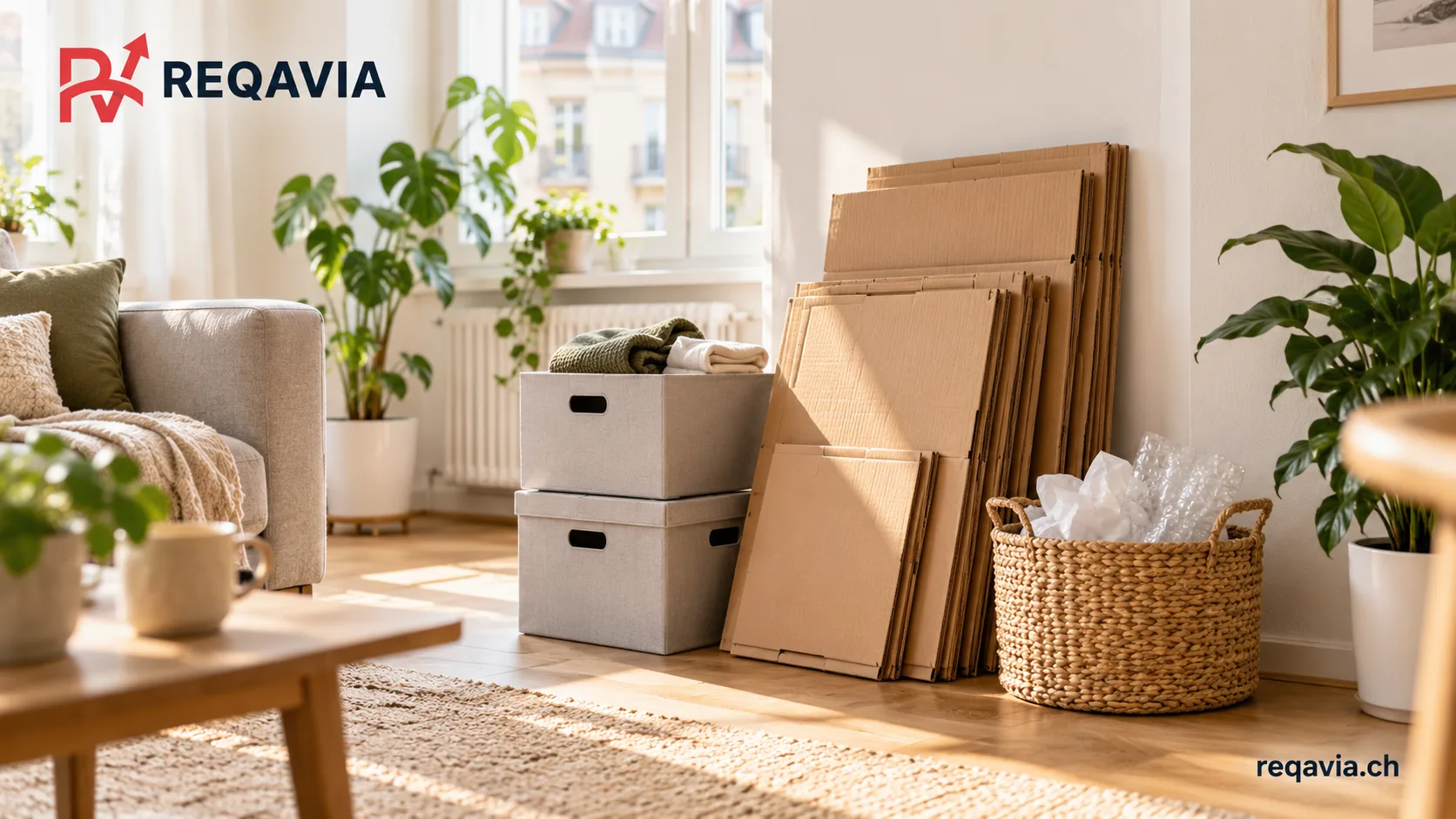
The final box is unpacked, but the empty cartons remain in a corner because they might be useful one day. Soon that corner becomes a room you cannot properly use. Decide promptly which boxes have a specific purpose: sound cartons for an upcoming move, fitted packaging for an appliance or a small everyday supply. The effort of buying them is not, by itself, a reason to keep every size.
Sort everything in one careful pass
- Open each box fully and check corners, dividers and crumpled paper. Screws, keys and small accessories can disappear into packaging. Complete this check before putting materials into their final groups.
- Separate sound boxes from torn or damp ones. Consider which could help someone who is moving soon. Describe their condition and dimensions accurately instead of treating every carton as equally strong.
- Collect different packing materials separately. Plastic film, cushioning and tape remnants do not automatically belong in the same disposal stream as cardboard. Check the instructions for the actual material you have.
- Read your current municipality’s guidance on accepted materials, preparation and collection dates. Do not assume the arrangements at your previous address still apply.
Give the boxes you keep a defined space
Prefer cartons that fold flat and fit within a clearly limited storage area. For a fragile appliance, also consider whether its fitted inserts will be useful during a future move. Make a short note of what you have kept and where it is. Once the allocated area is full, another box needs a specific reason to join it. A weakened carton does not become suitable for something heavy simply because it is available.
A common mistake is taking all the packaging to a collection point that accepts only some of it, or putting materials out too early. The City of Bern’s disposal index is an example of a guide organised by material. It does not replace the rules in your own municipality. Ask the responsible service before loading everything if you have mixed materials or an unusually large quantity.
Deal with a large quantity without blocking shared space
Passing on usable boxes can make clearing the space easier. Set a definite collection appointment rather than leaving them in a shared passage while waiting for interest. If you need help, describe the volume after flattening. You can share photos directly and privately with the company; assembled boxes give a different impression of the final load.
You can submit a disposal request through REQAVIA when carrying and transport assistance are needed. Describe the materials, quantity, floor and access in writing. REQAVIA connects the parties. Agree the appropriate disposal route, price and exact scope directly with the company doing the work. Keep only a supply linked to a real use, so the new home does not become permanent storage for the packaging from your move.