
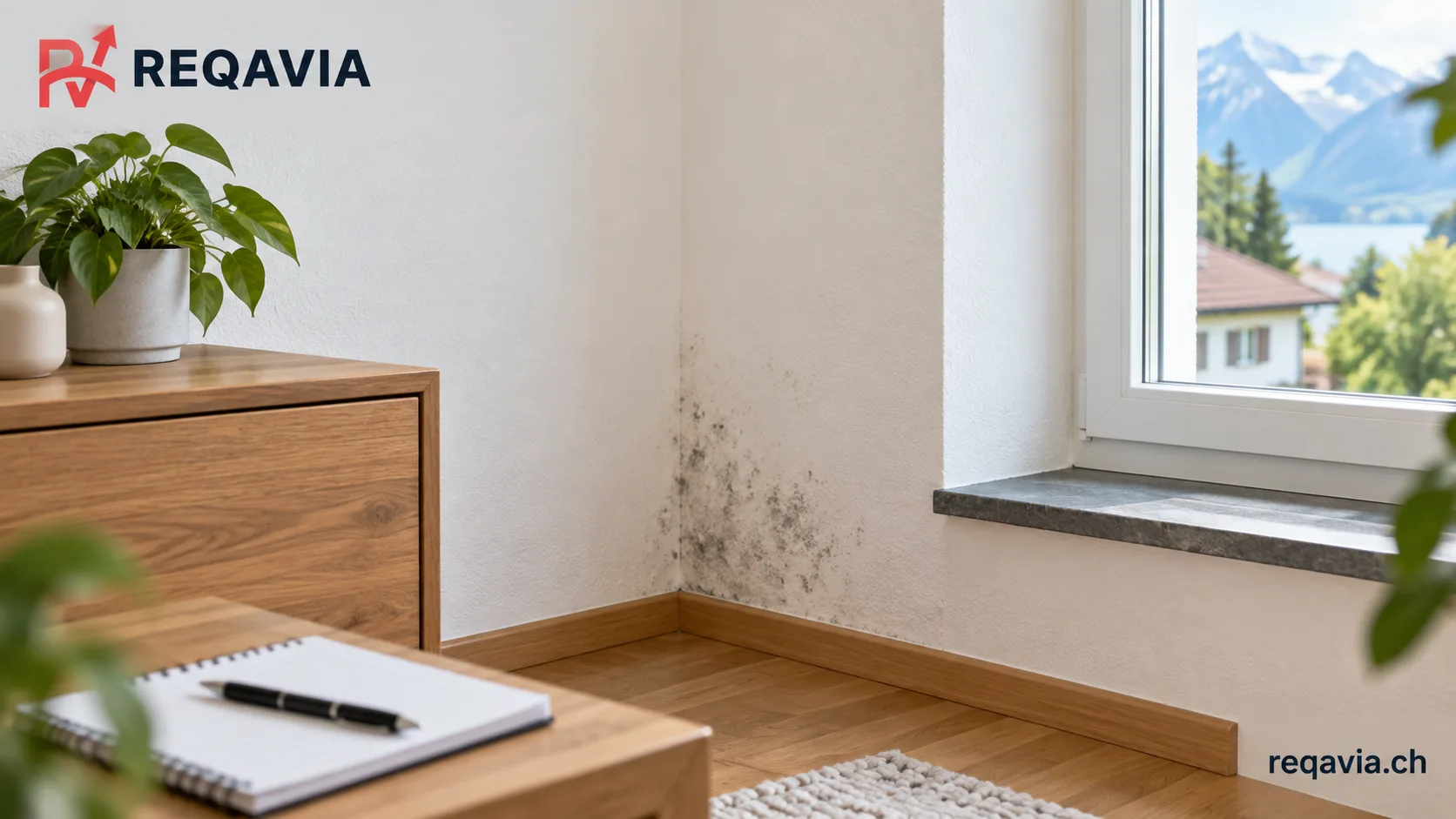
A patch disappears for a few days and returns, making the problem look like insufficient cleaning. Recurrence may instead mean that the moisture source remains or has not been understood. Before trying another product or painting over it, gather information for an appropriate assessment. The aim is to understand why it returns, not hide its latest appearance.
Record the pattern without disturbing the area
Take dated overview and detail photographs from a safe distance. Note location, timing, condensation or leaks, and any preceding change: a new window, furniture position, building work or water incident. Do not scrape material, take your own sample or move contaminated furniture between rooms simply to inspect it.
Cleaning alone does not answer the question
FOPH guidance stresses addressing moisture causes alongside appropriate mould removal. Ask for a written distinction between investigating the cause, treating the surface and completing any repairs. In rented accommodation, notify management promptly with photographs and factual observations and arrange access. Responsibility is a separate issue and cannot automatically be determined from the patch’s appearance.
What should you avoid now?
Do not cover the area with paint to meet an approaching handover date or ask an ordinary cleaning company to guarantee non-recurrence without assessment. Avoid self-treatment where the problem is extensive, recurrent or involves damaged building materials. If an occupant has symptoms or a health condition increasing susceptibility, seek suitable health advice alongside the building assessment.
Compare plans, not a promise to remove mould
Ask about relevant experience, what will be inspected, how the rest of the home will be protected and what will be recorded afterwards. The plan should explain the next step if a leak or building defect is identified. Ask how correction of the cause will be checked, rather than accepting a photograph of a freshly white wall as proof.
Describe the limits of the requested service
Write: “Recurring patches since this date, in these locations, with these observations. I need assessment of the cause and an appropriate treatment plan, not cosmetic cleaning alone.” Describe the need in the text request on REQAVIA, then share photographs directly with the company after contact. Verify its mould-remediation expertise or seek the appropriate specialist.