
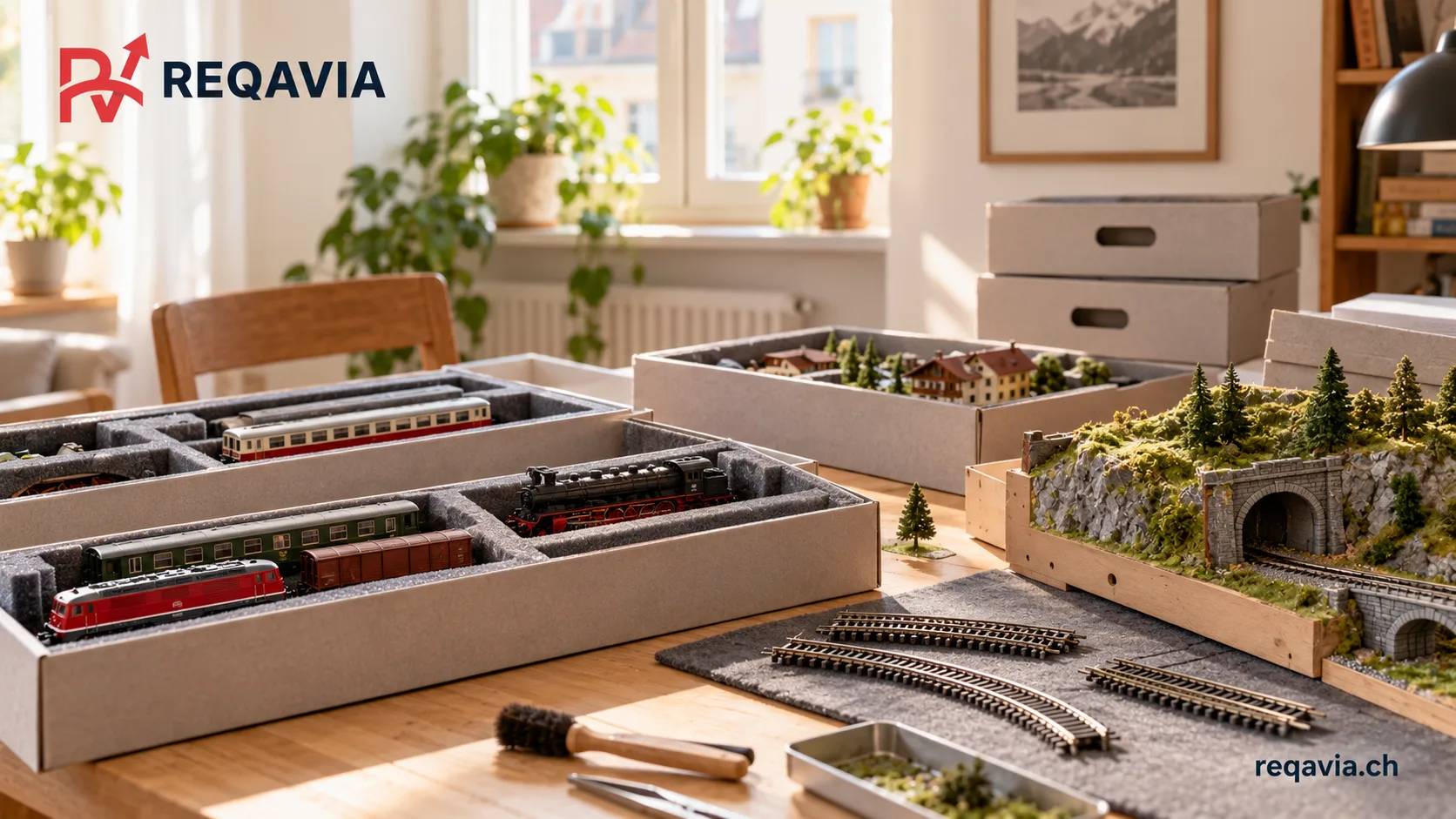
Before clearing a model railway from its room, decide what you want to preserve: the vehicles alone, or the ability to rebuild the existing layout as well. That decision determines the documentation and preparation required. Do not start by putting everything into boxes. An empty table achieves little if the small components can no longer be connected to their original purpose afterwards.
Describe the collection and layout separately
Inventory the vehicles with known model references, matching boxes, accessories and your own documents. Record only details you actually know. Keep unidentified loose components in a separate group for assessment; they are not automatically surplus. If someone knowledgeable helps identify them, record the connections clearly so that useful information does not remain only in a conversation.
Describe the layout too: track sections, scenic modules, buildings, controllers and other assemblies present. A shared inventory reference can connect associated packages while the detailed model list remains private. Distinguish identified components from assumed associations. Similar colour, size or previous storage together does not establish that parts belong to the same technical system. Keep uncertainty visible for the person who will assess the collection.
Document what you want to recreate
If rebuilding the arrangement matters, photograph the overall layout and useful details before dismantling. Name the images so that the side of the room, module and viewing direction can be recognised. Record existing connection labels you already understand without trying to infer an unfamiliar electrical circuit yourself. Keep the photographs and inventory accessible outside the boxes being placed in storage.
Choose someone who knows the installation and can work safely to deal with electrical disconnection and delicate dismantling. A furniture transport company does not implicitly take on these tasks. Before the collection date, specify which modules will be handed over prepared and which separate work needs to happen first. Avoid improvised testing or repairs under pressure merely because the room must be cleared that day.
Make packaging and readiness visible
Match available original boxes and inserts to their actual contents and describe their condition. A corresponding name on the outside does not confirm complete protection. Have the proposed packaging assessed for delicate or unfamiliar models. Do not prescribe one padding material or dismantling method for every model; the actual pieces and their known requirements should determine the arrangement.
Mark each group as ready to pack, awaiting identification or requiring specialist preparation. Do not combine small accessories without references simply to save a step. Record dimensions and associations for completed packages. Anyone helping with packing needs an understandable list and a clear instruction not to discard uncertain parts on their own. A separate outstanding-items group makes it easier to complete the work deliberately.
Connect storage with future use
Have storage requirements clarified where materials or condition make that necessary. Tell the storage company the established requirements and confirm acceptance and access. Specify the services actually wanted: a storage agreement does not promise maintenance or recommissioning. If some models will be retrieved earlier, their identification and accessibility need to appear in the plan from the outset.
For sale or transfer, distinguish known functions from untested condition. Do not promise a value, working order or compatibility across the collection. Specialist assessment may be useful before dividing it. For a REQAVIA storage request, describe package count, dimensions, known requirements, readiness and intended period in text. REQAVIA is an intermediary; you agree price, terms and execution directly with the company. Share necessary photographs privately during coordination, without uploading them to the request form.