
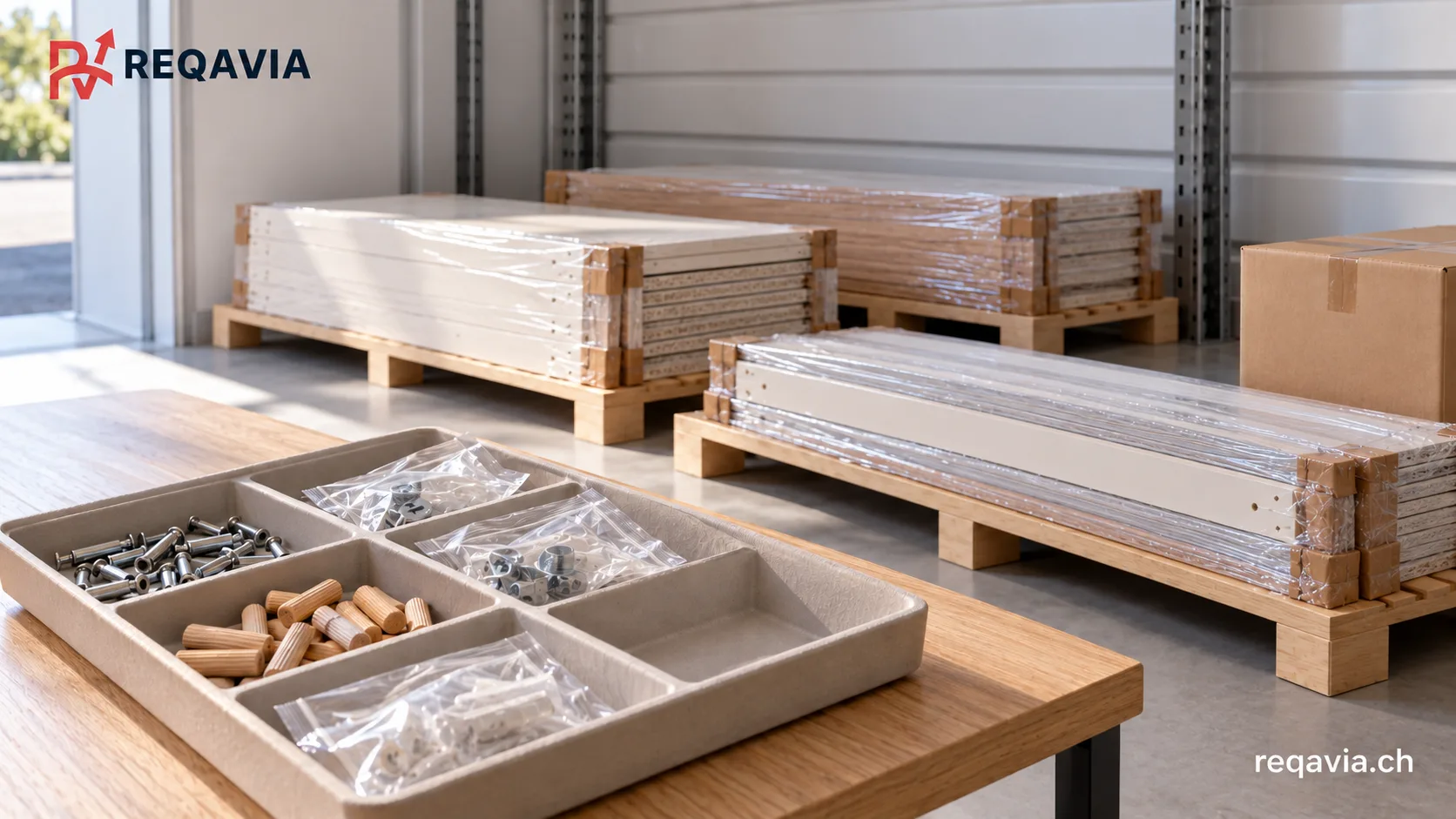
If the wardrobe panels are ready but the bag of fittings is missing, check the small parts before arranging the return journey. First establish what is absent, whether it was packed separately and who can confirm a suitable replacement. This lets you decide whether to collect a complete set, postpone that item or arrange a separate assessment. A furniture delivery should not leave you with an assembly problem that could have been identified in storage.
1. Identify the furniture and the missing part
Find the model or product reference on your invoice, instructions or an accessible label. Use the parts list for that exact item, if available. A photograph of a similar wardrobe is not enough to identify a fitting. Record the part reference, expected quantity, quantity found and what remains uncertain. Distinguish an empty bag from a bag that has not yet been checked.
Keep the questions specific: is a shelf support missing, a door fitting, a connecting piece or an anchoring component? If you cannot establish its role, mark it for assessment. Measurements and photographs can help someone identify it; they are not confirmation that another part will work.
2. Search the linked containers in a known order
Compare the inventory with your dismantling photographs and packing notes. Start with the boxes or accessory bags linked to this piece of furniture. Ask the storage company how an inspection can be arranged, who may open packaging and whether help or a separate visit needs to be agreed. Have obstructed items made accessible rather than dismantling a stack to look behind it.
Check one set at a time on a clear surface, count its contents and put it back in a labelled bag. Note the furniture identifier and the bag’s exact storage location. Do not combine unidentified screws from several items into a single “spares” bag: that removes useful clues when you need them most.
3. Confirm replacements before planning assembly
Send the model, part reference, quantities and any relevant detail directly to the manufacturer or a competent furniture assembler. Ask for confirmation of the suitable replacement and whether any damaged connection also needs assessment. Do not select load-bearing or anchoring parts simply because their shape looks close. Check your own instructions; the storage or removal crew cannot be assumed to carry universal fittings.
For a piece requiring anchoring, agree who will assess and complete that work. Do not put it into use while a necessary fixing remains unresolved. An order confirmation for replacement parts is also different from having the correct parts available for the appointment.
4. Choose a workable collection date
Collect the complete set when identification and the outstanding parts are resolved. If the answer is still uncertain, consider leaving that item in storage while retrieving other belongings. Ask what this changes about access, storage and any additional trip. If the storage must be emptied, first agree where the unassembled furniture can remain together without being used until its parts and assembly are sorted out.
[FOEN](https://www.bafu.admin.ch/de/kreislaufwirtschaft) identifies repair and reuse as ways to extend a product’s useful life.
5. Make the request specific
Describe the furniture, its location, the missing parts, the records you have and the intended collection period. State whether you need access for an inventory check, help finding the associated bags or collection after completeness is confirmed. Ask separately whether assembly and sourcing parts are offered, what they include and who gives the final confirmation.
Before collection, match the labelled accessory bag to the furniture identifier and update the list of unresolved items. You can use REQAVIA to send a storage request in text. Share any useful photographs directly and privately with the company during coordination. REQAVIA is an intermediary; the scope, price and execution are agreed directly with the company.