
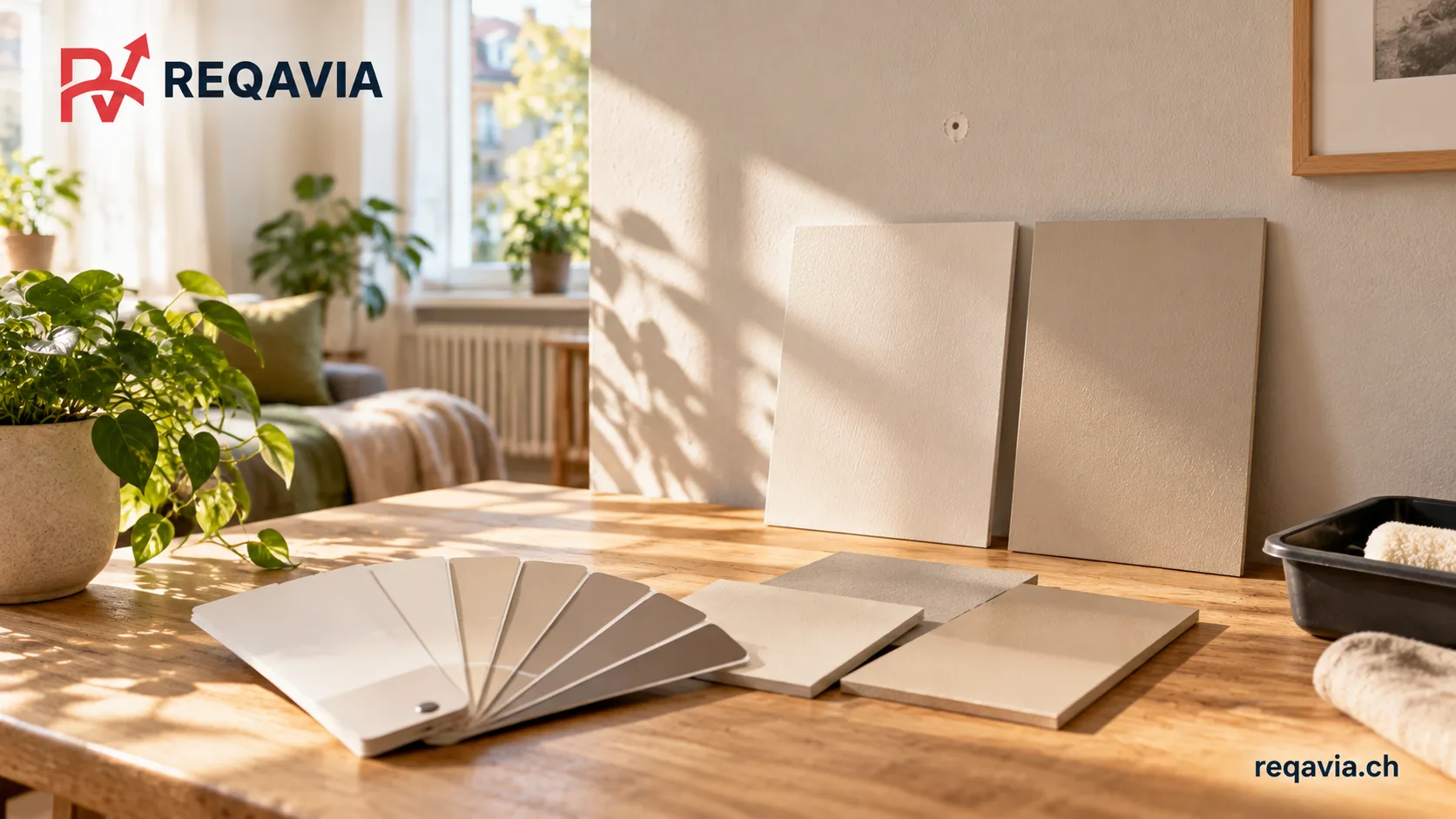
If the original paint code is missing, ask for a matching assessment and an agreed sample before authorising a repair. Do not make the quotation depend on an untested promise of an invisible patch. Start by finding any existing records, then decide what result you need and how you will assess it in the room.
Look for records before choosing a new reference
Ask the owner, property manager or previous painter about invoices, product names, colour references and finish. Check whether a labelled sample or leftover container belongs to this particular wall. Record uncertainty: a tin found in the cellar may relate to a different room or an earlier renovation.
If you rent, clarify the proposed work with the landlord before making changes. The [Federal Housing Office’s guide](https://www.bwo.admin.ch/dam/de/sd-web/xKj1v2BhllVl/englisch.pdf) states that changes to the apartment, including painting walls, require the landlord’s prior written consent. Agree the scope rather than assuming a matching attempt is already authorised.
Define what you want to match
Explain whether you want to repair one small area, cover several previous repairs or restore a continuous wall. Identify which existing surface will be the reference. If different walls were painted at different times, tell the painter instead of treating the room as a single known colour.
List the approximate wall dimensions and the size and position of the repair. Note visible texture, the finish as you see it, and any nearby trim or corners that could define a sensible stopping point. You can describe an appearance as matt or shiny without claiming to know the old product’s specification.
Ask for assessment before sampling
Show the painter existing marks, earlier filling, flaking areas or any history of dampness. If the surface itself needs investigation, separate that work from choosing a colour. A coating proposal should not quietly become a diagnosis or a way of hiding an unresolved problem.
Ask how a representative area will be selected and whether several positions should be compared. Do not scrape an unknown old coating to provide a sample without suitable assessment and permission. If the painter uses a measuring device, ask for its proposed matching reference to be recorded separately from any confirmed historical product information. A newly chosen reference should not be presented as the original code without supporting records.
Approve a physical sample
Agree where and how the trial will be made, who prepares the surface and whether the sample uses the proposed finish and application method. Ask the painter to specify when it is ready to assess; avoid setting a universal drying period yourself.
View the sample in the room’s ordinary daylight and evening lighting, from positions where you normally see the wall. Look at the whole result: colour, sheen, texture and the boundary of the repair. Use photographs to explain location and extent, while approving the actual sample in person or through a clearly authorised representative.
Compare the alternatives before extending the work
A local repair may suit your agreed expectations. If the trial remains unsatisfactory, discuss painting the entire continuous wall up to defined edges. Ask for separate scope and pricing for this alternative. It does not automatically mean repainting every wall or the whole room.
The quotation should distinguish assessment, preparation, trial work, protection and final painting. Confirm who approves an expansion and what happens if the sample is rejected. Avoid repeated small patches without a decision point or an agreement about additional work.
Keep a useful record for next time
Retain the agreed reference, product and finish, sample, date and exact surfaces painted. If keeping leftover paint, obtain the applicable storage instructions. In a REQAVIA painting request, describe the missing code, repair size, surface condition and your matching goal. Photos can be shared directly and privately with the company during coordination. REQAVIA is an intermediary; you agree the work, price and execution directly with the painting company.