
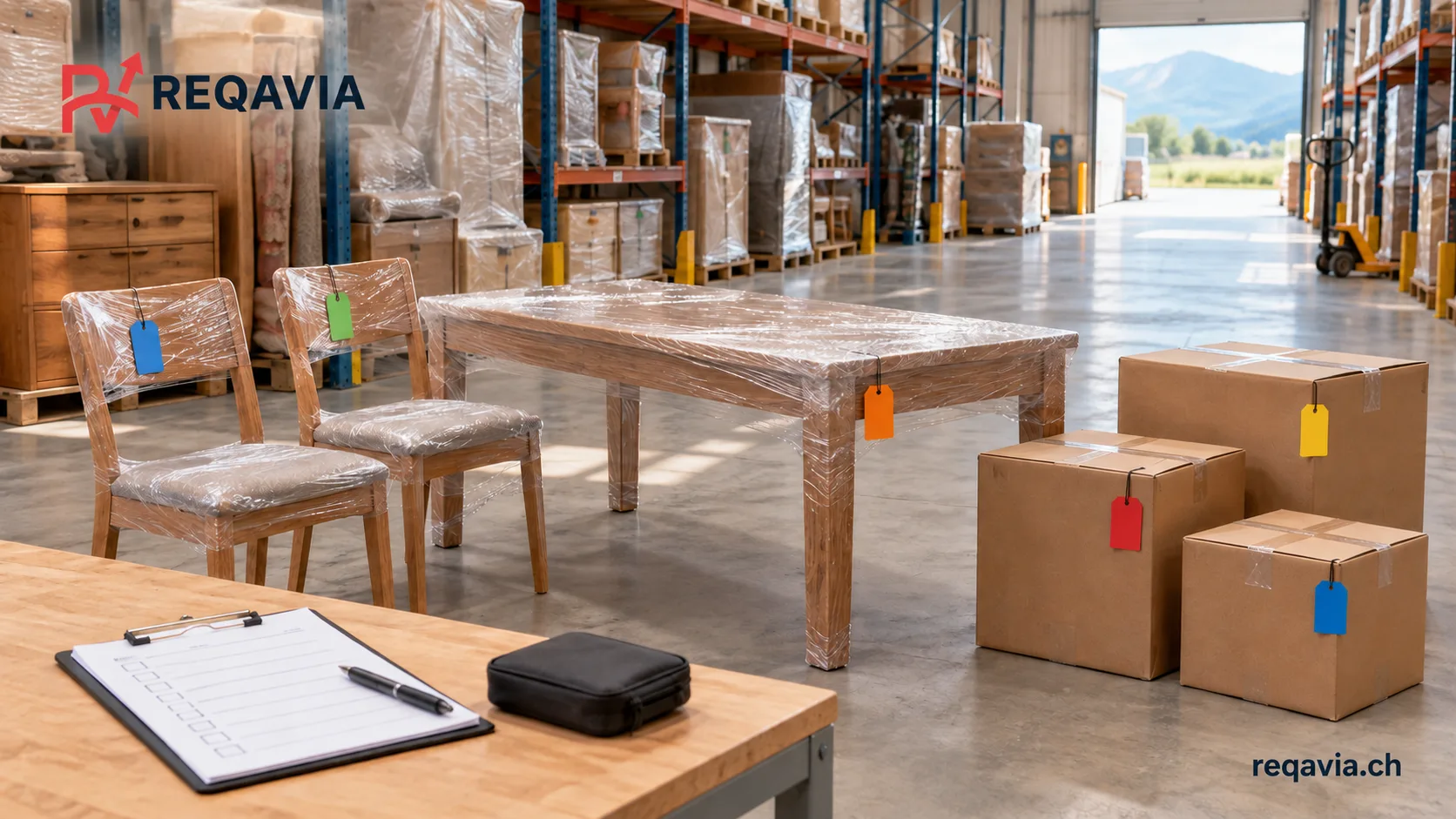
When a company takes your furniture into storage and manages its location, you need an inventory that lets both sides identify the same belongings. “Contents of the flat” is too vague when you later want one particular box back. Before collection, agree what will be recorded, how items will be labelled and how the record will change when something leaves storage.
1. Establish what the company will actually record
Ask for a blank example of the handover record. Does it list individual furniture items, packaged units or only groups? Does it include notes on visible condition? Who prepares it, and when will you receive your copy? Confirm which tasks are included and which need a separate agreement. Your personal list is useful only if its references can be matched to the company’s record.
Separate observations made together from information supplied by you. A closed box can be recorded as a received package without its contents being checked. Ask for that distinction to be clear, so a description you provided is not mistaken for a joint inspection.
2. Link furniture, packages and accessories
Use short identifiers. A possible entry is: “M07, dining table, tabletop and four separately wrapped legs; fittings bag Z07.” Add the number of associated packages and any agreed handling notes. This is an example, not a required numbering system. What matters is that labels, inventory entries and supporting photographs use matching references.
Distinguish similar belongings by material, colour or original room. For bulky furniture, record length, width and height in the form actually handed over. Position labels where they remain readable. Avoid putting confidential document details or unnecessary personal information on the outside of boxes.
3. Reconcile the record at handover
Before the load leaves, compare your list with the company’s document. Do the identifiers, package count and separate components match? Record visible scratches, loose parts and unresolved questions specifically. A general “all fine” note does not settle a missing detail. If the company will repackage belongings, agree how old identifiers will be linked to new ones.
Photographs can support a condition note. Show the whole item and the relevant detail without including readable documents or other people. Share necessary pictures directly and privately with the company. Agree how you will receive the relevant version of the record and who can answer questions if the original contact is unavailable.
4. Test a partial collection before everything goes in
Give the company one identifier as a trial and ask whether it is enough to locate the right item. Clarify notice, available collection arrangements, preparation and agreed charges. Do not assume that you can enter the warehouse and search yourself. If you need frequent access to particular belongings, compare the access arrangements actually offered before choosing this storage method.
Arrange an update after every addition or return. The new version should show the date, the change and what remains in storage. Keep older versions, but make the current one unmistakable. If a discrepancy appears, provide the identifier, the last confirmed list and the handover stage involved, rather than immediately assuming what caused it.
5. Specify special requirements and the service you need
For delicate, valuable or hard-to-identify belongings, ask whether a specialist should assess condition and handling before collection. An initial visit may be appropriate. The inventory does not replace a separate discussion about storage conditions or any insurance you want; clarify those matters expressly.
In a text-based storage request through REQAVIA, describe the furniture groups, approximate package count, intended duration and planned partial collections. State that you need an inventory both sides can reconcile. REQAVIA is an intermediary platform; scope, price and service delivery are agreed directly with the company. These details give you a practical basis for comparing its offer with your actual needs.