
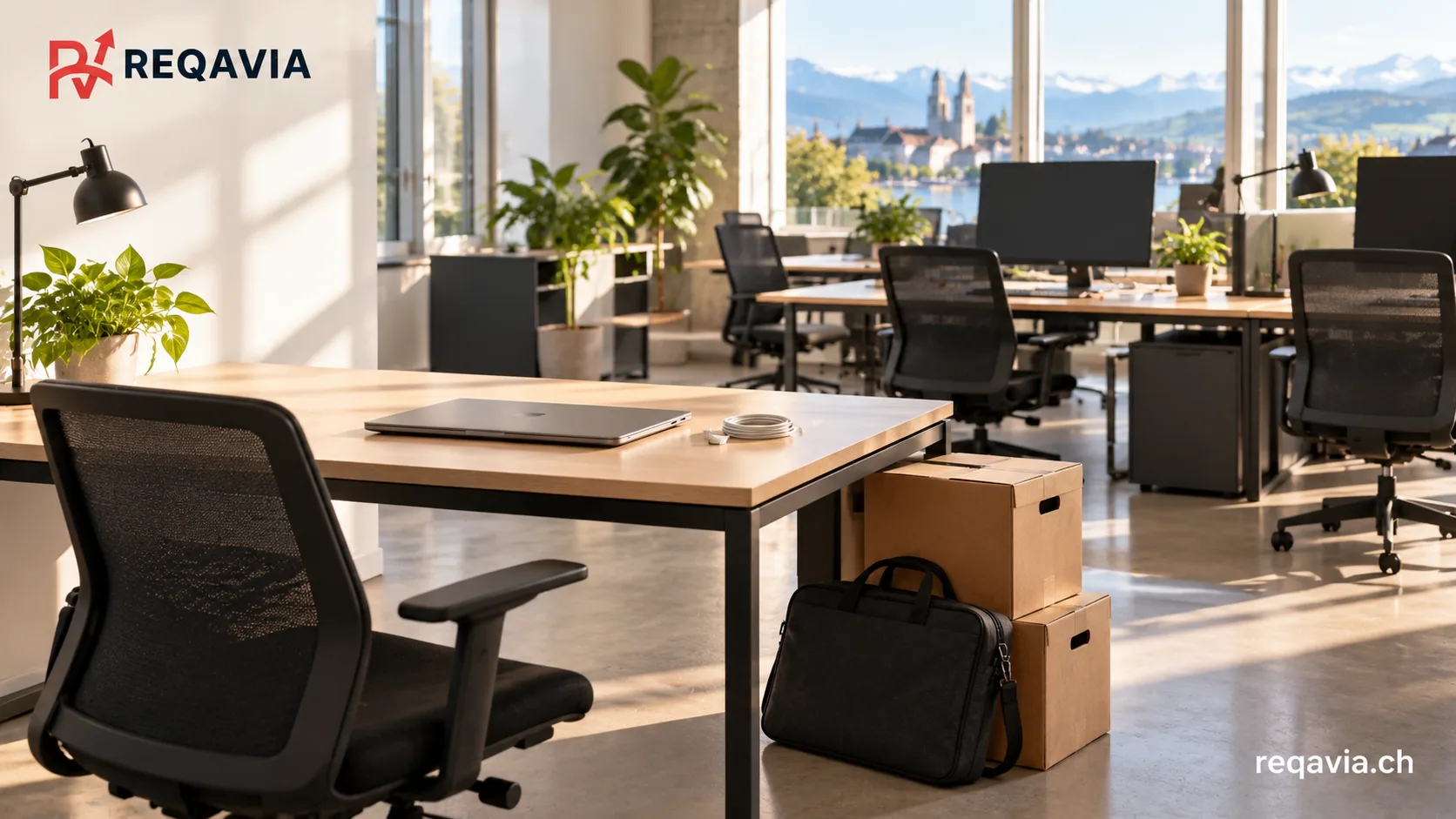
When leaving a coworking space, have movers take only items that are cleared for removal and have an agreed destination. A screen on your desk is not necessarily yours; your own chair may sit beside borrowed furniture. Make a specific list before requesting a quote. Agree with the space manager what leaves, what is returned and what stays available for the remaining users.
Three groups, rather than “the whole office”
Compare your workspace agreement, arrival inventory and personal records. Sort the contents into three groups: your equipment to take, borrowed items to return and fixtures or equipment that remain in place. For something bought jointly, settle the decision with the people entitled to make it. Keep an uncertain item outside the transport scope until permission and destination have been clarified.
Record quantities, dimensions and fragile parts of the load. Include drawer units, packed paperwork and accessories that do not appear in a photograph of the desk. Check the new workspace too: what furniture is already provided, what may you bring and where will each item go? This defines the actual load, rather than a full office move that does not match your belongings.
Prepare cables and data separately from furniture
Match your own power supplies, brackets and cables to their devices. Ask the responsible IT person which connections can be disconnected. A shared router, printer or connection should not be unplugged merely because you are leaving the desk. Do not give the mover a network change or device reset task that has not been expressly agreed with the responsible people.
Handle files, accounts and business records according to your employer's or the workspace's procedures. Arrange their transfer or removal with the relevant person before departure. The moving company should transport cleared equipment, not decide which business data to delete. Keep essential documents and your working laptop accessible so they are not accidentally packed into a delivery scheduled for a later date.
For planning photographs, show only the relevant objects and difficult parts of the route. Avoid screen contents, other users' documents, name lists and access codes. Useful pictures can later be shared directly and privately with the company. The initial request needs an accurate written description and known measurements; flag information that still needs checking.
Fit the collection around an occupied workplace
Agree the time, team registration, escort arrangements, lift use and loading point with the manager. Ask whether particular hours or routes would interfere with other users. Identify a place for packed belongings and keep shared passageways usable. Give the confirmed instructions to the mover as well; an open office door is not a substitute for agreed access arrangements.
Describe heavy or awkward items and provide their weight if known. Let the company plan staffing and handling equipment rather than relying on colleagues to help spontaneously. [Suva's prevention guidance](https://www.suva.ch/de-ch/praevention/nach-gefahren/gefaehrliche-materialien-strahlungen-und-situationen/koerperliche-belastung-und-ergonomie/umgang-mit-schweren-lasten) emphasises suitable handling aids and planned workflows when moving loads. Where access or equipment is difficult to assess, request a visit before the job is confirmed.
Return access items after the last necessary visit
Agree when passes, keys and borrowed devices will be returned so that loading and unloading can still be completed. Name a contact for the final check: have your belongings left, is borrowed equipment complete and has packaging been removed? Record any outstanding points. Membership, access rights and closing the agreement need to be settled directly with the manager; transporting the equipment does not complete those tasks for you.
In a moving request through REQAVIA, describe the approved load, both addresses, access, dates and shared areas that remain occupied. State which equipment stays connected and who can make decisions on site. REQAVIA is an intermediary. Agree the price, scope and service delivery directly with the company. Questions of ownership and returning access passes remain matters to resolve with the workspace manager.