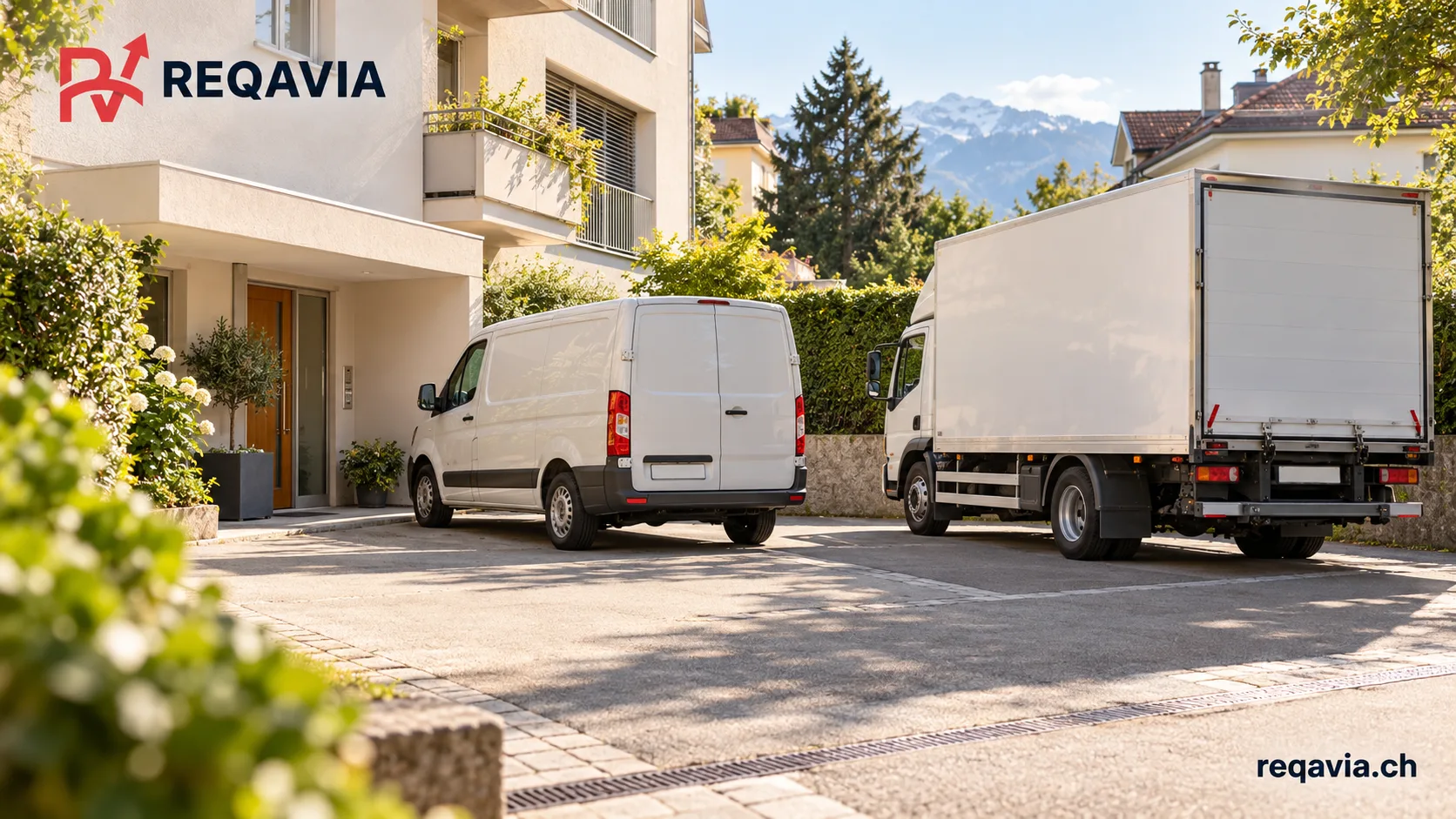
A larger vehicle and a smaller vehicle making two trips can both be workable moving plans. Compare the entire route and working day before choosing. A single journey is useful only if the vehicle can reach suitable loading points; two journeys need a credible return leg, access timetable and receiving arrangement. Ask the moving company to assess the vehicle, load and equipment together.
Give both proposals the same starting information
Prepare one inventory covering rooms, cellar, attic and other included areas. Note large furniture dimensions, items requiring disassembly, fragile pieces and anything unusually heavy. Separate items you will carry yourself. Give each company the same version, then communicate later additions: a proposal based on fewer belongings is not directly comparable.
Describe both addresses in practical terms: floors, lift availability and dimensions, narrow doors, stairs, distance from vehicle to entrance and any known access restrictions. Include information about the proposed unloading point and manoeuvring space. If access is uncertain, request an assessment before accepting a vehicle plan. Check arrangements for shared areas or loading space with the responsible building contact or local authority as appropriate.
Follow the larger vehicle from arrival to departure
Ask where it would stand at each address and how the furniture would travel between it and the home. A vehicle parked farther away changes the carrying route, even if everything fits inside. Establish whether additional equipment or a different loading point is needed, and who will confirm that arrangement. Do not decide suitability from a photograph of the vehicle alone.
Leave load capacity and securing arrangements to the operator. Empty space is not permission to add more weight or an unlisted item. Give the company any known weight information rather than estimating a safe limit yourself. In its prevention guidance, [Suva](https://www.suva.ch/de-ch/praevention/nach-gefahren/gefaehrliche-materialien-strahlungen-und-situationen/koerperliche-belastung-und-ergonomie/umgang-mit-schweren-lasten) recommends suitable handling aids and planned work processes for moving heavy loads. That supports asking how the work will be organised, not choosing a truck by size alone.
Walk through both trips on paper
For two trips, write the sequence explicitly: first loading, outward journey, unloading, return journey, second loading and final delivery. Add the necessary preparation and furniture assembly. Each belonging may still travel only once; the comparison concerns the extra journey and repeated arrival arrangements, not an assumption that every item is handled twice as often.
Who opens each property, and who receives the first load while the vehicle returns? Can the same crew complete the proposed sequence, or does the plan rely on people who have not been included? Compare it with lift access windows, key handover and your own availability. Ask what changes if the first unloading takes longer than expected.
Agree which items travel first and where they will be placed. Early boxes should not fill the space required for furniture arriving on the second trip. Check each load against the inventory and finish with a walk through every included storage area. Avoid declaring the old home empty merely because the main rooms are clear.
Compare the offer, not just the vehicle
Ask each company to describe the included crew, travel, carrying, protection, disassembly, assembly and any waiting arrangements. Clarify how a changed inventory, unsuitable access or an extra journey would be handled and priced. Use the same scope for both options; do not combine a low figure from one offer with services assumed from another.
Your preferred option should fit the actual site, inventory and timetable. In a text request through REQAVIA, provide those details and ask the moving company to explain its proposed vehicle and sequence. REQAVIA is an intermediary. The company directly agrees the assessment, price, work and any changes with you.