
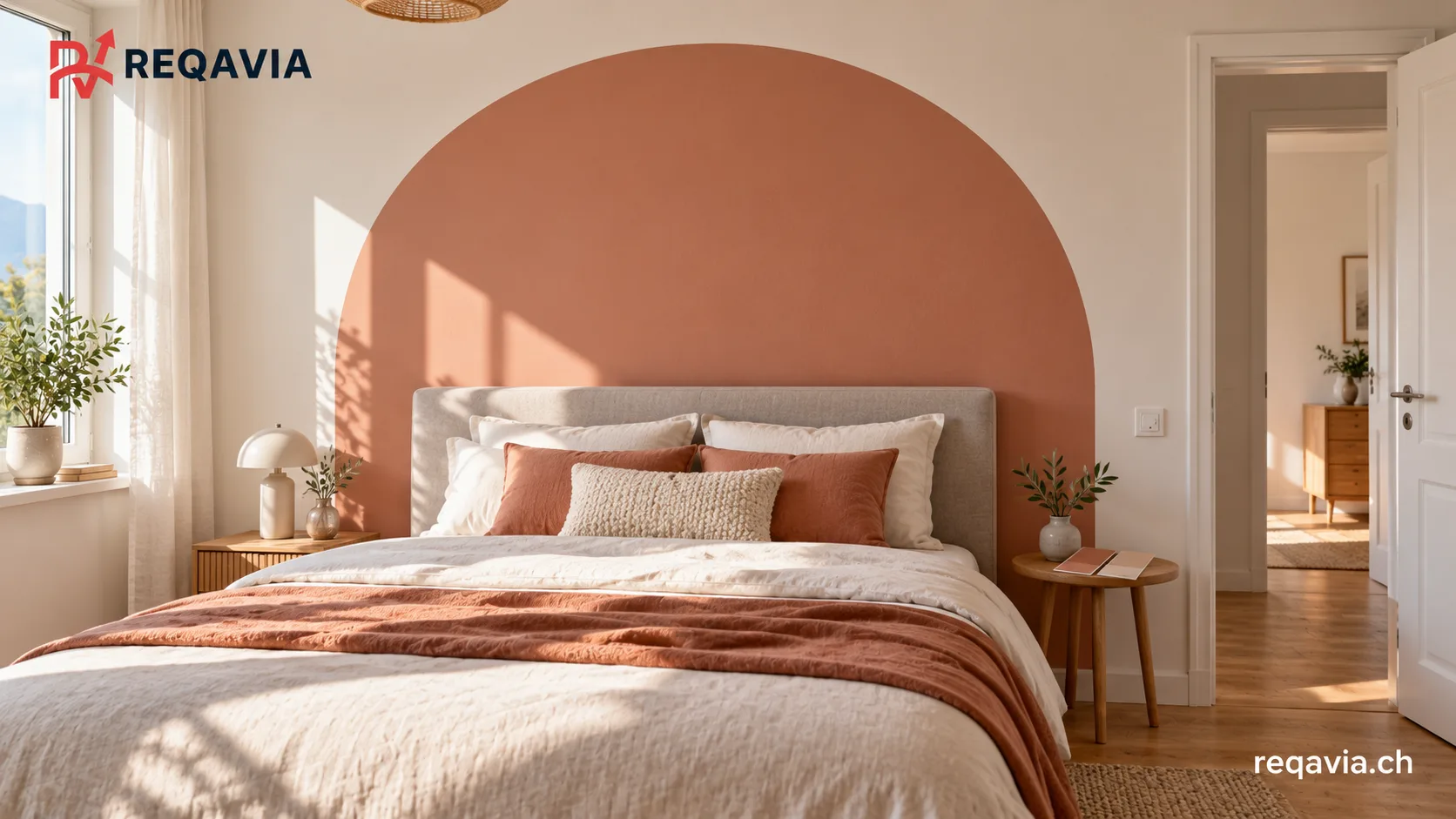
An arch that looks right in a photograph may sit too high above your bed or run through a light switch in your room. Start with the furniture’s final position and one measured drawing, then choose the colours. This gives you and the painter a common reference instead of trying to resolve proportions while the wall is being painted.
Decide what the design should align with
Measure the full wall width and height, then record the width and final position of the bed, desk or cabinet the design will frame. Include the headboard, shelves, wall lights, sockets, switches and nearby door openings. If new furniture is still on order, distinguish confirmed dimensions from estimates. Do not approve the layout around an item you intend to replace without checking the replacement.
Choose whether the shape should be centred on the wall, the furniture or another fixed feature. Those positions are not necessarily the same. Decide whether the colour continues behind furniture, stops above it or wraps around a corner. Consider what will be visible if the furniture moves later. A narrower shape and a full-width band solve different visual problems; compare them in your actual room.
Make one drawing that can be checked
Ask for a sketch showing overall shape dimensions, distances from fixed corners and the height of key lines above the floor. Mark the start and end of each colour and show how the design relates to switches and sockets. Ask the painter to confirm measurements that affect execution. Keep a dated, approved version; a stream of new inspiration pictures should not silently change the agreed design.
Review the scale with a visual mock-up or a temporary paper model that does not damage the surface. Look from the doorway and from the place where you normally sit or lie down. Do not attach materials or make marks before agreeing a suitable method with the painter. If the wall is uneven or the room has sloping features, ask how the proposed reference lines will be interpreted.
Approve the colours together
View a sample of the background and the shape together, with the proposed sheen. Examine it under the room’s normal daylight and artificial lighting, alongside the furniture. A colour name or a screen image alone does not record the whole choice. Agree whether the background is also to be repainted and whether the desired finish keeps or changes the wall’s existing texture.
Clarify permission and the existing wall
For a rented apartment, obtain the landlord’s written consent for the proposed alteration before commissioning it. The [Federal Housing Office’s renting guide](https://www.bwo.admin.ch/dam/de/sd-web/xKj1v2BhllVl/englisch.pdf) specifically includes wall painting among changes requiring prior written consent. Discuss any agreed restoration when moving out at the same time, rather than assuming that a decorative design can simply remain.
Tell the painter about peeling areas, damp marks, cracks or an unknown existing finish. Ask for an assessment before settling the method and scope. A decorative shape does not resolve an underlying wall problem. Any work involving electrical fittings should be assigned to an appropriately qualified person; do not treat moving a socket as part of an ordinary painting request.
Compare the complete decorative job
Ask the quote to distinguish layout and samples, agreed wall preparation, background painting, the decorative shapes, protection of the room and cleanup. Establish who approves the sample and any design change. If you request a different size after work starts, obtain the effect on timing and price before proceeding. Check the finished work against the approved drawing under normal room lighting when the painter confirms it is ready.
In your REQAVIA painting request, describe the room, wall and furniture dimensions, intended shape, proposed colours, known wall condition and preferred dates in text. Share drawings and useful photographs directly and privately with the company during coordination. REQAVIA is an intermediary; agree the design, price and execution directly with the company.